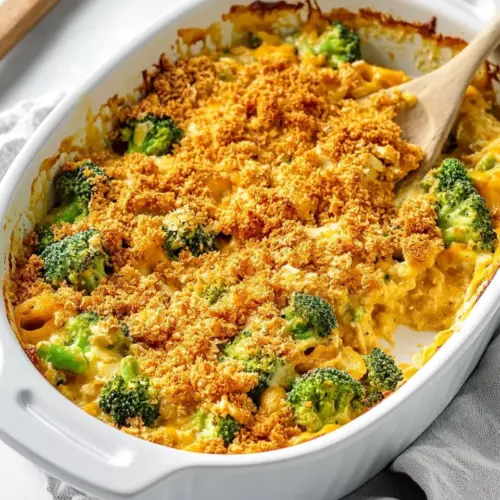
Broccoli Cheese Casserole
Broccoli Cheese Casserole is a creamy, cheesy, and crunchy baked side that delivers comfort with bright vegetable texture. This easy weeknight dinner favorite combines tender broccoli, a savory soup based sauce, and a buttery cracker topping for a crowd pleasing dish that reheats well. Make it for family meals or potlucks when you want reliable, cozy flavor everyone will ask for again.
Equipment
- 9×13 baking pan
Ingredients
- 32 ounces frozen broccoli (2 (16-ounce) bags), thawed Provide a firm, crunchy green base and deliver concentrated vegetable flavor and nutrients once thawed; fold gently into the mixture to retain texture and prevent sogginess during baking.
- 1 large egg Bind the casserole components together and add richness while helping set the filling when baked; whisk thoroughly with the soup for an even custard-like consistency.
- 10.5 ounces cream of chicken soup (1 can) Contribute a savory, creamy backbone with seasoned poultry flavors and a silky texture that helps hold the casserole together; mix evenly to distribute moisture and depth.
- 1/2 cup mayonnaise store-bought or homemade Add creamy tang and additional fat to enhance mouthfeel and prevent dryness; stir in until smooth to create a cohesive, rich filling that complements the cheese.
- 1 teaspoon garlic powder Impart warm, roasted garlic flavor and depth without moisture; sprinkle evenly to enhance savory notes throughout the dish.
- 1 teaspoon onion powder Provide sweet, aromatic onion undertones and umami that round out the profile; incorporate uniformly to ensure balanced flavor in every bite.
- 1/2 teaspoon ground black pepper Introduce gentle heat and earthy bite to cut through the richness; season conservatively and adjust to taste to maintain balance.
- 1/2 teaspoon ground paprika Add subtle smoky warmth and color to the top and interior, enhancing visual appeal and flavor complexity; blend with other spices or sprinkle on top for a mild finish.
- 2 cups freshly shredded cheddar cheese Deliver creamy, sharp, melted cheesiness that creates gooey strands and rich flavor; fold most into the filling and reserve some for a bubbly topping.
- 11/2 cups crushed Ritz crackers Offer crunchy, buttery topping texture and a slightly salty contrast when crushed; combine with melted butter and sprinkle over the casserole for a crisp finish.
- 1/4 cup unsalted butter melted (1/2 stick) Provide rich, buttery flavor and act as a binder for the cracker topping to create a golden, crisp crust; melt and mix with crackers before sprinkling evenly over the dish.
Instructions
- Ensure the broccoli is fully thawed before beginning. To quickly thaw broccoli, microwave it at 50% power until no longer frozen but cool to the touch.: The thawed broccoli should feel cool and pliable, not icy. When you press a floret gently it should release any trapped ice crystals, and the texture will be slightly limp rather than rock hard. This matters because frozen pockets will turn to water during baking, thinning the sauce and making the casserole watery. A common mistake is rushing this step, which leads to excess liquid pooling in the pan; avoid that by setting the broccoli in a colander and pressing out moisture if needed.
- Preheat oven to 350°F. Coat a 9×13-inch baking pan with nonstick cooking spray. Set aside.: You should feel the warm oven air when you open the door, and the pan will be dry and ready to receive the mixture. Preheating ensures even cooking and helps the topping brown reliably. If you skip preheating the casserole can bake unevenly and lengthen the required time. A pitfall to watch for is using a pan that is the wrong size, which can make the casserole too thin or too deep, altering cooking time.
- In a large bowl, whisk the egg, cream of chicken soup, mayonnaise, garlic powder, onion powder, pepper, and paprika together.: As you whisk you should notice the sauce becoming uniformly smooth and slightly glossy, with the spices evenly distributed. This emulsion coats the broccoli better and prevents clumps of seasoning. The why here is simple, even coating yields consistent flavor in every bite. A common error is under-whisking, which leaves pockets of seasoning or uneven texture; whisk until smooth and well combined.
- Add in the broccoli and cheddar cheese, and stir gently until the broccoli is well coated in the sauce.: When you fold in the broccoli and cheddar you'll see the florets take on a creamy sheen and the cheese begin to nestle into the crevices. Gently pressing the mixture helps the sauce cling to each piece. The tactile cue is that the broccoli should look glossy and the cheese should be distributed but not fully melted. Stirring too vigorously can break the florets apart, producing a mushy texture, so be gentle to preserve integrity.
- Transfer to your prepared pan and smooth into an even layer.: Use a spatula to spread the mixture until the surface is level and compacted slightly, which helps the casserole bake evenly. The finished surface should be uniform, with no large air pockets, so the topping sits flush. If you leave a lumpy surface the topping may brown unevenly. One mistake is overpacking the pan which can slow heat penetration and increase bake time, so aim for an even, but not slammed, layer.
- Top with the crushed crackers and drizzle with butter.: Scatter the crushed Ritz crackers evenly so they form a continuous layer, then drizzle the melted butter to moisten the crumbs. Watch for an even sheen across the top, because the butter encourages golden browning and prevents dry spots. This step creates the signature contrast of crunchy topping to creamy interior. A common slip is uneven distribution of butter, which leaves parts of the crust pale and soft, so be sure to drizzle deliberately and spread crumbs as needed.
- Bake for 35-45 minutes, until the crackers are golden and the casserole is warmed through.: During baking you'll notice the kitchen fill with a warm, toasty aroma and the topping will change color from pale to a rich golden brown. The edges may bubble slightly where the sauce meets the pan, and the interior will feel set when a knife inserted near the center comes out mostly clean. This final heat melds flavors and crisps the topping. If the crust browns too quickly before the interior is hot, tent the pan with foil to prevent burning while the center finishes cooking. A typical oversight is pulling the casserole out too early, resulting in a lukewarm center, so test the middle for warmth before serving.
Notes
- Swap fresh for frozen broccoli if you prefer fresh texture: Use about 3 to 4 stalks of fresh broccoli for each 16 ounce bag of frozen. Blanch the florets for 2 minutes then shock in ice water, drain well, and proceed. This preserves a bit more bite and color.
- Mix cheeses for complexity by combining sharp cheddar with a milder melting cheese like Havarti or fontina: This adds depth without overpowering the dish. Measure the total to remain at 2 cups to avoid altering melt behavior.
- Adjust the topping texture by swapping half the crushed Ritz crackers for panko: Panko adds airy crispness while maintaining the familiar buttery flavor, and it browns quickly so monitor the oven.
- Make it lighter by using low fat mayonnaise and reducing butter on the topping: The casserole will be a touch less rich but still creamy, especially if you ensure excess water from the broccoli is removed first.
- Prevent a soggy casserole by draining the thawed broccoli and pressing firmly in a colander before mixing: Excess moisture is the main reason a bake goes watery, and this trick keeps the texture intact.
- Use alternative cream soups like cream of mushroom or cream of celery as noted: Each swap alters the savory base subtly, so choose based on the flavor direction you prefer for the casserole.