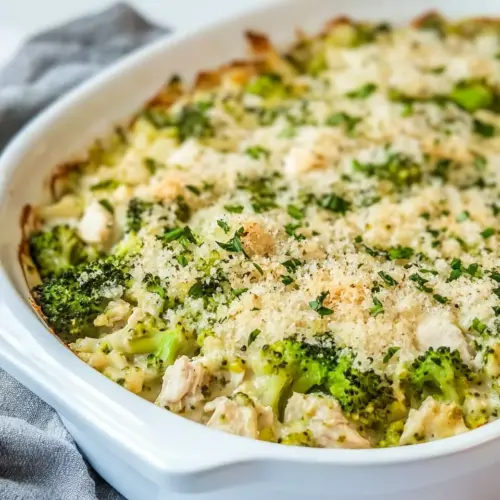
Broccoli Cheddar Chicken Casserole
Broccoli Cheddar Chicken Casserole is a creamy, cheesy, easy weeknight dinner that combines browned chicken, nutty brown rice, and tender broccoli in a luscious coconut milk and cheddar sauce. It bakes to bubbling perfection with a golden top, making it perfect for family meals and leftovers. Try it for a comforting, flavorful dinner that reheats beautifully.
Equipment
- Large Skillet
- 9 x 13 Casserole Dish
- Mixing Bowl
Ingredients
- 1 cup brown rice Provides a hearty whole-grain base and absorbs flavors while cooking; offers nutty texture and fiber that complements the casserole. Rinsing and partially pre-cooking ensures even tenderness when baked with other ingredients.
- 1 tbsp avocado oil Adds a high smoke point fat for sautéing aromatics and browning chicken; contributes a neutral, subtle richness without overpowering flavors. Measure carefully to prevent greasiness while achieving a light savory coating.
- 1 small yellow onion finely chopped Releases savory sweetness and moisture when finely chopped and sautéed; forms the aromatic foundation that enhances overall flavor complexity. Cooking until translucent helps mellow sharpness and balances the casserole’s richness.
- 3 to 4 cups broccoli chopped Contributes fresh vegetable texture, vibrant color, and nutritional value; chopping to uniform pieces ensures even cooking and pleasant mouthfeel. Steaming or lightly sautéing before combining prevents undercooked florets in the finished dish.
- 3 cloves garlic Imparts pungent, savory depth and aromatic warmth when minced; complements the onion and boosts umami in the casserole. Adding garlic after onions prevents burning and preserves its bright, garlicky flavor.
- 1 lb chicken thighs chopped Provides tender, flavorful protein and richness when chopped and cooked; thighs offer moistness that stands up to baking and creamy elements. Seasoning and properly browning enhances savory notes and prevents dryness.
- 15 -ounce can full-fat canned coconut milk Supplies a creamy, dairy-free liquid base that adds richness and body; full-fat coconut milk creates a velvety texture and subtle sweetness for the sauce. Shaking or stirring well ensures an even consistency before mixing into the casserole.
- 1 tsp sea salt Enhances overall seasoning and brings out flavors from other components; judicious salting balances richness and highlights savory notes. Tasting before and after baking helps avoid over-salting due to concentrated flavors.
- 1/2 tsp black pepper Adds mild heat and depth to the seasoning; freshly ground pepper brightens flavors without overwhelming them. Use sparingly and adjust to taste to maintain balance with salt and cheese.
- 2 cups cheddar cheese see note Delivers sharp, melty richness and a creamy, savory topping; shredding cheddar allows even melting and a golden crust. Choosing a quality cheddar influences flavor intensity and the casserole’s overall cheesiness.
Instructions
- Cook rice according to package instructions.: The kitchen fills with a toasty, nutty steam as the rice simmers, and you should notice separate, plump grains when it is done. This matters because properly cooked rice absorbs the coconut milk without turning gluey, creating a pleasant mouthfeel in every forkful. If rice is undercooked, it will stay hard in the casserole, so test a grain before you stop cooking. A common mistake is over stirring during cooking, which can make grains break and become mushy; avoid aggressive stirring.
- Preheat the oven to 350 degrees F and lightly grease or spray a large 9” x 13” casserole dish.: The warm oven hum and the smell of a properly preheated space set you up for even baking and browning. Greasing prevents sticking and ensures the edges crisp a little, giving each serving a golden framework. Not preheating can lead to uneven baking and longer cooking times, so wait until it reaches temperature before sliding the dish in. A frequent error is using an undersized pan, which affects cook time and bubbling, so use the recommended size.
- While rice is cooking, prepare the rest of the recipe. Heat a large skillet or pot over medium heat and add the avocado oil. Add the chopped onion, broccoli, and garlic and cook, stirring occasionally, until onion and broccoli have softened but are still al dente, about 2 to 3 minutes.: You should smell the sweet aroma of softened onion and the green, slightly vegetal scent of broccoli , and the pan will make gentle sizzling noises as the vegetables release moisture. Leaving the florets slightly crisp prevents them from going mushy after baking, and the brief sauté builds subtle caramelization for deeper flavor. Be careful not to overcook here, because over softened vegetables can collapse into the casserole, losing texture. A common misstep is crowding the pan which causes steaming rather than sautéing, so give the veggies room.
- Scoot the vegetables off to one side of the skillet and add the chopped chicken thighs. Allow them to brown without touching for 2 minutes. Flip and cook another 2 to 3 minutes, until browned but not cooked through. Stir everything together and remove from heat.: You will hear a hearty sizzle as the chicken hits the hot oil and see a golden crust form, which adds savory depth. Browning concentrates flavor and helps lock in juices, and stopping when the pieces are not fully cooked ensures tenderness after baking. Stirring everything together blends the juices from the chicken with the aromatics for cohesive flavor. Avoid crowding the pan, which prevents browning and leads to pale, boiled meat.
- In a large mixing bowl, add the rice, coconut milk, sea salt, black pepper, and 1 cup of the grated cheese. Stir well to combine.: The mixture will take on a silky sheen as the coconut milk coats each grain, and the first hint of melted cheddar cheese will add a savory scent. Mixing at this stage ensures even seasoning and consistent creaminess throughout the casserole. This step is vital because it distributes moisture evenly so no dry pockets remain. A common error is skimping on stirring, which can leave clumps of unmixed liquid or cheese.
- Transfer the rice mixture to the pot with the sautéed veggies and chicken and stir well.: You will notice steam rising and the aromas mingling as the components fuse; the mixture should feel cohesive and slightly loose, not dry. Combining now lets the flavors marry before baking, ensuring each spoonful has balanced protein vegetable and starch. Mixing thoroughly helps prevent concentration of ingredients in one area which would create dry or overly saucy sections. Avoid vigorous stirring that breaks up browned bits, instead fold gently to preserve texture.
- Pour the casserole mixture into the casserole dish. Bake on the center rack of the preheated oven for 30 to 40 minutes, until bubbly and cheese begins turning golden-brown.: As it bakes the top will bubble and the cheddar cheese will brown into irresistible, toasted pockets. You will hear occasional gentle bubbling and smell rich, toasty notes, a reliable sign it is nearly done. Baking at the center rack promotes even heat circulation for a uniform finish. If it bakes too long the cheese can dry out and become greasy, so watch the color rather than strictly the clock.
- Serve and enjoy!: When you spoon out a portion you should see creamy interior and a slightly crisped top; the texture contrast is part of the pleasure. Let it rest briefly so the filling sets slightly, making neat portions easier to remove. Taste and adjust with a pinch of extra sea salt if needed, though I often find the flavors are balanced right out of the oven. Avoid serving immediately if it is still steaming excessively, as it can be too loose and spill apart on the plate.
Notes
- Rice texture matters — Use fully cooked but slightly firm rice so it absorbs the coconut milk without turning mushy; if you prefer a softer bite cook the rice a touch longer.
- Heat for browning — Ensure the skillet is hot before adding the chicken so it browns quickly, which develops a deep savory flavor you can taste throughout the casserole.
- Cheese placement — Stir half the cheddar cheese into the mixture and sprinkle the remainder on top to achieve both creamy integration and a bubbly, golden crust.
- Even chopping — Cut the broccoli into uniform pieces to ensure consistent cooking; uneven florets mean some bits overcook while others stay too firm.
- Rest before serving — Let the casserole sit for five to ten minutes after baking so it sets and slices cleanly, making serving neater and flavors more melded.
- Adapt the cheese — If you want a milder finish use a young cheddar, and for stronger tang choose an aged variety, but keep the total cheese amount the same for balance.