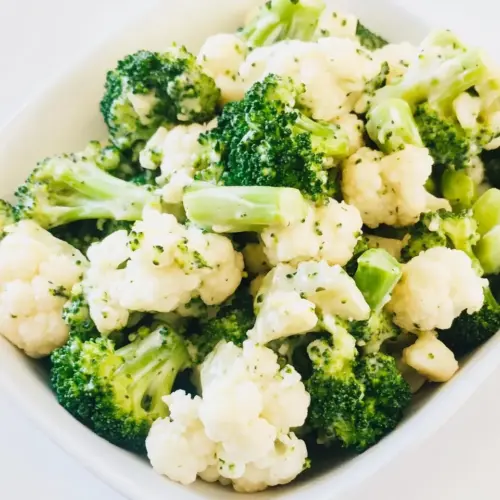
Broccoli Cauliflower Salad
Broccoli Cauliflower Salad is a crunchy, creamy spring side with crisp florets, tangy dressing, and a hint of sweetness. This easy salad brings bright lemon notes and satisfying texture, perfect for easy weeknight dinners or spring gatherings. Make it ahead and watch it become even better after chilling, a reliable crowd pleaser worth trying.
Equipment
- Mixing Bowl
- Knife
- Cutting Board
- Measuring Cup
Ingredients
- 1 small broccoli head Chop finely to create small florets and tender stalk pieces that provide a crunchy, nutritious base for the salad. Add vibrant green color and a slightly bitter, earthy flavor that contrasts well with creamy dressing. Blanching briefly can soften texture while preserving crispness and color.
- 1 small cauliflower head Cut into bite-sized florets to add a mild, slightly sweet and nutty component that complements the broccoli. Provide a firm, crisp texture and pale color that balances the salad visually and texturally. Light steaming or raw use works well depending on desired crunch.
- 2 green onions Slice thinly across the white and green parts to add a mild onion aroma and subtle sharpness that brightens the salad. Offer small pops of flavor throughout without overpowering the other vegetables. Use both green and white portions for color contrast and varied texture.
- 1/2 cup Miracle Whip Whisk smooth to create a creamy binder that coats the vegetables and holds the salad together. Contribute a tangy, slightly sweet and rich mouthfeel that balances crunchy elements and adds moisture. Adjust quantity to achieve the desired creaminess and consistency.
- 1 teaspoon lemon juice Squeeze in to add a bright acidic note that lifts the flavors and balances richness from the dressing. Provide a subtle citrus tang that enhances freshness and prevents the salad from tasting flat. Start with a small amount and adjust to taste for optimal brightness.
- 1/4 cups ugar Sprinkle to introduce sweetness that offsets acidity and bitter vegetable flavors, helping to round out the dressing profile. Dissolve well into the dressing to avoid graininess and ensure even distribution. Use measured amounts carefully to balance overall taste.
Instructions
- Cut broccoli and cauliflower into bite-sized flowerets.: As you work, you will notice the clean, green scent of broccoli and the more neutral, slightly nutty smell of cauliflower , and the act of cutting releases these aromas into the air. The visual cue to aim for is uniformity, little florets about the size of a large cherry, so they eat evenly. Use a sharp knife so the edges are neat rather than ragged, which helps the salad look appealing. One common mistake is cutting pieces very unevenly, which leads to inconsistent texture in each bite, so take a little time to match sizes. The sound of the knife on the board is soft, and the stems will have a slightly fibrous feel; trim as needed to avoid tough bits. This technique matters because similar sized pieces ensure a balanced mouthfeel throughout the salad.
- Chop green onions.: When you slice the green onions , the room fills with a mild onion perfume that is pleasantly bright rather than sharp. Cut thin rounds so the pieces mingle through the florets without dominating. The visual cue is small green flecks distributed across the bowl, which signal that every forkful will get a hint of onion. Avoid chopping them too far in advance and letting them sit uncovered, because they can dry out or lose their snap. A tip is to include both the white and green parts for layered flavor, and slice with a rocking motion for clean cuts. The slight moisture on the cut edges helps the onions cling to the dressing later.
- Toss until everything is well-coated.: Once you combine the vegetables, dressing, and green onions , toss gently so the creamy dressing nests in the florets' crevices, visible as a thin sheen on each piece. You should hear a soft clinking of florets against the bowl as you turn them, and see a glossy finish rather than pools of liquid. The sensation to aim for is even coverage without saturating the vegetables, because too much dressing makes the salad heavy. A common error is aggressive tossing which can bruise the florets, so use gentle folding motions. This step matters because the distribution of dressing determines whether the salad tastes cohesive or patchy, and the tactile feel of each bite hinges on the right coating.
- Refrigerate for at least one hour before serving.: Chilling lets the flavors marry and the dressing settle into the vegetable nooks, and while the fridge hums you can expect the salad to become more cohesive and slightly firmer. The ideal texture after refrigeration is still crisp but a touch more yielding, and the scent becomes more unified as the lemon and sugar mellow. Avoid leaving it out on the counter for long, because the dressing can soften the florets excessively at room temperature. One mistake is serving immediately, which means the dressing will feel more separate and the salad less integrated. This resting period matters because it deepens flavor and improves mouthfeel, turning a quick mix into a well-rounded salad.
- NOTE: Don’t skimp on the dressing. Sometimes I double it, depending on the size of the salad.: Don’t skimp on the dressing. Sometimes I double it, depending on the size of the salad : When you heed this note, the salad achieves a luscious balance where each bite is both creamy and bright, and doubling the dressing is sensible when you use larger heads or prefer a saucier texture. The sensory result is a silkier mouthfeel and more pronounced lemon lift, which many guests appreciate. A pitfall is adding all the dressing at once without tasting, so reserve a small portion to adjust seasoning after a chill. This guidance matters because the right amount of dressing ensures every forkful is satisfying rather than dry or too heavy, and it gives you control over final texture and flavor intensity.
Notes
- Dress it richer By increasing the amount of Miracle Whip slightly you get a creamier mouthfeel, which pairs well with larger florets and makes the salad feel more indulgent without changing the core ingredients.
- Brighten the acid Add a touch more lemon juice if you prefer a fresher edge, start with a quarter teaspoon more, then taste after chilling so the acidity does not overpower the salad.
- Double the dressing for larger heads When using bigger broccoli or cauliflower heads, prepare extra dressing to ensure even coating, this prevents dry pockets and keeps the bowl cohesive.
- Fine chop the onions If you want the onion to be less assertive, slice the green onions very thin so they melt into the salad rather than standing out.
- Adjust sweetness carefully The measured amount of sugar tames the tang, but you can reduce it if you prefer a tarter profile; always taste after mixing and chilling before making larger changes.