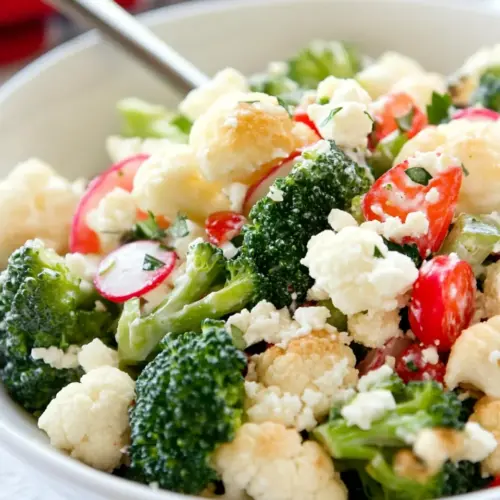
Broccoli Cauliflower Radish Salad
Broccoli Cauliflower Radish Salad blends crisp florets, peppery radish, and crunchy cashews with a creamy herbed dressing, creating a fresh, textured side or light meal. This easy, vibrant salad is perfect for quick weeknight dinners or for entertaining, offering bright color and satisfying crunch. Make it to add a lively, healthy dish to your table that stays appealing and simple to prepare.
Equipment
- Pot
- Colander
- Whisk
- Mixing Bowl
- Knife
Ingredients
- 4 cups small broccoli florets Provide a crisp, crunchy texture and bright green color that forms the primary base of the salad; steam or blanch briefly if a softer bite is desired, then shock in ice water to preserve color. Pair with the cauliflower and radish for contrast and distribute evenly for consistent mouthfeel and visual appeal.
- 4 cups small cauliflower florets Add a mild, slightly sweet and nutty flavor while contributing a firm, crunchy bite that complements the broccoli; blanching briefly can mellow raw sharpness without losing structure. Combine with other vegetables to balance textures and provide a neutral backdrop for dressing and seasonings.
- 1 red bell pepper, stem and seeds removed and cut into small thin strips Introduce a sweet, slightly fruity flavor and vibrant red color while contributing thin, tender strips that add visual interest; remove stem and seeds to avoid bitterness and cut into matchstick-like slices for even distribution. Use as a colorful accent and to provide occasional juicy bursts amid the crisp vegetables.
- 1 bunch radishes, thickly sliced Offer a peppery, refreshing bite and crisp texture that contrasts with milder florets; slice thickly to retain crunch and visual rounds that stand out in the salad. Toss with dressing just before serving to maintain crunch and avoid wilting, and use to add a zesty finish to each forkful.
- 1/4 cup finely chopped red onion (see notes) Contribute a sharp, savory bite and subtle pungency that brightens the overall flavor profile; finely chop to disperse pungency evenly without overwhelming other ingredients. Use sparingly to add depth and aromatic lift, and soak briefly in cold water if you want to soften intensity.
- 1/2 cup coarsely chopped cashews (or more) Provide a rich, buttery crunch and a toasty, slightly sweet nutty flavor that enhances texture and adds protein; coarsely chop to preserve bite and distribute through the salad. Toast lightly if desired to deepen flavor and sprinkle on top for garnish and satisfying contrast.
Instructions
- Take cream cheese out of the fridge and cut into small cubes so it will start to soften.: As you cut the cream cheese into small cubes you will feel it give slightly under the knife, and the air around your prep area will pick up a faint dairy aroma. This early softening shortens whisking time and prevents lumps, which matters because a silky dressing clings much better to the vegetables. A common mistake is trying to whisk a rock hard block, which leads to uneven texture and small white clumps. If the cream cheese is still firm, leave the cubes at room temperature for a few more minutes.
- Bring a pot of lightly salted water to a boil while you cut the broccoli and cauliflower into small bite-sized florets.: You will hear the pot begin to rumble as it approaches a boil and the surface will shimmer before steaming. Light salting seasons the vegetables from the inside out during blanching, enhancing their natural flavors. Cutting the florets uniformly ensures even cooking and an attractive final presentation. Avoid cutting pieces drastically different sizes, as small bits will overcook while larger ones remain underdone.
- When water boils, add the vegetables, bring back to a low boil, and cook 2 minutes (or less; test a piece to see how crunchy you want it.): The water will briefly roar when the vegetables hit it, and you may see the surface foam slightly. After two minutes the florets should be bright and slightly tender but still have a snap. I always test by nibbling a single piece because personal preference for crunch varies. Overcooking is easy here and will result in a soft, sodden salad, so err on the side of undercooking if you like a firmer bite.
- Immediately drain the vegetables into a colander placed in the sink and rinse with very cold water.: As you pour the vegetables into the colander you will notice steam give way to cooler air, and the quick shock of cold water stops cooking instantly, preserving color and crunch. The sound of water hitting the florets changes from a steady rush to a lighter rinse as the temperature drops. A common slip is skipping the cold rinse, which continues cooking residual heat and softens the vegetables; be sure to rinse until they feel cool to the touch.
- Let the broccoli and cauliflower drain well while you prep the other ingredients.: After rinsing, allow the florets to sit and release excess water, either in the colander or on a towel. You will see droplets bead and fall away while the vegetables regain their firm texture. Proper draining prevents a watery dressing and helps the coating stick to the florets. If you hurry this step and toss wet vegetables, the dressing will slide off and the salad will be diluted.
- Clean and slice the radishes.: As you slice each radish you will notice a crisp snap and a bright, peppery scent. Thick slices provide satisfying texture and visual contrast in the bowl. Arrange the slices so they do not clump, which helps distribute their bite across the salad. A typical mistake is slicing too thin, which can make radishes disappear in the mix rather than contribute a pop of flavor.
- Cut out the stem and seeds from the red bell pepper and cut into small thin strips.: Removing the stem and seeds eliminates any bitter pockets and keeps the pepper sweet. The thin strips should glisten slightly as you slice, and their flexible shape allows them to mingle with florets without overpowering them. Avoid pieces that are too wide, which can make a mouthful dominated by pepper instead of a balanced bite.
- Finely chop the red onion (or slice green onions.): Finely chopping the red onion releases its aroma and ensures subtle distribution in every bite. You may notice a mild sting to your eyes as sulfur compounds are released, which is normal. Slicing green onions is a great milder alternative. One common misstep is using large chunks of onion that overpower the salad, so keep the pieces small and even.
- Coarsely chop the cashews.: When you chop the cashews you will hear a satisfying crunch and see generous bits that stand out in the finished salad. Coarse pieces add texture contrast and a buttery note. If cashews are powdered too finely they can blend into the dressing and lose their impact, so keep them chunky for visual and textural interest.
- Put the softened cream cheese into a small dish or measuring cup and whisk until it’s soft, then add the Ranch dressing, dill weed, and Spike Seasoning and whisk ingredients together.: As you whisk, the cream cheese will transform into a glossy, velvety base that integrates with the Ranch dressing . The aroma of dill will lift the mixture, and Spike Seasoning adds a savory backbone. A smooth dressing adheres to the florets instead of pooling in the bottom of the bowl, which is why thorough whisking is important. Avoid under mixing, which leaves small lumps and an uneven distribution of seasoning.
- When the vegetables are well drained (blot with a paper towel if you’re in a hurry) put them in bowl and toss gently with the radishes, red bell pepper strips, and red onion.: You will hear a soft rustle as the ingredients meet in the bowl and see colors mingle. Tossing gently ensures the vegetables remain intact while the flavors begin to meld. Overly vigorous tossing can bruise the florets and make the salad look battered, so use wide, folding motions to combine.
- Stir in as much dressing as desired, until the salad is as moist as you’d like it.: The dressing will cloak each piece in a glossy sheen, and you can adjust quantity to create anything from lightly kissed to luxuriously creamy. Watch for pooled dressing at the base of the bowl, which signals you have added too much. If you accidentally overdress, blot the excess with a paper towel or add a handful more florets to absorb it.
- Add cashews and toss again, season the salad with salt and fresh ground black pepper to taste, and serve immediately. (I used salted cashews so I didn’t need any additional salt.): Once the cashews are added you will hear a lively crunch and see nutty flecks distributed through the salad. Season lightly, particularly if your nuts are salted, so the balance stays bright. Serving immediately preserves maximum crunch, and waiting too long will soften the nuts and mellow the fresh notes. If you used salted cashews, taste before adding extra salt.
- If you’re making this Broccoli Cauliflower Radish Salad in advance or making more than you’ll eat at once, don’t add the dressing or toss with the cashews until right before you serve the salad.: Storing components separately keeps textures distinct and flavors fresh, and the chilled florets will stay crisp longer when not dressed. When it’s time to serve, bring the components together and toss only once so guests enjoy the intended contrast. A common error is dressing too early, which results in a soggy, muted salad.
Notes
- Prep your vegetables uniformly - Cutting broccoli and cauliflower into similar sized florets ensures even blanching and a pleasing bite in every forkful. Take a moment to trim large stems and create consistent pieces.
- Shock immediately after blanching - Rinsing the florets under very cold water stops the cooking and sets the color, preserving that bright green and white contrast. Without this, residual heat will keep cooking the vegetables and soften them.
- Whisk the cream cheese until glossy - Smooth the softened cream cheese before adding other dressing components so the final dressing is lump free and coats the vegetables evenly, enhancing mouthfeel.
- Reserve the cashews for last - Adding the cashews just before serving keeps them crunchy and visually appealing, preventing them from becoming soggy in the dressing.
- Taste before salting - If you use salted cashews, sample the salad after tossing to decide if additional salt is necessary, avoiding over seasoning.
- Make it ahead strategically - You can prep and store the components separately in the fridge, but combine them only when ready to serve to keep textures vibrant and fresh.