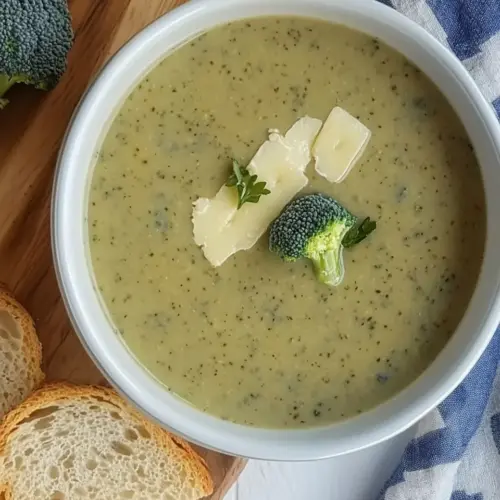
Broccoli and Stilton Soup
Broccoli and Stilton Soup is a creamy, savory bowl that balances bright green broccoli with tangy stilton. This easy weeknight soup is silky, comforting, and quick to prepare, perfect when you need an elegant yet effortless meal. Make it for cozy dinners or casual lunches and enjoy its rich flavor and simple preparation.
Equipment
- Large saucepan
- Immersion Blender
- Ladle
Ingredients
- 1 head broccoli Chop finely and cook until just tender to provide fresh vegetal body and texture to the soup; contributes a mild, slightly bitter backbone that balances creamy and salty elements. Stem and florets can be used together for economy and added fiber, with florets puréed for a smooth finish. Bright green color from careful cooking also enhances visual appeal and freshness.
- 2 tablespoon olive oil Warm gently to release flavor and serve as the primary cooking fat that softens aromatics; brings a subtle fruitiness and helps prevent sticking while sweating the vegetables. Use measured amount to keep soup light yet flavorful and to carry fat-soluble flavors from cheese and cream.
- 1 onion, chopped Sweat slowly to develop sweet, savory depth and form the aromatic base that complements broccoli; chopped onion melts into the broth and rounds out harsher flavors. Cooking until translucent rather than browned preserves a delicate sweetness that suits a creamy vegetable soup.
- 1 stick celery, sliced Slice uniformly and sauté with other aromatics to add subtle vegetal sweetness and a pleasant crunch if left in pieces; contributes aromatic leafiness and moisture that deepens overall soup complexity. Celery also lends a mild herbal perfuming and helps build a balanced savory platform.
- 4 cups low sodium vegetable broth/stock (see note 1) Simmer with vegetables to create the liquid foundation and concentrate flavors without adding excessive sodium; low sodium stock allows control over final seasoning. Use enough to cover vegetables for even cooking, and reduce slightly if a thicker, creamier texture is desired.
- 1/4 cup cream, optional (see note 2) Stir in at the end if desired to add silkiness and a richer mouthfeel; optional cream softens sharp notes and adds a luxurious finish. Add gradually and adjust heat to avoid curdling, keeping a smooth, velvety consistency that complements the cheese.
- 1/2 cup stilton, crumbled (see note 3) Crumble into the soup to impart intense, tangy, and salty blue-cheese character that defines the dish; melting into swirls creates pockets of savory richness. Use moderation when combining with broth and cream to maintain balance and allow stilton’s distinctive aroma to shine.
- nutmeg Grate or pinch sparingly to add warm, aromatic depth that enhances sweetness of cooked broccoli and creaminess of the soup. Use just a hint to avoid overwhelming other flavors while contributing a classic, gently nutty spice note.
- black pepper Grind freshly to season and finish, providing pungent heat that balances richness and cuts through cream and cheese. Adjust quantity to taste and add at the end to preserve pepper’s bright, aromatic quality.
Instructions
- Remove any leaves from the broccoli, break off the florets, and roughly chop, then chop the stalks into slices.: The aroma starts to change as you cut broccoli , a green, almost grassy scent that promises freshness. Using the stalks is crucial because they add body when blended, and slicing them thin helps them soften evenly. A tip I learned is to feel for fibrous strings in the stalks and peel them if needed, because unpeeled thick fibers can create a stringy texture after blending. Watch for uneven pieces, which cause some bits to overcook while others remain firm. The right visual cue is uniform green pieces, and you should hear a quiet, crisp snap when you slice fresh florets.
- Heat the oil in a large saucepan over medium-low heat, then add the chopped onion, celery, and broccoli stalks. Cook for 5-6 minutes until the onion is soft.: As the vegetables sweat, you ll notice a sweet, gentle scent rising from the pan and a softening sound as moisture escapes, not a sizzle. This step builds the base flavors, converting sharp raw edges into mellow sweetness. If you rush with too high heat, the edges can brown and introduce bitterness, so keep it steady. Stir occasionally so the pieces soften evenly and look glossy and translucent when done. A common mistake is skipping this softening, which leaves the soup tasting flat.
- Pour in the broth/stock and bring to a simmer. Add the broccoli florets and any leaves. Cook for 10-15 minutes until all the broccoli is soft.: When the liquid hits the pan you ll hear a gentle bubble as it moves toward simmer. The green color will intensify as the florets cook and the kitchen fills with a vegetal perfume. Simmering gently allows the flavors to meld and the stalks to release starches that thicken the soup naturally. Avoid a rolling boil that can agitate the foam and make the greens dull. The visual cue is very tender florets collapsing slightly and the broth taking on a green tint.
- Remove the soup from the heat, add the cream (if using) and cool for a couple of minutes.: Taking the pot off the heat prevents the dairy from splitting and gives the temperature time to settle. You ll sense a softer steam, and the surface calms. Stirring in the cream now achieves a glossy sheen and richer mouthfeel. If you add cream while the pot is at a roaring boil, it may separate, so patience matters. A simple check is to let a fingertip near the pot feel warm, not scalding, before pouring the cream.
- Use a handheld immersion blender to blitz the soup until smooth. Or transfer the soup to a blender, allow the top to vent, cover with a tea towel, and blitz until smooth.: Blending transforms the mixture into a silky texture, releasing aromas and thickening the soup. With an immersion blender you ll hear a steady whirr and see a glossy, uniform swirl form. If using a countertop blender, the sound is louder, and venting prevents steam buildup. Always cover with a towel to avoid hot splashes. A mistake is over blending very long, which can heat the soup further and flatten flavors; pulse until smooth and stop to taste. The right sign is a creamy, velvety surface without visible chunks.
- Stir in the crumbled Stilton, keeping back a few crumbles for garnish.: As the cheese melts into the warm soup you ll notice a savory, tangy perfume that lifts the bowl. Stirring gently distributes the cheese so it dissolves into ribbons of flavor, creating depth and saltiness. Hold back some crumbles for texture contrast on top. If you add too much cheese at once, it can clump, so fold it in gradually. The ideal cue is an even, slightly speckled surface with streaks of melted cheese integrating smoothly.
- Taste your soup and add a grating of nutmeg and some black pepper to taste.: Tasting is where you personalize the bowl, adjusting for salt, acidity, and warmth. A fresh grating of nutmeg introduces a warming note that balances the tang of stilton , and a few twists of black pepper brighten the finish. Go light at first, because both nutmeg and pepper build quickly. Over seasoning is the common misstep here, so add cautiously and re-taste. The sensory marker is a balanced flavor with a gentle peppery lift and a whisper of spice.
- Serve hot with the remaining lumps of cheese as garnish.: Ladling into bowls releases a final wave of steam and aroma, and the reserved crumbles on top give a pleasing textural pop. The soup should be steaming but not scalding, making it comfortable to sip. Garnish makes the dish feel intentional and celebratory. If you serve it too cold it loses the silkiness and the cheese won t melt properly, so aim for warm and inviting bowls. The visual cue is a glossy surface crowned with scattered cheese crumbles and a light grind of pepper.
Notes
- Prep once, cook faster Chop the broccoli, onion, and celery before you heat the pan so you can move through the cook steps without slowing down.
- Watch the sweat Keep the heat at medium low when softening aromatics so they become sweet without browning, which keeps the soup clean tasting.
- Stock choice matters Use low sodium vegetable broth to let you season at the end, because the stilton will add saltiness during finishing.
- Blending safety If using a countertop blender, vent the lid and cover with a towel to avoid steam explosions, and blend in batches if necessary.
- Cheese integration Stir the stilton in off heat so it melts into the soup smoothly rather than clumping.
- Texture options For a chunkier soup puree only half and reserve some pieces, or go fully smooth for an elegant presentation.