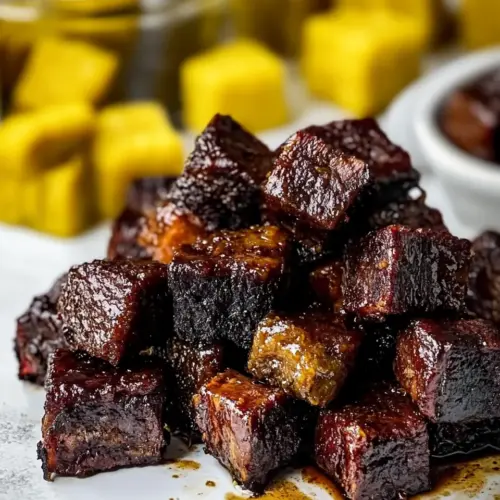
Brisket Burnt Ends
Brisket Burnt Ends deliver sticky, caramelized cubes of beef with a smoky seasoned crust and a glossy, spicy sweet glaze. Perfect for an easy weeknight dinner or a party appetizer, these rich bites balance savory rub and sweet sauce for craveable texture and deep flavor. Try this approachable oven or smoker method to create melt in your mouth pieces that everyone will love.
Equipment
- Rimmed Baking Sheet
- Small Bowl
- Meat thermometer probe
- 9 x 13 inch baking dish
- Serrated Knife
Ingredients
- 3 -4 pounds beef brisket point-end Trimmed and tender, provide a well-marbled cut for brisket burnt ends, offering rich beefy flavor and connective tissue that renders down during slow cooking. Cube after initial smoking to create caramelized, crispy edges while keeping a succulent interior. Serve as the centerpiece of the dish with deep smoky notes and tender bite.
- 1 1/2 teaspoons salt Season generously to enhance the meat's natural flavor and help form a savory crust during smoking and caramelization. Balance the sweetness in the glaze and assert saltiness throughout the cooking process so the burnt ends are well seasoned. Dissolve slightly into the surface to aid in bark formation and moisture retention.
- 1 1/2 teaspoon black pepper Crush or grind to provide sharp, aromatic heat that complements the beef and deepens the overall flavor profile. Apply evenly with other dry spices to contribute to a bold, peppery crust that contrasts the sweet glaze. Persist through slow cooking to brighten rich, fatty notes.
- 1 1/2 teaspoon garlic powder Sprinkle to add a warm, mellow garlic presence that rounds out the savory seasoning blend and enhances umami perception. Integrate with the salt and pepper so the garlic flavor infuses the meat during smoking and resting. Remain subtle enough to support rather than overpower the brisket's beefiness.
- 1 teaspoon ancho chile powder Dust to introduce a mild smoky-chile warmth with fruity undertones that elevates the rub complexity without overpowering the brisket. Complement the smoky barbecue flavors and add depth to the final caramelized exterior once glazed and cooked. Pair well with sweeter elements to balance heat.
- 1 cup spicy-sweet barbecue sauce Coat to create a sticky, spicy-sweet glaze that caramelizes on the cubed brisket pieces during the final cooking stage, forming the characteristic glossy, flavorful crust. Combine with the cola to build a balanced sauce that melds heat, acidity, and sweetness. Brush on during the last phase so it thickens and clings to the burnt ends.
- 1 cup Coca-Cola I used a mini Coke Add to deglaze and sweeten, contributing caramelized sugars and slight acidity that help form a deeply flavored glaze for the burnt ends. Reduce with the barbecue sauce to create a syrupy coating that enhances browning and adds a cola note to the finished bites. Use sparingly to prevent over-sweetening while encouraging sticky, glossy edges.
Instructions
- Set out a rimmed baking sheet and place the brisket on it. In a small bowl, mix the salt, pepper, garlic powder, and ancho chile. Rub the spice blend over the entire surface of the brisket.: Warmth from your hands releases the spices and helps them adhere to the meat, and you will notice the rub darkening the surface slightly as it absorbs into the exterior. This tactile step matters because a well applied rub creates a seasoned crust that contrasts with the tender interior. Avoid piling the rub in one spot, which can cause uneven seasoning. If the meat seems wet, pat it dry first so the spice blend sticks better. The aroma at this stage should be fragrant, a combination of peppery and smoky notes, and your prep area will start smelling like a promise of what is to come.
- Smoker Method: If you have a smoker, use it! Place the brisket in a 225 degree F smoker. Insert a meat thermometer probe and smoke the brisket to 195 degrees F. *You can wrap the brisket in foil or peach butcher paper once it hits 150 degrees F to keep the cooking process from stalling.: If you have a smoker, use it Place the brisket in a 225 degree F smoker Insert a meat thermometer probe and smoke the brisket to 195 degrees F You can wrap the brisket in foil or peach butcher paper once it hits 150 degrees F to keep the cooking process from stalling : Low smoke at 225 degrees F gently penetrates the meat, delivering a subtle smoky aroma while allowing collagen to melt slowly. You will notice a thin, dry bark forming on the surface, with the smell evolving into deep, meaty notes. The probe lets you track internal temperature precisely, and reaching 195 degrees F indicates that the connective tissues have softened. Wrapping at 150 degrees F can speed the finish and preserve moisture, but wrapping too early can prevent bark formation. A common mistake is peeking too often, which lets heat escape and prolongs cooking. Trust the thermometer and the clock, and you will be rewarded with tender, smoky meat.
- Oven Method: If you don’t have a smoker, preheat the oven to 225 degrees F. Set the brisket in the oven, insert a meat thermometer probe and bake to 195 degrees F. Either way, this usually takes 3 1/2 – 5 hours, depending on the size and shape of the brisket.*You can wrap the brisket in foil or peach butcher paper once it hits 150 degrees F to keep the cooking process from stalling.: If you don’t have a smoker, preheat the oven to 225 degrees F Set the brisket in the oven, insert a meat thermometer probe and bake to 195 degrees F Either way, this usually takes 3 1/2 to 5 hours, depending on the size and shape of the brisket You can wrap the brisket in foil or peach butcher paper once it hits 150 degrees F to keep the cooking process from stalling : The oven provides even, steady heat, so the brisket cooks uniformly and the rendered fat bastes the meat internally. As it approaches the 150 degrees F mark you will see juices collecting in the pan and the exterior beginning to darken. Using a probe thermometer avoids guesswork, and the slow oven method is forgiving if you need to step away briefly. Avoid cranking up the temperature to speed things up because that will toughen the meat. Instead, be patient and allow the low heat to do its work for that tender finish.
- Once the internal temperature is around 190, prepare the sauce. Set out a 9 X 13 inch baking dish. Pour the barbecue sauce and Coca-Cola into the dish. Once the brisket reaches 195 degrees, remove it from the heat.: At about 190 degrees F the meat will start to give under pressure and the juices will be abundant, which is your cue to ready the sauce. Mixing the barbecue sauce with Coca Cola in a baking dish readies the glaze that will both tenderize and caramelize the cut pieces. Removing the brisket at 195 degrees ensures the collagen is rendered while keeping the meat moist. A common slip is to skip the dish prep and then scramble at the last minute, so have everything staged beforehand. Notice the savory sweet steam rising when you combine the sauce and soda, it hints at the sticky glaze that will form.
- Use a serrated knife to cut the brisket into 1 inch chunks. As you cut them, quickly move them to the dish so that any juices that run out get mixed into the sauce. Once all the brisket is chopped, stir the pieces to coat in sauce.: The serrated knife helps separate fibers without compressing the meat, and transferring the pieces immediately captures flavorful juices in the sauce. As you work you will see the sauce darken and thicken slightly from the meat juices, and the smell becomes rich and saucy. Coating the chunks ensures each little piece will caramelize evenly during the final hour. Avoid cutting while the meat is too hot to handle, because you could lose more juices and burn yourself. Let the brisket rest just long enough to slice safely but not so long that the sauce cools and becomes difficult to meld.
- Now place the pan back in the oven (or on the smoker) and continue cooking for 1 hour, until the sauce thickens and the exposed pieces of brisket are crispy. Stir and serve warm.: This final hour is transformative, as the sugars in the barbecue sauce and Coca Cola reduce to a shiny, sticky glaze that clings and crisps the exposed edges. You will hear gentle bubbling and smell a toffee like sweetness along with roasted beef notes. Stirring occasionally encourages even caramelization and prevents burning in hot spots. A usual mistake is leaving it unattended until it scorches, so check halfway through and adjust placement if needed. Serve while warm so the sauce is glossy and the texture contrasts between soft interior and crispy exterior is at its best.
Notes
- Swap the sauce style Try a mustard based barbecue sauce for tangier notes, which will brighten the richness of the brisket while maintaining sticky caramelization.
- Use cola alternatives If you prefer, use a cola like beverage without caffeine or opt for a dark soda with similar sweetness to create the same glaze effect.
- Adjust the heat Increase ancho chile slightly or add a pinch of cayenne to the rub if you want more warmth that cuts through the sweetness of the sauce.
- Double glaze After the final hour, toss the cubes with a little extra sauce and broil briefly to intensify the caramelization, watching closely to avoid burning.
- Make ahead Prepare through the smoking or oven phase, cool, and refrigerate. Reheat in the sauce gently before finishing to preserve texture and flavor.