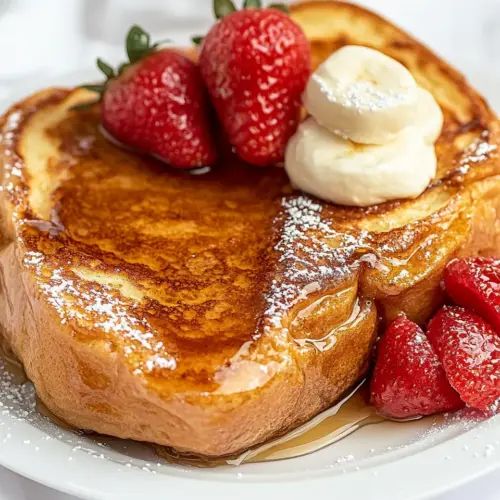
Brioche French Toast
Brioche French Toast offers a creamy, tender interior and a golden, slightly crisp exterior thanks to rich eggs and heavy cream. This easy breakfast or brunch recipe is perfect for a relaxed weekend or an indulgent weeknight treat. Serve with bright berries and pure maple syrup for a balanced, crave worthy plate you will want to make again.
Equipment
- Large Skillet
- Large Bowl
- Whisk
- Oven
- Wire Rack
Ingredients
- 5 large eggs Whisk together to provide structure and richness to the custard base, helping the coating set and create a custardy interior when cooked.
- 1/4 cup heavy cream may also use half & half Add to the egg mixture to enrich the custard, contributing creaminess and a tender texture to the soaked bread while preventing it from drying out.
- 1 tablespoon vanilla Infuse the custard with aromatic sweetness, enhancing overall flavor and complementing the dairy and eggs without overpowering other elements.
- 1 tablespoon pure maple syrup Sweeten and deepen flavor with a hint of maple, balancing the custard’s richness and providing a subtle complexity that pairs well with toppings.
- 1 teaspoon ground cinnamon Season the custard with warm, fragrant spice that adds depth and a comforting flavor profile, pairing exceptionally well with maple and berries.
- pinch salt Enhance overall flavor balance by bringing out sweetness and rounding edges; also helps to highlight other spices and ingredients.
- 8 slices Brioche bread cut into 1-inch thick slices Serve as the foundation for the dish; thick slices absorb the custard while maintaining a tender yet slightly firm interior once cooked.
- butter for cooking and serving Prevent sticking and add a golden, lightly crisp exterior during cooking, while extra for serving adds richness and indulgence to each bite.
- berries, pure maple syrup, whipped cream, and powdered sugar for serving. Garnish and finish the dish with bright acidity, extra sweetness, airy texture, and a dusting for visual appeal that elevates each serving.
Instructions
- Preheat a large skillet to medium heat.: You will notice a gentle sheen on the pan as it warms and a faint rising scent from the metal. This temperature helps the butter brown and the surface of the brioche caramelize without burning. If the pan is too cool, the toast will sit soggy and absorb excess custard, instead of forming a crisp crust, so allow the pan to fully come to temperature before adding fat.
- In a large bowl, whisk together the eggs, heavy cream, vanilla, maple syrup, cinnamon, and salt.: As you whisk, the mixture smooths into a glossy custard and releases the aromas of vanilla and cinnamon . The sound is a soft, steady whisking rhythm. This step builds the custard structure; under-mixing can leave streaks of yolk or uneven spice distribution, so whisk until cohesive but avoid overbeating which can introduce too much air.
- When the skillet is heated melt in a 1/2 tablespoon of butter.: The butter will foam and give off a nutty scent as the milk solids begin to brown slightly, signaling readiness. This sizzling is a clue that the skillet is primed to sear the custard-coated brioche . Watch closely, as butter can transition from browned to burnt quickly; lower the heat a touch if the butter darkens too fast.
- Dip the Brioche slices in the custard mixture and allow the excess to drip back into the bowl.: The surface of the bread should glisten, not be sodden; you should hear a slight drip as excess custard returns to the bowl. This method ensures the interior becomes custardy while the exterior crisps in the pan. Avoid long soaks which cause sogginess and collapsing of the loaf structure.
- Cook about 3 slices in the pan at a time for about 3 minutes per side or until golden brown.: You will see the edges firm and the surface turn a warm golden brown, and you may hear a gentle sizzle as moisture leaves the bread. Flip once the first side shows even color, and the second side often browns quicker. A common error is overcrowding the pan, which lowers the temperature and prevents proper browning, so give each slice breathing room.
- Keep cooked French toast in a 200-degree oven to stay warm while you cook the remaining slices.: The low oven keeps the toast warm and allows steam to escape slowly, preserving the crisp exterior. You will notice the scent of warm butter lingering in the oven as you finish. Avoid stacking slices directly on top of each other, which traps steam and softens the crust; use a wire rack when possible.
- Serve with butter, maple syrup, berries, and whipped cream.: The final presentation should balance texture and flavor, with glossy maple syrup pooling and bright berries cutting through richness. The sound is the soft sigh as syrup hits the plate, and the visual is a mosaic of color and shine. Resist over-topping, which can hide the custardy interior; allow each component to play its role.
Notes
- Use half and half to lighten the custard while keeping creaminess, which reduces richness slightly while preserving the custard’s cling to the brioche.
- Try a citrus twist by adding a teaspoon of finely grated orange zest to the custard for bright, aromatic notes that complement berries.
- Swap toppings by using a compote of warmed berries and a squeeze of lemon to add acidity and a sauce like quality to each bite.
- Use clarified butter for cooking to allow higher heat and deeper browning without the risk of burning the dairy solids.
- Toast under a broiler briefly for a minute to get extra surface crispness, watching constantly to avoid charring.
- Make ahead by preparing the custard and slices the night before, then cook fresh in the morning for a quick, impressive breakfast.