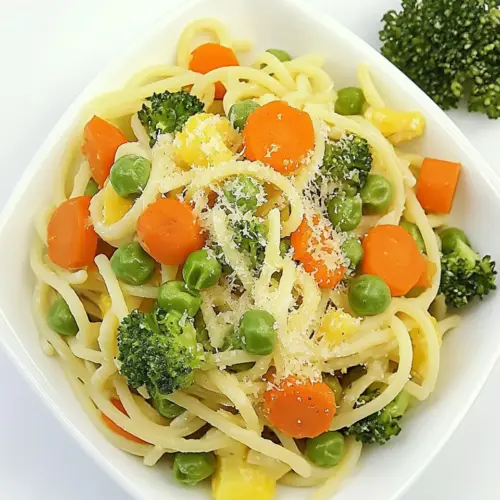
Bright Vegetable Pasta
Bright Vegetable Pasta delivers a creamy, citrus kissed, vegetable studded bowl that is perfect for an easy weeknight dinner. Tender mini pasta, sweet peas, and vibrant spinach come together with lemon and parmesan cheese for a light yet satisfying meal. Fast to make and pantry friendly, it is a colorful, approachable dish worth trying tonight.
Equipment
- Saucepan
- Sauté Pan
- Colander
Ingredients
- 2 cups mini pasta (such as wheels, penne, bowties or spirals) Cook until al dente to provide the pasta base and texture for the dish; mini shapes like wheels, penne, bowties, or spirals capture sauce and small vegetables, making every bite balanced. Combine with vegetables and cheese so the flavors meld evenly and the dish holds together well.
- 1 tablespoon vegetable or canola oil Heat briefly to coat pan and prevent sticking while providing a neutral medium for sautéing aromatics; vegetable or canola oil has a high smoke point and a mild flavor that won’t overpower the other components. Use sparingly to brown onion and garlic and carry flavors into the pasta.
- 2 garlic cloves, minced Mince finely to release pungent, aromatic oils that build foundational savory flavor; garlic adds depth and a subtle sweetness when sautéed. Add early in cooking for fragrance but watch closely to avoid burning, which can make it bitter.
- 1 small onion, chopped Chop small to create tender, flavorful bites that soften and sweeten as they cook; onion contributes a savory backbone and balances the bright, fresh notes from vegetables and lemon. Sauté until translucent to develop sweetness without losing texture.
- 1/2 cup grated carrots Grate finely to distribute natural sweetness and color evenly throughout the pasta; carrots add crunch when barely cooked and a pleasant contrast to softer elements. Add early enough to soften slightly while maintaining brightness and visual appeal.
- 1/2 cup finely chopped broccoli Chop finely to introduce a mild, slightly bitter green note and pleasant bite; broccoli florets or stems bring fiber and a complementary texture to the pasta. Briefly cook to keep the vibrant color and tender-crisp texture that complements the other vegetables.
- 1/2 cup frozen peas Add from frozen to provide bursts of sweetness and a pop of green color; peas cook quickly and require minimal prep while adding protein and texture. Stir in near the end of cooking to heat through without becoming mushy.
- 1/2 cup packed fresh baby spinach Tightly pack to add tender leafy greens, a mild earthy flavor, and extra nutrients; baby spinach wilts quickly and blends seamlessly into the pasta, brightening the dish. Fold in at the end so it just wilts, preserving its color and delicate texture.
- 2 –3 tablespoons lemon juice (about 1 small lemon) Squeeze fresh to add bright acidity and lift the entire dish; lemon juice cuts through richness and enhances the flavors of vegetables and cheese. Start with 2 tablespoons and adjust to taste for a balanced, refreshing finish.
- 1/4 cup grated parmesan cheese Grate finely to contribute salty, umami-rich savory notes and a creamy finish when melted into the pasta; parmesan adds depth and helps bind the ingredients together. Sprinkle at the end and toss so it warms and lightly melts, coating the pasta.
Instructions
- Cook the pasta according to package directions. Reserve 1 cup of the cooking liquid before draining.: The kitchen fills with the comforting scent of boiling starch as the pasta cooks, and listening for the subtle change in bubbling helps you gauge doneness. When it reaches the point where the center has a tiny firm core, it will finish cooking in the pan with the vegetables and sauce, so undercook by a touch if you prefer a firmer bite. Reserve a cup of that starchy cooking water, because its slightly thickened texture is what will bind the lemon and parmesan cheese to the pasta , creating a glossy coating. A common mistake is draining everything and tossing immediately, which leaves the dish dry. If the pasta seems too sticky while draining, give it a quick shake but do not rinse, rinsing washes away the starch you need for the sauce.
- While the pasta is cooking, heat the oil in a saute pan over medium heat. Add the onions and saute until soft, about 3 minutes. Add the garlic, carrots, broccoli, and peas and saute another 3-5 minutes. Add the spinach and cook for 1 minute more.: As the oil warms, it becomes a thin mirror in the pan that quickly carries heat and flavor, and the chopped onion will begin to release sweet, savory aromas as it softens. You will hear a gentle sizzle when the vegetables hit the pan, and that sound signals flavor development through gentle caramelization. Adding minced garlic after the onion prevents burning, and once the shredded carrots , chopped broccoli , and frozen peas join the party the mixture will steam slightly, softening while maintaining bite. When you toss in the packed fresh spinach , it will quickly wilt, collapsing into a vivid green softness. The key here is to avoid high heat that scorches the edges, and instead cook over medium so the vegetables become tender without losing color. A frequent misstep is overcooking the vegetables into mush, so stay attentive and sample a piece to check texture.
- Add the vegetables to the cooked pasta, toss with the lemon juice, parmesan cheese and reserved pasta water to combine thoroughly.: As you fold the warm vegetables into the drained pasta , you will notice steam rising and a burst of citrus aroma when the lemon juice hits the hot starch. Begin adding the reserved cooking water a little at a time, and watch the sauce transform from thin to silky, coating each curl and hollow of the pasta . The grated parmesan cheese will melt into this emulsion, yielding a creamy mouthfeel without any cream. Taste as you go to adjust the amount of lemon and water, because acidity and saltiness balance differently on every batch of cheese and pasta. If the mixture seems thin, let it sit off heat for a minute to thicken slightly; if it is too thick, add another splash of the reserved water. A typical mistake is dumping all the liquid at once, which can make the sauce watery instead of luxuriously glossy. Finish by giving a final toss to ensure even distribution of flavors, and serve while warm so the textures remain distinct and vibrant.
Notes
- Choose the right pasta shape Small shapes like wheels, penne, or bowties trap bits of vegetable and sauce, ensuring each forkful has variety and flavor.
- Keep pasta water The reserved cooking water binds the lemon and parmesan cheese into a silky emulsion, which is the difference between clumpy and cohesive.
- Dont overcook the vegetables Aim for tender crisp, and taste as you go to avoid losing color and texture from excessive cooking.
- Use fresh lemon Bottled juice lacks brightness, so squeezing a small lemon gives a lively acidity that lifts the whole dish.
- Grate cheese fresh Freshly grated parmesan cheese melts better and contributes a richer, fresher umami than pre grated varieties.