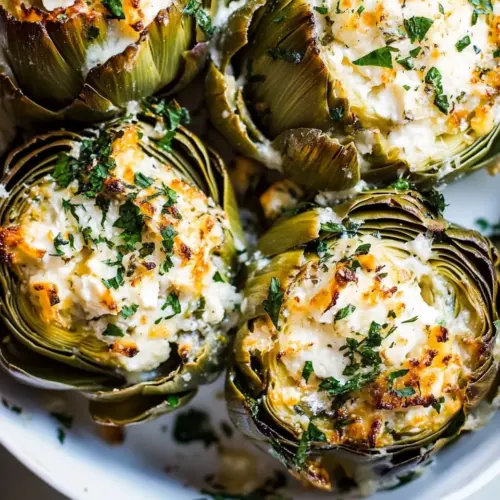
Brie Stuffed Artichokes
Brie Stuffed Artichokes are creamy, nutty, and irresistibly shareable. Tender artichokes filled with a silky blend of brie, heavy cream, and parmesan cheese, topped with crunchy pistachios and toasted sourdough bread crumbs for texture. Ideal as an easy weeknight appetizer or a showstopping starter for guests, this recipe balances rich flavors and crisp topping for a memorable bite.
Equipment
- Pot
- Colander
- Small Saucepan
- Skillet
- Baking Sheet
- Mixing Bowl
Ingredients
- 3 -4 medium artichokes Trimmed and steamed to tenderize, used as the main vessel for stuffing and presenting the dish.
- 1/3 cup heavy cream Rich and silky, used to create a creamy binder that helps meld the cheese and stuffing components together.
- 8 ounces brie diced (you can remove the rind or leave it on) Soft and buttery, diced to provide a luxurious, melty filling; rind optional depending on desired texture and flavor.
- 1/2 cup grated parmesan cheese Sharp and nutty, grated to add savory depth and a slightly granular texture that enhances umami.
- 1 egg yolk Thickened and emulsifying, used to bind the cheeses and breadcrumbs while adding a silkier mouthfeel to the filling.
- pepper to taste Freshly cracked and adjusted to taste, used to balance richness and accentuate the overall seasoning profile.
- honey, for serving Sweet and floral, drizzled at serving to provide a contrasting finish that brightens the savory, creamy flavors.
- 2 slices thick cut sourdough bread torn into pieces Toasted and torn for texture, used to create hearty, crisp morsels within the stuffing or served alongside for dipping.
- 1/2 cup roasted pistachios finely chopped Toasted and finely chopped, used to introduce a crunchy, earthy element and a subtle nutty flavor to the filling.
- 2 tablespoons butter softened Softened and creamed, used to add richness and help the stuffing adhere while contributing buttery flavor.
- 1 teaspoon dried oregano Aromatic and slightly bitter when dried, used to impart Mediterranean herb notes and enhance overall savory flavor.
- salt + pepper to taste Balanced seasoning added to taste, used to elevate and harmonize the flavors while ensuring the filling and artichokes are well seasoned.
Instructions
- Bring a pot of salted water to a boil. Cut the stems from the artichokes to leave a neat, flat base. Cut off and discard top one-third of artichoke. Place artichokes in boiling water and boil for 15-20 minutes, then drain upside down in colander.: The water should be at a lively boil and smell faintly of salt, which seasons the artichokes from the inside as they cook; you will hear active bubbling and see steam rise, and the leaves will begin to soften when pierced with a paring knife, this initial blanching prevents undercooked centers and preserves the vegetable's bright flavor, avoid boiling too hard which can bruise the leaves, and a common mistake is underseasoning the water which makes the artichokes bland.
- In a small sauce pan or skillet set over low heat, heat cream and brie, stirring occasionally, until smooth and creamy. Turn off heat and, while still stirring, add the egg yolk and the Parmesan cheese. Season with pepper.: When you trim the stems the artichokes should sit upright on the cutting board, their bases smooth and stable, the fresh cut exposes a pale, moist interior that will steam evenly during boiling, this technique helps the artichokes stand during baking so the filling pools in the center, avoid cutting too close to the heart which can damage the core, a usual slip is leaving uneven stems so the artichokes tip while baking.
- Preheat the oven to 400 degrees F.: Removing the top third reveals the tighter inner leaves and signals the artichoke is ready to be cleaned, you will feel slightly more pliable leaves and see a cleaner silhouette, this makes accessing the choke easier later, be careful not to remove too much which reduces the edible portion, many people overtrim and end up with smaller serving sizes.
- If desired, you can cut the artichokes in half or leave them whole. I think it's easier to halve them, but either way works!: After boiling, the leaves will pull away with gentle resistance and the base will pierce easily with a knife, you will notice a softened, fragrant steam as you lift them from the pot, draining upside down removes excess water so the filling does not get soggy, avoid overcooking which yields mushy leaves, the frequent error here is boiling too long thinking it speeds up later steps.
- Place the artichokes on a baking sheet. Press the leaves gently back so that the artichoke opens to reveal the inner choke and prickly purple leaves. Pull out the prickly white/purple leaves and gently scrape out the choke with a spoon. Gently pull the leaves outward from the center until the leaves open slightly. If you halve the artichokes, you just need to remove the choke and purple prickly leaves in the middle.: As the heavy cream warms and the diced brie melts you will see a glossy emulsion form with gentle wisps of steam and hear the soft simmer, stirring keeps the mixture homogeneous and prevents scorching at the bottom, this gentle heat is essential to maintain a silky texture, a common pitfall is using high heat which can make the mixture grainy or separate.
- Fill artichokes with cheese sauce. Sauce should cover tops and fill into artichoke leaves.: With the pan off the heat the residual warmth will temper the egg yolk so it blends without scrambling, you will feel the sauce thicken slightly and notice a richer aroma as the parmesan cheese melts into it, this step creates a cohesive filling that sets gently while baking, do not add the yolk to a very hot pan or it will curdle, which is an easy mistake to make.
- In a medium bowl, mix together the bread crumbs, pistachios, butter, oregano and a pinch of salt until well combined. Sprinkle over tops of artichokes.: Freshly ground pepper added now releases pungent aromatics that lift the filling; as you stir you will catch the peppery scent and the flavor will cut through the richness, this finishing seasoning is essential for balance, avoid over salting early because the parmesan cheese already contributes sodium, many cooks skip tasting at this stage and end up over seasoned later.
- Bake the artichokes for 10-15 minutes or until the cheese is bubbling and the breadcrumbs are golden. Serve warm.: The oven should reach an even heat of 400 degrees F so the topping toasts and the filling bubbles, you will hear the oven cycle and feel even radiant warmth when you open the door, this temperature delivers a crisp topping without drying the artichoke, avoid placing the pan too low which can burn the crumbs, a common oversight is not allowing the oven to fully preheat.
- If desired you can cut the artichokes in half or leave them whole: Halving exposes the heart and makes removing the choke straightforward, you will see the pale inner leaves and the fibrous choke which should be removed, leaving them whole gives a dramatic presentation and requires a bit more filling, decide based on serving style but be mindful that halved artichokes bake slightly faster, many people leave the choke in which results in an unpleasant texture.
- Place the artichokes on a baking sheet press the leaves gently back so that the artichoke opens to reveal the inner choke and prickly purple leaves: As you press the leaves they will fan open and you will notice the center ready for cleaning, pulling back exposes the heart and gives space for the sauce, this tactile step helps the filling penetrate the leaves, avoid ripping leaves aggressively which can tear them, a typical error is not opening the artichoke enough so the filling cannot settle into the crevices.
- Pull out the prickly white purple leaves and gently scrape out the choke with a spoon: Removing the choke reveals the tender heart, you should feel a smooth, almost velvety base and see a clean cavity, scraping carefully prevents leaving fibrous strands that are unpleasant to eat, this cleaning is key to a refined mouthfeel, rushing here often leaves bits of choke that are stringy when eaten.
- Gently pull the leaves outward from the center until the leaves open slightly: As you ease the leaves outward the artichoke will fan and create pockets for the filling, visually the vegetable takes on a floral shape which helps presentation, this gentle manipulation allows sauce to nestle between leaves, a mistake is forcing leaves too far which can break them off and reduce the edible portion.
- Fill artichokes with cheese sauce: The warm sauce should pool in the center and slip down between the leaves producing a glossy sheen and releasing a savory aroma, the filling clings to the leaf edges creating delicious bites, filling thoroughly ensures every leaf tastes decadent, avoid cold filling which will not spread and may cool the artichoke too much.
- Sauce should cover tops and fill into artichoke leaves: When the sauce covers the top you will see a creamy blanket that will brown slightly at the edges as it bakes, this coverage guarantees molten pockets when you pull the leaves, ensure you scoop sauce into deep crevices for maximum payoff, missing the deeper cavities is a frequent oversight that leaves inner leaves dry.
- In a medium bowl mix together the bread crumbs pistachios butter oregano and a pinch of salt until well combined: The crumb mixture should feel evenly moistened by the softened butter and smell nutty from the pistachios and fragrant from the oregano , this topping adds a toasted crunch after baking, combine until uniform so it browns consistently, a common mistake is adding too much butter which makes soggy crumbs rather than crisp ones.
- Sprinkle over tops of artichokes: Scatter the crumb pistachio mix across the filled centers so it forms a golden crust, you will see the topping adhere to the sauce and start to caramelize as it bakes, an even layer ensures uniform browning, avoid piling crumbs too thickly which can insulate the filling and prevent bubbling.
- Bake the artichokes for 10 to 15 minutes or until the cheese is bubbling and the breadcrumbs are golden: During baking you will hear a quiet bubbling and smell toasty notes as the crumbs brown and the filling simmers, visually the edges will darken to a warm golden color and the sauce will shimmer, this quick oven finish melds flavors and creates contrast, the usual error is underbaking so the topping stays pale or overbaking which dries the filling.
- Serve warm: Present the Brie Stuffed Artichokes right away so the sauce is molten and the crumbs retain their crisp texture, the aroma will be at its peak and the first leaf dipped will deliver the intended contrast, letting them sit too long cools the filling and softens the topping, a common lapse is plating too early and losing that fresh baked appeal.
Notes
- Cheese handling Keep the heat low when melting the brie so it becomes glossy and smooth rather than grainy, gently stirring helps the heavy cream and parmesan cheese integrate without separating.
- Breadcrumb texture Use torn sourdough bread and pulse briefly to keep pieces uneven, this yields a more interesting crunch after they toast with butter.
- Nuts If you prefer a different nut texture swap the pistachios for a similar volume of finely chopped pecans or walnuts keeping the toasting time similar so they do not burn.
- Halving artichokes Halve the artichokes for easier cleaning and faster baking, just keep an eye on the oven as exposed centers brown faster than whole ones.
- Seasoning Taste the filling for salt and pepper before stuffing since the parmesan cheese will contribute saltiness and may reduce the need for extra seasoning.
- Make ahead You can prepare the filling and crumb topping ahead, store separately in the fridge, then assemble and bake when guests arrive to preserve texture.