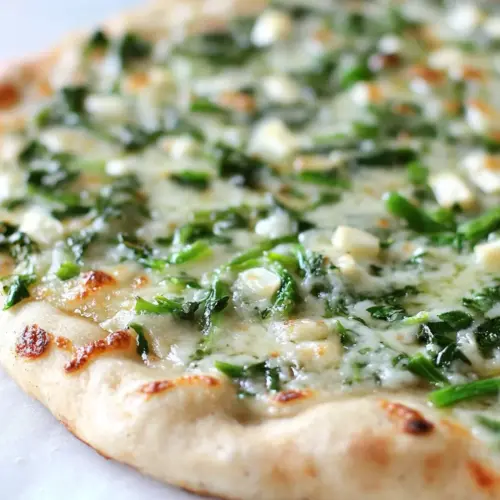
Brie and Garlic Scape Pizza
Brie and Garlic Scape Pizza combines creamy, melting brie with bright, snappy garlic scapes on a chewy, lightly crisp crust. This easy, seasonal pizza is perfect for an easy weeknight dinner or a relaxed summer gathering, delivering a balance of creamy and fresh flavors that make it worth trying tonight.
Equipment
- Electric Mixer
- Dough Hook
- Baking stone
- Peel or sheet pan
- Bench scraper
Ingredients
- Crust: 2 1/4 cups unbleached bread flour 3/4 teaspoon salt 1/2 teaspoon instant yeast 2 tablespoons olive oil 7/8 cup (7 ounces) water, ice cold (40°F) Semolina flour OR cornmeal for dusting Provide structure and chewiness to the pizza by combining unbleached bread flour with salt and instant yeast; olive oil and cold water help hydrate and tenderize the dough while semolina flour or cornmeal prevent sticking during baking.
- Topping: 8 oz. soft brie cheese 8-10 garlic scapes, thinly sliced on the bias (about 2 cups) olive oil sea salt freshly cracked black pepper Contribute creamy, savory, and aromatic topping elements with soft brie offering a rich, meltable base and thinly sliced garlic scapes imparting a bright, garlicky-onion flavor; a drizzle of olive oil plus sea salt and freshly cracked black pepper finish and balance the flavors.
Instructions
- Stir together the flour, salt, and instant yeast in the bowl of an electric mixer. Add the oil and the cold water and stir on low speed until the flour is all absorbed. Switch to the dough hook and mix on medium speed for 5 to 7 minutes, or as long as it takes to create a smooth, sticky dough. The dough should clear the sides of the bowl but stick to the bottom of the bowl. The finished dough will be springy, elastic, and sticky, not just tacky.: You will immediately notice the dry mixture has a faint, nutty aroma from the bread flour , and mixing them first ensures even distribution of the salt and instant yeast . As the dry ingredients break apart and mingle, you are setting the stage for uniform fermentation. Use the paddle or whisk to combine briefly so there are no pockets of yeast or salt that can create uneven rise. A common error is adding salt directly onto yeast, which can slow its action; mixing dry ingredients first prevents that. When finished, the bowl should look homogenous and light in texture.
- Transfer the dough to floured work surface. Prepare a baking dish by lining it with lightly oiled parchment paper. Cut the dough into 4 equal pieces. Sprinkle flour over the dough. Gently round each piece into a ball. If the dough sticks to your hands, lightly dip your hands in flour. Transfer the dough balls to the prepared dish, mist the dough generously with spray oil and slip the pan into a food-grade plastic bag or cover with plastic wrap.: At this stage the mixture takes on a shaggy, slightly wet look as the olive oil and ice cold water are drawn into the flour. The cold temperature of the water slows the yeast and helps maintain a long ferment window, which deepens flavor. Listen for the subtle change in sound as the mixer moves from dry scraping to soft clumps forming. If the dough seems too dry, add a teaspoon of water at a time; if too wet, a sprinkle of flour on your hands will help. Avoid overworking here, because you want the gluten to develop gently in the next step.
- Refrigerate overnight (or up to 3 days). At this point the dough can also be frozen; simply wrap each ball individually in plastic wrap and place inside a zippered freezer bag. Transfer to the refrigerator the day before you plan on baking them.: As you transition to the dough hook you will hear a change to a more elastic, cohesive sound. The dough should clear the sides of the bowl but stick to the bottom, a sign of proper hydration. Expect a springy, elastic, and sticky texture when you pull a bit between your fingers, and you may see faint strands forming when you stretch the dough. This gluten development is what gives the crust chew and structure. If the dough is not coming together after the time, give it another minute, but do not add much extra flour, which will make the final crust heavy. A common problem is overmixing, which can tighten the dough; stop when the dough shows elasticity and softness.
- Remove dough from refrigerator and rest at room temperature for 2 hours. On a lightly floured work surface, gently press the dough into flat disks about 1/2 inch thick and 5 inches in diameter.: The moment you set the dough down you will sense its coolness and tacky surface. Flour the surface lightly to prevent sticking, then prepare a baking dish lined with lightly oiled parchment. Cut the dough into 4 equal pieces using a bench scraper; you will hear a soft, muffled sound as you divide the dough. Gently round each piece into a ball, creating surface tension by tucking the edges underneath. This rounding helps with uniform proofing. If the dough sticks to your hands, a light dust of flour will help, but avoid smothering the dough with extra flour which can dry the surface. The balls should sit comfortably in the dish before the rest period.
- At least 45 minutes before making the pizza, place a baking stone either on the floor of the oven (for gas ovens), or on a rack in the lower third of the oven. Heat the oven as hot as possible, 500 to 550 degrees F. If you do not have a baking stone, you can use the back of a sheet pan, but do not preheat the pan.: As the dough chills the yeast works slowly, creating flavor without aggressive rise. You will notice the dough relax and flatten slightly as gases form. Covering the dough traps humidity, preventing a hard skin. Refrigeration for up to three days deepens complexity, and freezing is an option if you want longer storage. A typical mistake is leaving dough uncovered, which can form a tough, dry skin; always cover snugly before chilling.
- Generously dust a peel or the back of a sheet pan with semolina flour or cornmeal. Make the pizzas one at a time. Dip your hands, including the backs of your hands and knuckles, in flour and lift a piece of dough by getting under it with a pastry scraper. Very gently lay the dough across your fists and carefully stretch it by bouncing the dough in a circular motion on your hands, carefully giving it a little stretch with each bounce, and continue to stretch/toss until the dough is approximately 7" across and uniformly thin. If you have trouble tossing the dough, or if the dough keeps springing back, let it rest for 5 to 20 minutes so the gluten can relax, and try again.: Bringing the dough back to room temperature allows the gluten and yeast to awaken. You will feel the dough warm and slightly more pliable as it rests. Press each piece into a disk about 1/2 inch thick and 5 inches in diameter; this pre shaping loosens the dough and makes final stretching easier. If you skip the rest, the dough may snap back when you try to stretch it, because the gluten will still be tight. A mindful rest helps achieve a thinner, more even crust.
- Lay the stretched dough on the peel or pan, making sure there is enough semolina flour or cornmeal to allow it to slide. Lightly brush with olive oil, and poke it a few times with a fork so it doesn’t bubble.: At least 45 minutes before baking, place a baking stone on the oven floor for gas ovens or on a lower rack for electric ovens, and heat to as hot as possible, 500 to 550 degrees F. The stone absorbs intense heat which quickly crisp the bottom of the crust, producing that desirable leopard spotting and a snappy bite. If you are using a sheet pan instead, do not preheat it; the dough will cook differently and needs gentler heat from the air. A common pitfall is not preheating long enough, which yields a limp base rather than a crisp one.
- Spread 2 oz of brie cheese on each crust. You can also use slices if your brie is too firm to spread. Sprinkle evenly with 1/4 of garlic scapes. Season with sea salt and pepper.: The semolina or cornmeal creates a dry barrier so the dough will slide effortlessly onto the stone. As you lift and stretch the dough you will feel tension release and a soft popping sound when tiny air pockets give way. If the dough resists and springs back keep it resting for 5 to 20 minutes to relax the gluten. This patience prevents tearing and ensures an even, thin crust. Avoid pressing out all the air, you want bubbles to form while baking for texture.
- Gently slide the topped pizza onto the stone (or bake directly on the sheet pan) and close the door. Bake (two at a time) until the bottoms are lightly golden and the cheese is bubbly and just barely browned. Remove from the oven and transfer to a cutting board. Repeat with remaining pizzas. Let rest for 3 to 5 minutes before slicing and serving.: The brushing of olive oil gives a glossy base that helps the brie slide and melt without soaking the dough. Poking with a fork keeps large bubbles from forming and allows steam to escape, which helps the pizza remain flat and evenly baked. Visually you will see a faint sheen from the oil and a few fork marks that tell you the base is primed. A typical mistake is over poking and deflating too many pockets; a few pricks are enough.
- Spread 2 oz of brie cheese on each crust and sprinkle with 1/4 of garlic scapes, season with sea salt and pepper: When you place the brie it will begin to soften and glisten from the oven heat. Use a spoon to dollop soft cheese or thin slices if it is firmer. Scatter the thinly sliced garlic scapes so they nestle into the cheese without overcrowding. Add a light sprinkle of sea salt and a few twists of freshly cracked black pepper to balance the richness. Overloading with cheese or scapes can prevent proper bubbling and lead to a greasy top, so keep quantities as directed.
- Bake until the bottoms are lightly golden and the cheese is bubbly and just barely browned: Sliding the pizza onto the hot stone you will hear a satisfying sizzle. Watch for the bottom to develop golden brown spots and for the brie to bubble into glossy pools with tiny browned edges. The aroma should be intoxicatingly garlicky and toasty. Remove when the crust is crisp and the cheese shows gentle browning. A common error is leaving the pizza too long, which can dry out the delicate brie .
- Remove from oven, transfer to a cutting board, let rest for 3 to 5 minutes before slicing and serving: Resting gives the melted brie time to settle so slices hold together cleanly. You will notice the cheese thicken slightly and the crust cool just enough to handle. Cutting too soon causes the cheese to run and makes messy slices. Let the pizza rest briefly, then slice and enjoy the balanced textures and scents that make this recipe so memorable.
Notes
- Use thin slices of brie: If your brie is firmer, slice it thinly so it melts evenly into glossy puddles rather than clumping into large chunks.
- Adjust garlic scape quantity: For a milder garlic note use fewer garlic scapes, for a greener punch add an extra handful, but avoid overcrowding the pizza surface.
- Dust with semolina or cornmeal: Both work well under the dough, semolina gives a slightly grittier crunch while cornmeal offers a familiar, toasty note.
- Shape as a single large pizza: Instead of individual rounds, you can stretch into one larger pie; baking time may vary so watch for browning and bubbling.
- Freeze dough balls for later: Freeze individual dough portions wrapped tightly, then thaw in the fridge the day before you plan to bake for convenience without losing flavor.