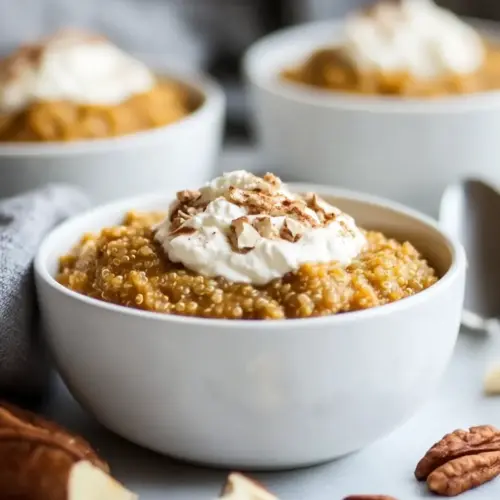
Breakfast Quinoa Recipe with Pumpkin and Whipped Ricotta
Breakfast Quinoa Recipe with Pumpkin and Whipped Ricotta is a creamy, spiced morning bowl that balances nutty quinoa with silky almond milk and airy whipped ricotta cheese. Warm pumpkin and cozy spices make it an easy fall breakfast or brunch choice, perfect for leisurely weekends or a nourishing weekday pick me up.
Equipment
- Large Pot
- Small food processor
- Strainer
Ingredients
- 1/4 cup ricotta cheese reduced-fat Provide creamy body and mild tang to the whipped ricotta topping, lending a light texture while contributing protein and moisture to balance sweetness in the dish.
- 1 tablespoon cream cheese reduced-fat Add a silky, tangy richness to the whipped ricotta, helping it achieve a smoother, spreadable consistency while slightly enhancing mouthfeel.
- 1/8 teaspoon vanilla extract Contribute a subtle floral aroma and sweet note to the whipped ricotta, tying together dairy and pumpkin flavors without overpowering them.
- 1 teaspoon maple syrup Introduce warm, natural sweetness into both the ricotta topping and quinoa, helping to balance spices and enhance overall flavor depth.
- 1 tablespoon Truvia or granulated sweetener of choice Sweeten without sugar granularity, allowing for sugar-free or reduced-sugar sweetness in the whipped ricotta and quinoa pudding while maintaining texture.
- 1 cup uncooked quinoa Provide a fluffy, gluten-free grain base that absorbs flavors, cooks to a tender yet slightly chewy texture, and supplies protein and fiber to the breakfast.
- 3 cups unsweetened vanilla almond milk Supply creamy liquid and gentle vanilla undertones while keeping the recipe dairy-free friendly if substituted, aiding quinoa cooking and porridge creaminess.
- 2 cinnamon sticks Infuse gentle, woody cinnamon aroma during cooking to simmer into the quinoa and milk, adding warm spice complexity that blends with pumpkin pie spice.
- 8 whole cloves Add concentrated, warm, clove spice flavor when simmered with the quinoa and milk, deepening the overall spiced profile without overpowering subtle notes.
- Pinch of salt Enhance overall flavor balance by accentuating the sweetness and spices in the quinoa while subtly elevating savory and sweet contrasts.
- 2 teaspoons pumpkin pie spice Deliver the classic pumpkin spice blend that brings warm, aromatic notes of cinnamon, nutmeg, ginger, and clove, harmonizing with pumpkin and sweeteners.
- 3/4 cup canned pure pumpkin not pie filling Provide rich pumpkin flavor and creamy texture without added sugars, contributing color, moisture, and vitamin content to the breakfast quinoa.
- 2 tablespoons maple syrup Layer additional pure maple sweetness and depth to the quinoa and ricotta, reinforcing warm caramel notes and enhancing overall flavor complexity.
- Ground cinnamon for garnish Offer a finishing aromatic dusting that visually complements the dish while reinforcing warm spice notes and adding a hint of sweetness.
- Pecans for garnish Contribute crunchy texture and nutty flavor as an optional topping, offering contrast to the creamy quinoa and ricotta while adding healthy fats.
Instructions
- In a small food processor, combine all whipped ricotta ingredients and blend until smooth and well combined. Transfer to a small bowl and place in the refrigerator to set for at least 2 hours.: As the machine hums you will notice the mixture change from slightly lumpy to cloudlike and glossy, a clear signal that the dairy components have emulsified. This texture matters because the chilled whipped ricotta will gently melt atop the warm quinoa without turning runny, offering a velvety contrast. If the mixture feels too thin, briefly chill it longer so it firms up; if you overblend, the texture can become grainy, so stop when it looks smooth.
- Soak the quinoa in a large pot of water, rubbing the grains together with your fingers until the water appears cloudy. Strain the quinoa and set aside.: The soaking and rubbing release any residual bitterness and loosen debris, leaving the grains bright and clean. After straining, the quinoa should sparkle rather than look dull, which is the visual cue that you rinsed properly. A common error is skimping on rinsing, which can leave a slightly soapy taste, so spend an extra moment if the water still looks cloudy.
- Combine 2 cups of the unsweetened almond milk, cinnamon sticks, cloves, and a pinch of salt in a large pot and bring to a boil.: As the liquid warms you will smell the spices bloom, filling the kitchen with woody and sweet notes. Watching small bubbles form and steam rise tells you the infusion is happening, which flavors the quinoa from the inside out. Avoid leaving it unattended at a vigorous boil, because milk can scald on the bottom, imparting an unpleasant toasted note.
- Stir in the quinoa, cover, and turn the heat down to low. Boil until most of the milk is absorbed, about 15 minutes.: Once you lower the heat, the pot should give a gentle, steady simmer and occasional soft bubbling, with the aroma thickening in the air. The grain will swell and look translucent at the edges while the center remains slightly opaque, which is the visual cue that it is nearly done. Resist lifting the lid frequently, as that lets heat escape and increases cooking time; if the texture seems too firm at 15 minutes, let it rest off the heat for a few minutes.
- Once cooked, stir in the pumpkin pie spice, canned pumpkin, and maple syrup.: Immediately the pot will release warm, spiced steam and the pumpkin will melt into the grain, turning it a rich, autumnal color. Stirring here is about integration, so use a gentle fold to keep the texture creamy rather than pasty. A mistake people make is adding too much pumpkin, which can overwhelm the consistency, so maintain the balance between grain and puree.
- Divide the mixture between bowls and divide the remaining cup of unsweetened almond milk over top. Then, dollop on the whipped ricotta.: Pouring the extra almond milk adds silkiness and gives each bowl a milky swirl, while the chilled whipped ricotta provides contrast when it meets warmth, creating a delightful soft melting effect. Spoon a generous cloud onto each portion, and watch the textures marry. If your whipped ricotta seems too loose, return it to the fridge briefly before plating.
- Sprinkle with ground cinnamon and garnish with pecans.: The final aroma lift from the ground cinnamon and the satisfying crunch of toasted pecans complete the experience. The contrast of silky porridge and crunchy nuts makes each bite layered and interesting. Be careful not to add too many nuts for those who prefer a gentler crunch, and always taste the bowl and adjust a final sprinkle of spice if needed.
Notes
- Adjust sweetness to taste, if you prefer a less sweet breakfast, reduce the added maple syrup by half and rely on the vanilla almond milk for subtle sweetness, tasting as you go to keep balance.
- Make it more protein forward, stir in a spoonful of Greek style or strained dairy if you want extra protein, but be mindful this changes the whipped topping profile because the recipe is built around reduced fat ricotta cheese.
- Prep components ahead, whip the ricotta up to two days in advance and keep chilled, which saves morning time and actually deepens the chilled dairy flavor.
- Control spice intensity, if your pumpkin pie spice is very bold, start with half the amount and add more after tasting to avoid overpowering the delicate quinoa base.
- Swap nut garnish consistency, if you do not have pecans, try a lighter sprinkle of seeds for texture but keep the same toast time to achieve that warm, nutty aroma.