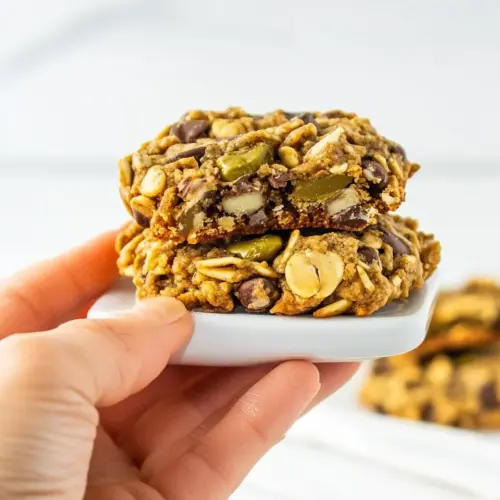
Breakfast Cookies
Breakfast Cookies combine chewy old-fashioned rolled oats, ripe bananas, creamy almond butter, and bursts of dark chocolate chips for an easy, wholesome morning bite. These portable treats are slightly sweet, satisfyingly textured, and perfect for busy weekdays or casual brunches, making them an ideal easy grab and go option you will reach for again and again.
Equipment
- Mixing Bowl
- Cookie Scoop
- Baking Sheet
- Parchment Paper
- Wire Rack
Ingredients
- 1/2 cup mashed bananas (from 2 ripe bananas) Provide moisture and natural sweetness while binding the dough; mashed bananas add a soft texture and help reduce added fats. Use ripe bananas for stronger flavor and easier mashability, which enhances the cookie's chewiness and aroma.
- 3/4 cup almond butter Contribute rich, nutty fat and protein to create a tender, satisfying cookie; almond butter adds depth of flavor and helps hold ingredients together. Choose smooth almond butter for easier mixing and a creamier mouthfeel throughout the batch.
- 1/3 cup honey Add concentrated sweetness and help with browning during baking; honey also contributes moisture and a slightly sticky texture that aids binding. Use room-temperature honey to mix evenly and maintain the cookies' soft interior.
- 1 teaspoon vanilla extract Impart aromatic warmth and enhance the overall sweetness profile with a subtle floral note; vanilla extract balances flavors and rounds out the banana and almond butter. Use pure vanilla extract for a more complex, natural flavor than imitation options.
- 2 1/2 cups old-fashioned rolled oats Provide structure, chewiness, and hearty texture as the primary bulk of the cookies; rolled oats also contribute fiber and nutty flavor. Opt for old-fashioned oats to preserve a chewy bite rather than quick oats, which can make the cookies denser.
- 1 teaspoon cinnamon Introduce warm, fragrant spice to complement the bananas and chocolate, enhancing complexity without overpowering. Use ground cinnamon sparingly to balance sweetness and highlight the baked aroma.
- 1/2 teaspoon baking powder Lightly leaven the cookies to produce a gentle lift and slightly softer crumb; baking powder reacts with moisture and heat for subtle rise. Measure carefully, as too much can create an off-taste or excessive puffing.
- 1/2 teaspoon salt Enhance overall flavor by balancing sweetness and amplifying other tastes while stabilizing dough; salt also strengthens gluten-free flavor profiles. Use fine salt for even distribution to prevent concentrated salty spots.
- 1/2 cup golden raisins Provide bursts of chewy, caramel-like sweetness and add textural contrast; golden raisins contribute natural sugar and a pleasant chew throughout. Consider plumping raisins in warm water briefly if they seem dry to ensure tender bites.
- 1/2 cup dark chocolate chips Deliver pockets of rich, bittersweet flavor and melty texture when warmed, balancing the cookies' sweetness; dark chocolate chips also add a decadent finish. Use quality chips with a higher cocoa percentage for a less cloying flavor.
- 1/4 cup pepitas (shelled pumpkin seeds) Offer a crunchy, nutty element and mild savory note while boosting nutritional value with healthy fats and minerals. Use hulled pepitas for a tender crunch that complements the oats and chocolate without overwhelming texture.
- 2 tablespoons flax seeds Provide subtle nuttiness, a pleasant crunch, and extra fiber with plant-based omega-3s; flax seeds also help absorb moisture and bind ingredients. Consider lightly grinding flax seeds to maximize nutrient absorption and mixing consistency.
Instructions
- Preheat oven to 350°F. Line two baking sheets with parchment paper or silicone baking mats. Set aside.: When you step into the kitchen and the oven begins to warm, you will notice a faint electrical hum followed by a gentle wave of heat as the cavity climbs toward 350°F . That warm air sets the stage for even browning and predictable bake times. Preheating is vital, because placing cookies into a cold oven can lead to extended bake time and uneven texture, often making them dry. A common mistake is to skip this, which results in inconsistent outcomes, so give your oven the full time to reach temperature before you slide the trays in.
- In a large mixing bowl, stir the mashed bananas, almond butter, honey, and vanilla extract until smooth and all the ingredients are fully combined.: As you stir, the bowl will release a warm, fruity scent from the mashed bananas mingling with the nutty perfume of almond butter and the floral notes of honey . Aim for a glossy, uniform emulsion where no streaks of oil or lumps of banana remain. This smooth base ensures each cookie bakes with consistent moisture. If you leave lumps or unmixed pockets, those areas can bake tougher or fall apart later, so take the time to blend thoroughly for the best mouthfeel.
- Add the old-fashioned rolled oats, cinnamon, baking powder, and salt to the bowl. Stir to fully combine the breakfast cookie mixture.: When the dry old-fashioned rolled oats meet the wet mixture, you will feel the mixture thicken and hear a soft scraping as the spoon moves through. The aroma will shift toward warm, toasty oats and spice from the cinnamon . Folding the dry into wet allows the oats to hydrate evenly, which determines the cookie's chew. Overmixing here can make the oats gummy, while undermixing leaves dry pockets, so stir until the mixture looks uniformly hydrated.
- Gently fold in the golden raisins, dark chocolate chips, pepitas, and flax seeds until all the add-ins are evenly distributed throughout the breakfast cookie mixture.: As you fold, pockets of color will speckle the dough and textures will contrast between soft and crunchy elements. The golden raisins will tuck into the matrix, and the dark chocolate chips will peek through in little dark islands. Even distribution ensures every cookie has a balanced bite; otherwise some cookies might be all seeds and others all chocolate. A common pitfall is vigorous stirring that crushes the mix ins, so fold gently until just combined.
- Using a 1/4-cup cookie scoop, scoop out level portions of the breakfast cookie mixture and place them onto the prepared baking sheets. These are large cookies, so you will need to place 7-8 cookies per baking sheet evenly spaced apart.: When you scoop, you will feel the dough hold its shape, slightly tacky but firm. Place each mound with equal spacing so hot air circulates and edges brown evenly. The size matters because these are intentionally large, and overcrowding leads to uneven heat exposure and inconsistent centers. If you scoop unevenly, some cookies will overbake while others remain underdone, so aim for uniformity.
- Using your hand, gently flatten the domed top of each cookie so that they bake up with a flatter top. You want your breakfast cookies to be about 2 inches wide by approximately 3/4 inch tall. These cookies will not spread as they are baked, so the shape of the raw cookie will be the same as the baked one.: Pressing the domes to the target size gives you a predictable final shape, and you will notice the dough becomes smoother and the edges neater. Because these cookies do not spread, shaping determines the final profile. If you leave them too tall, the centers may remain undercooked. A common misstep is overflattening, which yields a dry edge, so aim for gentle pressure until you reach the intended dimensions.
- Bake the breakfast cookies for 14-16 minutes or until lightly golden and the center is set.: As the cookies bake, you will smell the banana and cinnamon deepen and the edges will take on a light golden hue. Listen for a faint settling sound when you jiggle the sheet, and observe the centers; they should look set and not wet. The 14 to 16 minutes window gives you flexibility for your oven's quirks. Overbaking tends to dry these cookies, so remove them when the centers feel slightly firm to touch and the edges are modestly golden.
- Allow the cookies to cool on the baking sheets for 5 minutes before transferring them to a wire rack. Once fully cooled, transfer them to a serving platter or storage container.: The cookies will firm as they cool, making them easier to lift without falling apart. You will notice the aroma mellow and the texture reach that ideal chew after resting. Letting them cool prevents breakage and helps the flavors settle. A frequent error is moving them too soon, which causes them to crumble; wait the brief cooling period for best results.
Notes
- Choose ripe bananas: Use bananas with brown speckles for the best natural sweetness and moisture, which helps the cookies bind without extra liquid.
- Stir until smooth: Make sure the mashed bananas, almond butter, and honey form a glossy, even mixture to avoid dry pockets in the dough.
- Use old-fashioned oats: These provide the ideal chew and structure; instant oats will create a softer, less textured cookie.
- Measure add ins thoughtfully: Even distribution of dark chocolate chips and pepitas ensures balanced flavor in every cookie, so fold gently but thoroughly.
- Watch the bake time closely: Remove cookies when centers are set and edges are lightly golden to keep them moist and chewy, they will firm as they cool.
- Cool before storing: Allow cookies to reach room temperature on a rack to avoid trapped steam that makes them soggy in storage containers.