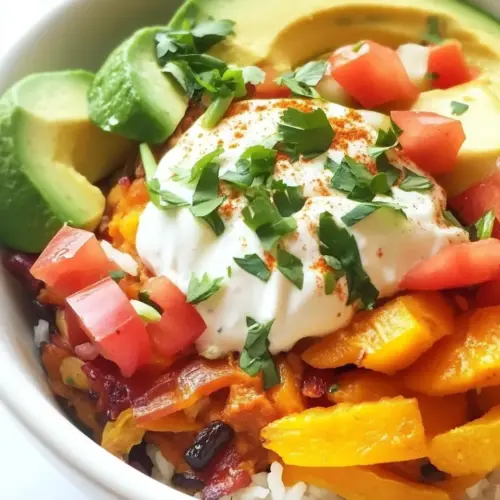
Breakfast Burrito Bowl with Spiced Butternut Squash
Breakfast Burrito Bowl with Spiced Butternut Squash is a warm, slightly sweet and savory bowl featuring roasted butternut squash, bright pico, creamy avocado, and a tender egg. It feels indulgent yet light, perfect for an easy weeknight breakfast or an effortless brunch. Make it for a fast, flavorful start to the day that nourishes and comforts.
Equipment
- Oven
- Sheet Pan
- Mixing Bowl
- Small skillet
- Spatula
Ingredients
- cooking spray Lightly coat the cooking surface to prevent sticking and ensure even browning when sautéing or roasting components of the bowl; particularly useful for keeping eggs, squash, and other ingredients from adhering. Provide a low-calorie alternative to pouring oil, allowing for controlled application and less mess in the pan or baking sheet.
- 20 ounces butternut squash, seeded and cut into 1-inch cubes Provide sweet, nutty roasted flavor and hearty texture when cut into 1-inch cubes and cooked; act as the main vegetable component offering fiber and vitamins to the bowl. Roast or sauté to caramelize edges, which adds depth and balances the savory spices and creamy toppings.
- 1 1/2 teaspoons olive oil Help promote even roasting by lightly drizzling over squash or using to coat a pan; impart a subtle fruity richness that complements the spices. Use sparingly to avoid excess oil while still aiding in browning and preventing sticking.
- 3 teaspoons garlic powder Impart a concentrated garlic flavor that seasons the squash and eggs without adding moisture; dispersed powdered form allows for even distribution across roasted vegetables. Pair with cumin and smoked paprika to build an aromatic base for the bowl's southwest-inspired profile.
- 1/2 teaspoon cumin Contribute warm, earthy notes that enhance the savory profile of the roasted squash and eggs; use a small amount to avoid overpowering the dish. Work well with smoked paprika and garlic powder to create a balanced, mildly spiced seasoning blend.
- 1/2 teaspoon smoked paprika Add deep, smoky complexity that complements roasted vegetables and pairs well with cumin and garlic; introduce a subtle barbecue-like flavor without adding liquid. Use in moderation to create a rounded, savory taste that ties the bowl together.
- 3/4 teaspoon kosher salt Provide essential seasoning to amplify and balance the flavors of the squash, eggs, and salsa components; help make the vegetables and proteins taste more vibrant. Dissolve into roasted pieces and egg mixture to ensure consistent saltiness throughout the dish.
- Freshly ground pepper, to taste Add adjustable heat and brighten flavors when freshly ground over finished components; allow diners to control the level of spice to taste. Sprinkle lightly during plating to complement the smokiness and salt without overwhelming the palate.
- 1 cup chopped tomatoes Contribute fresh acidity, juiciness, and color to the bowl while balancing roasted and savory elements; chopped tomatoes form a simple salsa or topping that lightens the dish. Combine with onion, cilantro, and lime juice to create a fresh, bright contrast to the spiced squash and eggs.
- 1/3 cup chopped onion Provide crisp texture and sharp, savory flavor that complements the tomatoes and balances richer components like eggs and cheese; small dice disperses onion bites evenly through the bowl. Sauté lightly or use raw in a salsa to maintain brightness and crunch.
- 1/4 cup chopped cilantro Offer bright, herbaceous notes and fresh aroma that lift the overall flavor profile; chopped cilantro pairs with lime and tomatoes to create a classic finishing garnish. Scatter over the assembled bowl to add color contrast and Mediterranean/Central American flavor cues.
- Juice from 1/2 a lime Introduce tangy brightness and acidity to balance rich and starchy elements when squeezed over the assembled bowl; juice from half a lime is sufficient to refresh the flavors. Drizzle over tomatoes, avocado, and squash to tie ingredients together and enhance overall taste.
- Olive oil spray Provide a quick, even mist of oil to prevent sticking during cooking or to finish vegetables with a light sheen; functions similarly to cooking spray but allows targeted application. Use sparingly to aid browning while maintaining lower overall fat content in the bowl.
- 4 large eggs Serve as the primary protein, offering a tender, fluffy texture when cooked and a neutral canvas for savory seasonings; four large eggs supply satiety and nutrients like protein and vitamins. Scramble or fry to preference and incorporate into the bowl to complement roasted squash and fresh toppings.
- 4 ounces Hass avocado, cubed Offer creamy, buttery texture and healthy monounsaturated fats when cubed and added as a topping; avocado adds richness that contrasts roasted squash and tangy salsa. Cube just before serving to maintain color and combine with lime juice to prevent browning.
- 1/4 cup reduced-fat shredded cheddar cheese Provide a mild, melty element that adds salty, cheesy richness when sprinkled over warm eggs and squash; reduced-fat shredded cheddar contributes familiar comfort flavor while limiting calories. Scatter over hot components so it softens and binds flavors together without overpowering other ingredients.
Instructions
- Preheat oven to 425 degrees F. Spray a large nonstick baking sheet with oil. In a medium bowl, combine squash, olive oil, garlic powder, cumin, smoked paprika, 1/2 teaspoon salt and pepper. Toss well to coat. Spread squash evenly onto a sheet pan and roast for 20-25 minutes, or until browned and tender, tossing once halfway through.: As the oven warms, you will smell a faint residual kitchen scent that fades as it reaches temperature, which is a good cue that the environment is ready for roasting; the hot oven ensures the butternut squash will brown on the outside while staying tender inside, creating caramelized flavors; a common mistake is not preheating long enough, which leads to steaming rather than roasting, so wait until the oven fully reaches 425 degrees F before putting the sheet pan in.
- Meanwhile, in a small bowl, combine tomatoes, onions, cilantro, lime juice, pinch of salt and pepper, to taste. Set aside.: The light sheen of cooking spray prevents sticking and encourages even browning, so the squash edges turn golden and slightly crisp; you should see a glint on the pan when it is ready; avoid overspraying because excess oil pools and causes uneven caramelization.
- Heat a small skillet over medium heat, lightly spray with olive oil spray, add eggs, season with salt, cover and cook to your desired doneness.: When you toss these ingredients, their aromas will lift, the spice blend coating each cube for an even flavor profile; this step builds the foundation of taste, with the olive oil acting as the flavor carrier; do not skip tossing thoroughly or some cubes will roast blandly.
- To assemble bowls: Layer 2/3 cup squash, 1/2 cup pico, 1 oz avocado, 1 egg and 1 tablespoon cheese. Repeat for remaining bowls.: You will feel the spices adhere to the surface, and visually the cubes will look glossy and evenly speckled; this ensures every bite contains seasoned flesh, enhancing the finished bowl; a mistake is to toss too roughly which can bruise softer pieces, instead use gentle folding motions.
- Spread squash evenly onto a sheet pan and roast for 20 to 25 minutes: The oven will transform the squash, filling the kitchen with sweet, toasty notes as edges brown, and you should hear a slight steam release as water evaporates; roast time concentrates sweetness and creates chewy caramelized bits; a common error is overcrowding the pan, which causes steaming and prevents browning, so space the cubes in a single layer.
- Toss once halfway through: Mid roast, flipping the cubes encourages uniform browning and reveals the new golden faces that developed; this action evens texture so no piece is underdone; be careful not to mash the cubes while turning, use a spatula and gentle lift instead of pressing down.
- Meanwhile, in a small bowl, combine tomatoes, onions, cilantro, lime juice, pinch of salt and pepper, to taste: As you mix the pico, the lime will brighten the tomatoes and soften the raw onion slightly, creating a lively counterpoint to the roasted squash; tasting and adjusting salt at this stage is crucial to balance acidity; avoid overdressing the pico which can make it watery, keep it freshly dressed just before serving.
- Set aside: Letting the pico rest briefly allows flavors to meld and the heat from the roasted squash will not wilt it when assembled; you will notice the aromas become more integrated after a few minutes; a common oversight is making pico too far in advance, which can mute its brightness, so prepare it close to serving time if possible.
- Heat a small skillet over medium heat: The pan should feel warm to the touch when you hover your hand a few inches above it, indicating it will cook the eggs evenly; proper pan temperature prevents sticking and promotes gentle cooking; avoid too high heat which makes eggs rubbery and causes them to brown excessively.
- Lightly spray with olive oil spray: A thin mist of olive oil spray creates a non stick surface for the eggs and yields a tender exterior on the cooked eggs; this keeps added fat minimal while ensuring even cooking; too much spray can pool and cause the eggs to fry instead of gently set.
- Add eggs, season with salt, cover and cook to your desired doneness: Covered cooking traps steam, gently setting the whites while keeping yolks luscious if you prefer them soft, and the sound changes from quiet to a soft simmer as moisture escapes; I like an even, slightly jiggly yolk that adds silk to the bowl; a frequent mistake is overcooking under high heat, resulting in dry, chalky whites and firm yolks, so watch the eggs closely and remove from heat when they reach your preferred texture.
- To assemble bowls: When you layer the components, start by placing warm roasted butternut squash then spoon the pico on top for contrast, add cubed avocado for creaminess, top with the cooked egg , and finish with the shredded cheddar cheese so it melts slightly from the residual heat; the mix of temperatures and textures ensures every bite has complexity; avoid piling ingredients in a way that buries the egg, instead arrange so each element remains visible and accessible.
- Layer 2/3 cup squash, 1/2 cup pico, 1 oz avocado, 1 egg and 1 tablespoon cheese: These proportions create balance between sweet, bright, creamy and savory components, and the visual arrangement invites you to dig in; note the contrast of warm squash and cool pico is what keeps the bowl from feeling monotone; a pitfall is uneven portions that overemphasize one element, so measure if you want consistent bowls.
- Repeat for remaining bowls: As you plate the rest, you will notice rhythm, and the process becomes quicker and more precise; assembling all bowls immediately ensures everyone gets components at their best temperature; avoid letting assembled bowls sit too long before serving, as the pico will begin to wilt and the avocado may brown.
Notes
- Swap oil sparingly Replace the olive oil with a light flavored oil if you prefer a neutral roast, but keep the amount the same to preserve browning and spice adherence.
- Make pico milder If raw onion is too assertive, soak the chopped pieces in cold water for 10 minutes before draining to take off some bite without losing crunch.
- Advance prep the squash Roast the butternut squash up to three days ahead and refrigerate in an airtight container, then reheat in a hot oven to refresh the crisp edges.
- Egg timing trick Cook the eggs last while the squash rests, that way the eggs are hot and tender, and you avoid overcooking them while waiting on other components.
- Keep avocado fresh Toss cubed avocado with a touch of lime to slow browning if you are assembling bowls slightly ahead of time.
- Adjust salt to taste Season each component lightly and then taste the assembled bowl, finishing salt can be more precise when you consider the whole bite.