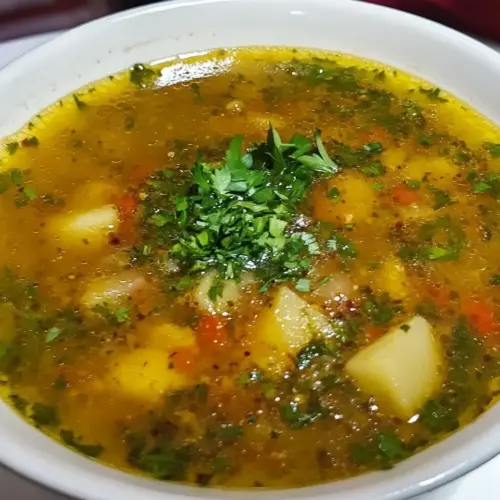
Bors Moldovenesc Sour Moldavian Soup
Bors Moldovenesc Sour Moldavian Soup is a bright, savory bowl built on a rich chicken broth with tangy bors and tender root vegetables. This traditional soup is comforting, aromatic, and an easy weeknight dinner that feels special. The balance of sour and savory makes it perfect for chilly nights and for feeding a crowd with minimal fuss.
Equipment
- Large Stockpot
- Cutting Board
- Knife
- Ladle
- Colander
- Separate pot for vermicelli
Ingredients
- 1 chicken Provide a whole bird to create a rich, savory broth that forms the soup's flavorful base. Simmer slowly with vegetables to extract collagen and depth, yielding a clear but hearty stock. Carve meat off the bones after cooking to add tender pieces back into the soup for texture and protein.
- vermicelli pasta Cook as a small pasta component to add tender, thread-like body and absorb the sour broth flavors. Boil separately or directly in the soup near the end to avoid overcooking and becoming mushy. Use a modest amount to balance the soup without overwhelming the vegetables and souring agent.
- 4 l water Supply ample liquid to cover ingredients fully and concentrate flavors as the soup simmers. Maintain a gentle boil and occasional skimming to keep the broth clear and balanced. Adjust quantity slightly for desired soup thickness and concentration.
- 1 lb orscht Introduce a traditional fermented souring agent to give the soup its characteristic tang and depth of flavor. Add gradually and taste to reach the preferred acidity, as potency can vary by batch. Combine with simmered broth to create the signature sour profile of Moldavian borscht.
- 1 parsnip Contribute a sweet, earthy root flavor and gentle aromatics when simmered whole or chopped into the stock. Slice or dice to cook evenly and impart subtle natural sugars that complement the sour base. Retain some texture by adding later if a firmer bite is preferred.
- 1 onion Supply savory aromatic notes and foundational sweetness when sautéed or simmered in the broth. Chop finely to disperse flavor uniformly and enhance the overall aroma of the soup. Use both in the stock and optionally as a garnish when softened.
- 1 small celery root Add a subtle, celery-like aroma and dense earthy flavor from the root when diced into the simmering broth. Peel and cube for even cooking; it helps to thicken the stock slightly as its starches release. Pair with other root vegetables to build a complex savory backbone.
- 1 carrot Provide natural sweetness and color to the soup while contributing to a balanced vegetable base when sliced or diced. Simmer until tender to meld with other roots and enhance the broth's flavor profile. Consider adding parts later to preserve slight texture if desired.
- parsley Offer bright herbal freshness and a mild, slightly peppery flavor when chopped and stirred into the finished soup. Add near the end of cooking to preserve aromatic essential oils and vibrant color. Use leaves as garnish to lift the dish and add a fresh contrast to the sour broth.
- celery Bring crisp, aromatic stalk flavor to complement other herbs and provide a subtle vegetal backbone when chopped into the soup or used as garnish. Add early to simmer for deeper infusion or later for brighter intensity, depending on desired flavor. Use leaves and small stalks for best texture and aroma.
- lovage Impart an intense, celery-like herbal note with a slightly savory, aromatic character that reinforces the soup's seasoning. Finely chop and add toward the end of cooking to preserve its strong fragrance and bright green color. Use sparingly to avoid overpowering other fresh herbs.
Instructions
- For this Moldovan borş, it is advisable to use the best chicken so that the resulting aroma is as tasty as possible. As for the vermicelli, use the finest possible.: The aroma of a quality chicken beginning to simmer is rich and slightly sweet, with a gentle savory perfume that promises depth. As the pot warms, you will hear a soft bubbling punctuated by occasional pops as the stock breathes. Selecting a good bird matters because the bones and skin release gelatin and natural fats, which create the body of the soup. If the chicken feels too lean, the broth may taste thin, so resist the urge to rush; a long gentle simmer extracts the best flavors. A common mistake here is cranking the heat and boiling hard, which produces cloudy, greasy broth and harsh flavors. Instead, maintain a steady gentle simmer and skim foam often to keep the liquid clear and fragrant.
- Wash and clean the meat thoroughly and boil in salted water. Be sure to remove the foam often during cooking.: As the water comes to a gentle boil, you will notice a rising scent of savory chicken and steam that fogs the kitchen windows. The bubbling should be steady but not aggressive, and the surface will develop a pale foam as proteins coagulate. Salting the water early seasons the meat and the broth from the inside out, producing layers of flavor. I always keep a small ladle handy to skim the foam; removing it improves clarity and mouthfeel. A frequent error is under salting, resulting in a flat tasting final soup, or over salting, which is hard to correct later. Taste the broth as it develops so you can adjust gradually.
- You will notice that the chicken is cooked when the flesh easily comes off the bones.: The sensory cue here is key, the meat should yield and separate without resistance when prodded. You will see the flesh pulling away and small juices run clear, which indicates doneness. At this point the broth carries concentrated savory notes and a fuller body. Leaving the chicken too long in high heat can dry the meat and cloud the stock with excess fat, while removing it too early leaves the bones under extracted. If unsure, test a small piece; it should feel tender and moist.
- Meanwhile, prepare the vegetables: peel and cut into small cubes.: peel and cut into small cubes : As you chop the vegetables, the kitchen will fill with a layered mix of sweet carrot, earthy parsnip, and sharp onion aroma, adding anticipation to the simmering broth. Uniform small cubes ensure even cooking and create a harmonious texture in each spoonful. Use a steady knife technique so pieces match in size; this ensures the carrot and parsnip soften as expected. A common slip is uneven chopping with large chunks that remain hard in the finished soup, so take a few extra minutes to match sizes.
- When the meat is well cooked, take it out of the pan and put it in a large dish to remove the bones.: The meat will be warm, fragrant, and tender, and transferring it to a plate makes the deboning process easier and cleaner. Use tongs to lift the pieces, and allow them to cool slightly so you can handle them without rushing. Removing bones keeps the final soup pleasant to eat and makes shredding the meat straightforward. One mistake is trying to debone while the meat is scorching hot, which is unsafe and leads to messy shredding; let it rest briefly to make neat work of it.
- In the broth left in the pan, add the chopped vegetables (onion, carrot, celery, and parsnip) and let it boil.: When the vegetables hit the hot broth, the pot will release renewed savory steam. A rolling but gentle boil helps the roots release sweetness and meld with the stock, enriching the flavor. Keep the heat controlled so the broth does not become cloudy from a violent boil. Allow the vegetables to soften until tender and fragrant, which usually results in a fuller mouthfeel. Overcooking until they disintegrate is a common problem, so check occasionally for a tender bite.
- Once the vegetables are cooked, add the meat and cook for a few more minutes.: Adding the shredded or sliced chicken back to the pot warms it through and lets the meat absorb some of the vegetable infused broth, producing a cohesive bowl. You may hear a soft settling sound as the meat nestles into the hot liquid, and small bubbles will play across the surface as the temperature equalizes. Cooking just a few minutes prevents the meat from drying and preserves its texture, while still allowing flavors to marry. Avoid letting it simmer too long after adding the meat, which can make it stringy and dry.
- Then add the borş.: When you pour in the bors , the soup brightens and lifts with a tangy, almost fruity acidity that cuts through the savory base. You will notice an immediate change in aroma and flavor profile, as the sour element enlivens the broth. This step balances richness and prevents the soup from feeling heavy. A common error is adding too much at once which can overpower the bowl, so go gradually and taste. If the bors is very sour, add incrementally until you reach your preferred brightness.
- If using vermicelli, cook it first in a separate pan.: Cooking vermicelli pasta separately preserves the clarity of the stock and prevents the noodles from releasing starch into the broth. The pot of boiling water for the vermicelli will hiss softly as the strands soften, and you should cook them to just al dente so they hold their shape when added. Drain them well to avoid diluting the soup, and rinse briefly if you prefer to stop cooking right away. A common mistake is cooking them directly in the soup which clouds the broth and can lead to mushy noodles.
- Once cooked, put it in the pot of meat and vegetables.: Adding the drained vermicelli pasta to the soup yields a pleasing textural contrast, the fine noodles nestle through the broth and catch bits of meat and vegetables. You will feel a slight thickening as the pasta integrates, and the scent should be inviting and complete. Gently stir to distribute evenly, taking care not to break the noodles. Over stirring can make them fragment, so handle with a light hand.
- Finally, sprinkle the chopped fresh herbs over the soup. Add the fresh lovage after taking the soup off the heat.: The moment you shower the bowl with chopped parsley and lovage the aroma lifts dramatically, delivering a fresh, herbaceous finish. The sound is subtle, a soft patter as herbs land in the hot broth, and visually the green flecks make the bowl sing. Adding the lovage off heat preserves its fragrant oils and prevents bitterness. The frequent misstep is cooking the herbs too long, which mutes their vibrancy, so add them right before serving for maximum effect.
Notes
- Choose a quality chicken for the richest broth, as bones and skin add natural gelatin and depth.
- Skim the foam often during the initial boil to keep the broth clear and improve mouthfeel.
- Match your vegetable cuts so carrots, parsnip, and celery root soften simultaneously.
- Cook vermicelli separately to avoid clouding the stock and to control noodle texture precisely.
- Add herbs last especially lovage, to preserve aroma and prevent bitterness from prolonged heat.