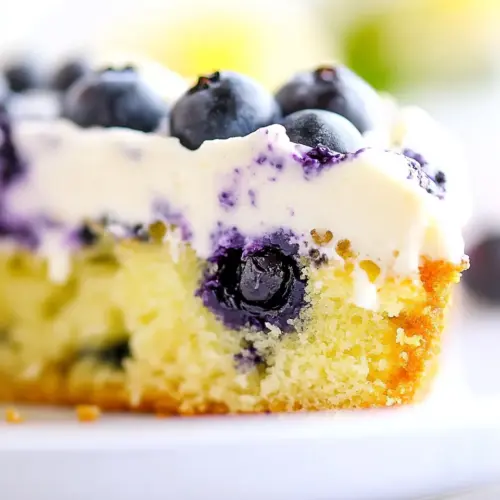
Blueberry Zucchini Poke Cake
Blueberry Zucchini Poke Cake is a moist, bright sheet cake that combines tender grated zucchini with bursts of fresh blueberries and a glossy white chocolate condensed milk filling. Topped with a lemon cream cheese frosting, this easy summer dessert balances sweet and tangy flavors, making it perfect for potlucks and easy weeknight celebrations. It’s a crowd pleaser you will want to make again and again.
Equipment
- 9×13-inch Cake Pan
- Hand Mixer
- Stand mixer or electric mixer
- Mixing Bowls
- Grater
- Microplane or zester
- Spatula
- Microwave-safe Bowl
Ingredients
- 3 eggs lightly beaten Lightly beaten to incorporate air and bind the batter, eggs contribute structure and moisture while helping the cake rise evenly during baking.
- 1 cup olive oil Used as a fat component to tenderize the crumb and add a subtle savory note, olive oil keeps the cake moist and improves shelf life.
- 1 tablespoon vanilla extract Added for its floral aroma and flavor, the vanilla extract enhances other flavors and rounds out the sweetness in the cake batter.
- 1 -2 cups white granulated sugar 1 cup is enough, 1 1/2 is medium sweet, and 2 cups is very sweet Adjusted to taste for sweetness, granulated sugar sweetens the cake, helps tenderize the crumb, and promotes browning during baking.
- 2 cups finely shredded and drained zucchini Finely shredded and well-drained to prevent excess moisture, zucchini adds tender, moist texture and a mild vegetable sweetness to the cake.
- zest from one lemon Zested to capture concentrated citrus oils, lemon zest brightens the flavor profile and provides aromatic high notes without extra acidity.
- juice from one lemon Pressed for fresh juice to add bright acidity and balance sweetness, lemon juice enhances overall flavor and activates baking agents slightly.
- 3 cups all-purpose flour Measured to provide the main bulk of dry structure, all-purpose flour forms the gluten network that gives the cake its body and crumb.
- 1 teaspoon salt Included in small amount to enhance flavor balance and control sweetness, salt also strengthens gluten and improves overall taste perception.
- 2 teaspoons baking powder Used as a leavening agent to produce carbon dioxide and lightness, baking powder helps the cake rise and creates a tender texture.
- 1 pint fresh blueberries save about 10-12 for garnish Saved some for garnish while folding the rest into the batter, fresh blueberries provide bursts of juicy fruitiness and visual appeal.
- 14 oz sweetened condensed milk Poured over the baked cake to seep into poked holes, sweetened condensed milk adds concentrated creaminess and rich, milky sweetness.
- 1 1/2 cups white chocolate chips Folded into fillings or melted into sauces to add creamy sweetness, white chocolate chips contribute a smooth, vanilla-like flavor and richness.
- 8 oz cream cheese room temperature Brought to room temperature for smooth blending, cream cheese provides tangy richness and a creamy base for frostings or fillings.
- 1 cup unsalted butter, room temperature 2 sticks or 226 grams Softened to room temperature to create a spreadable frosting base, unsalted butter adds richness and helps stabilize the icing texture.
- 1 teaspoon vanilla extract Added for aromatic depth and enhancement, vanilla extract in the frosting layers complements the cake and rounds out sweet notes.
- 1/2 teaspoon salt Used sparingly to balance sweetness and enhance other flavors, salt in the frosting brings out depth and prevents cloying taste.
- 4 cups powdered sugar more if needed to thicken Confectioners' sugar added gradually to reach desired thickness, powdered sugar sweetens and stabilizes the frosting for spreadability.
- 1 tablespoon lemon juice Stirred in to add bright acidity and balance richness, lemon juice lifts the frosting flavors and adds a fresh citrus tang.
- 1 tablespoon lemon zest Folded or sprinkled for a concentrated lemon aroma, lemon zest contributes vibrant citrus oils and enhances the overall lemon profile.
Instructions
- Preheat the oven to 350°F. Place the oven rack in the middle of the oven.: When the oven is preheating you should notice a steady, warm hum and a slowly increasing scent of dry heat in the kitchen, which primes the pan for an even bake. Preheating ensures the leavening reacts immediately, producing a consistent rise and fine crumb. A common mistake is sliding the cake into a cold oven, which can cause uneven texture and longer bake times, so always wait until the oven reaches the full temperature before baking.
- Spray a 9×13 inch cake pan with non-stick baking spray and set aside.: You will feel the slight tack of the spray on the pan, which helps the cake release cleanly once baked and cooled. Proper pan preparation keeps the edges from clinging and tearing when you slice. Do not skip the spray or lining, or the cake may stick and break when removed.
- Grate the zucchini, then place it between cloth towels and press to squeeze out all the water. Measure two cups of the grated zucchini and set aside.: The freshly grated zucchini will look glossy and release a faint vegetal scent when pressed; squeezing removes excess moisture so the batter will bake to a tender but stable crumb. Measuring after draining ensures correct hydration in the batter. If you fail to press out the water, the batter can become too wet and the cake may not set properly.
- Add the eggs to a large bowl and beat them lightly. Add the sugar, vanilla extract, and olive oil. Using a hand mixer, beat until well combined.: You should see the mixture become slightly paler and somewhat ribbon like as the eggs , sugar , and olive oil emulsify, and a faint sweet aroma will rise. This emulsion helps trap air and distribute fats evenly for a moist texture. A frequent error is underbeating, which can yield an uneven crumb, or overbeating, which might incorporate too much air and cause collapse.
- Add the grated zucchini, lemon juice, and zest, and fold in with a spatula until everything is well combined.: As you fold in the zucchini and citrus, note the flecks of green and bright lemon oil scent; gentle folding preserves air and the delicate structure of the batter. The lemon will lift the flavor profile so it stays fresh against the sweetness. Aggressive stirring at this stage can deflate the batter and create a dense final cake.
- Add the flour, baking powder, and salt. Fold in with a spatula until everything is combined.: The dry ingredients will disappear into the batter, transforming it from glossy to a thicker, spoonable texture, and you may detect a faint doughy aroma as the flour hydrates. Gentle folding prevents gluten overdevelopment, which keeps the crumb tender. Overmixing here is the most common reason for a tough cake, so stop as soon as streaks of flour vanish.
- Add the blueberries, using a spatula, gently fold them into the batter until all combined.: When the blueberries are folded in you will see little indigo specks throughout the batter and occasional blue streaks where berries have started to bleed a bit. This visual cue signals that the fruit is evenly distributed and will burst in pockets while baking. Avoid stirring vigorously, or you will macerate the berries and the batter may turn purple and heavy.
- Pour batter into the prepared pan and bake for 30-40 minutes or until a toothpick comes out with just a few moist crumbs. I baked mine for exactly 40 minutes.: As the cake bakes you will notice a sweet, fruity aroma and the top slowly turning a light golden color with tiny crackled spots. The toothpick test ensures the center is set while leaving a tender crumb. Opening the oven too often will lower temperature and can make the cake sink in the center, so check only near the end of the suggested time window.
- Remove the cake from the oven. Let it stand for 20 minutes, and using the end of a spatula or a large straw, poke holes one inch apart all over the cake.: During the brief resting period the cake firms and the steam redistributes, which makes the crumb ready to receive the glaze. Poking holes one inch apart creates channels that allow the glaze to penetrate, producing pockets of flavor. If holes are poked while the cake is still excessively hot, it can become soggy, so wait the recommended time.
- In a medium microwave-safe bowl, combine white chocolate chips and sweetened condensed milk. Heat in the microwave until hot, about 1 minute, then stir and heat for an additional 30 seconds or more if needed. Whisk until fully combined, smooth, and shiny.: As you heat the mixture you will see the white chocolate chips melt into the sweetened condensed milk , forming a glossy, viscous liquid that glistens when stirred. This shine indicates a smooth emulsion that will seep into the poke holes beautifully. Heat in short bursts to avoid scorching, which can make the mixture grainy or burned tasting.
- Pour the chocolate mixture over the cake and use a spatula to spread it evenly into the holes.: Pouring creates a slow glossy cascade that should settle into the poke holes, and when spread, the surface will look wet and lustrous. This step infuses the crumb with rich sweetness and white chocolate flavor. Pouring too quickly or when the mixture is too cool may prevent proper penetration into the holes.
- Let the cake cool completely before topping it with frosting.: Cooling allows the glaze to set slightly and prevents the frosting from sliding once applied; you can feel that the top is no longer warm to the touch when it is ready. Rushing this step can lead to the frosting melting and losing structure, so patience yields a neater finish.
- Using an electric or stand mixer fitted with the whisk attachment, beat the cream cheese and butter on medium speed until smooth with no lumps, about 1 minute. Stop once to scrape the sides and bottom of the bowl with a spatula.: Mixing these chilled but softened ingredients produces a silky base for the frosting, and you will notice a creamy texture and a mild dairy aroma. Smoothness ensures even sweetness distribution and a stable frosting. If lumps remain, continue whipping briefly, but avoid overwhipping which can aerate the frosting too much and make it unstable.
- Incorporate the vanilla extract, lemon juice, lemon zest, and salt, and continue mixing until the ingredients are thoroughly combined.: The lemon oils and juice will perfume the frosting while the salt elevates the flavors; the mixture should smell bright and tangy now. This balance prevents the frosting from tasting cloying when spread over the sweet cake. Too much lemon juice can thin the frosting, so add carefully.
- With the mixer speed on medium-low, gradually add in the powdered sugar. Increase mixer speed to medium-high and beat until combined. Stop once to scrape the sides and bottom of the bowl with a spatula.: As you add the powdered sugar the frosting will thicken and take on a glossy, pipeable texture; increase speed to ensure smooth incorporation without dusting your kitchen in fine sugar. If the frosting is overworked it may become chalky, so adjust speed and pause to scrape as needed.
- If your frosting is too thick, try adding one or two teaspoons of milk. If it’s too thin, you can incorporate more powdered sugar, adding it in 1/3 cup increments. Be sure to taste it after each addition to avoid making it too sweet. Keep in mind that the frosting may appear thin initially, but it will harden and settle once chilled.: The tactile adjustment of frosting is where you judge by feel and taste; a spoonful should hold shape but still spread easily. This fine tuning ensures an ideal spreadable consistency that sets when refrigerated. Adding too much liquid will make the frosting runny and difficult to set.
- Top the cake with the frosting. Garnish with fresh blueberries.: When you spread the frosting the surface should appear smooth and slightly glossy, and the reserved fresh blueberries add a visual contrast and fresh bursts of flavor. The final presentation should invite you to slice and serve. Overdecorating can overwhelm the cake, so use garnish sparingly for the best effect.
- Refrigerate the cake for at least 6-8 hours before serving. Enjoy!: While chilling, the flavors meld and the frosting firms, producing neat slices and concentrated taste. You may notice a slight tightening of texture as the cake cools, which helps with clean serving. Cutting too soon often yields messy slices and a softer crumb that may not hold together.
Notes
- Use milder oil for a neutral crumb - If you prefer a cake with a more neutral background flavor, choose a light olive oil or even a neutral vegetable oil. This keeps the focus on the blueberries and lemon, rather than a fruity oil note. Be aware that stronger olive oils will add a distinctive flavor that not everyone may expect in a sweet cake.
- Customize sweetness level - The recipe allows one to two cups of granulated sugar, so start with one cup if you want a less sweet dessert, or increase slowly to taste. Remember that the glaze and frosting add significant sweetness, so err on the side of less in the batter if you want balance.
- Shorten prep by using boxed cake mix - For a quicker version, combine a white or yellow boxed cake mix with the grated and squeezed zucchini, lemon zest, lemon juice, olive oil, eggs, and blueberries. This saves time while preserving the moist texture from the zucchini, though the homemade crumb has a slightly different density.
- Ensure bright lemon flavor - For a pronounced lemon profile, increase lemon zest by up to one additional teaspoon, but add juice conservatively to avoid thinning the batter. Zest contains essential oils that brighten without changing batter consistency.
- Chill overnight for best slices - Refrigerating for a full night firms the frosting and allows slices to come out perfectly clean. The flavors deepen slightly, giving you a more cohesive dessert when served the next day.
- Avoid using frozen blueberries - Frozen blueberries release extra liquid while baking, which can make the cake soggy; always use fresh berries for best texture and appearance.