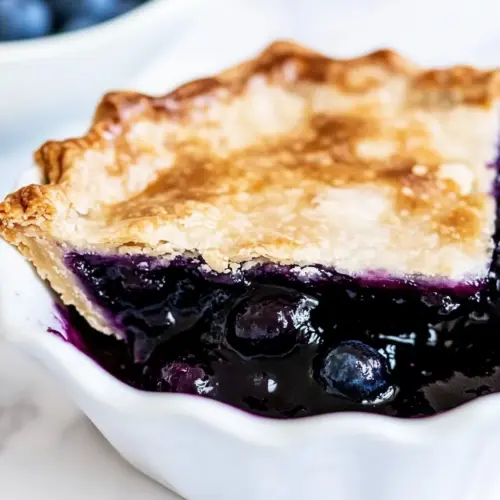
Blueberry Pie
Blueberry Pie combines juicy, fresh blueberries with a flaky, buttery crust for a glossy, jammy slice that is both easy and impressive. The bright touch of lemon and warm cinnamon lift the flavors, making it a perfect easy weeknight dessert or weekend showstopper. Make it for gatherings or a quiet treat because it consistently pleases a crowd.
Equipment
- Food Processor
- 9 inch Pie Tin
- Mixing Bowl
- Sheet tray
- Parchment Paper
- Oven
- Cooling rack
Ingredients
- pie crust recipe x 2 Provide two pie crusts to line and top the pie, creating a flaky, structural base and seal for the filling. Ensure dough is chilled before rolling to maintain texture and prevent shrinking during baking. Use one crust as the bottom shell and the other for lattice or full-top coverage to enclose juices.
- 6 cups of rinsed fresh blueberries Rinse and drain fresh blueberries thoroughly to remove debris while preserving firm berries that release natural juices when baked. Measure six cups to ensure enough volume for a generous, fruit-forward filling that sets well. Combine with thickener and sugar to balance sweetness and hold the pie filling together.
- juice of 2 lemons Squeeze fresh lemon juice to add bright acidity that balances the blueberries' sweetness and enhances overall flavor. Use the juice to help activate the thickening agent slightly and prevent the filling from tasting flat. Adjust amount subtly for desired tartness without overpowering the fruit.
- 1 teaspoon of cinnamon Add cinnamon to introduce a warm, aromatic spice note that complements the blueberries without dominating. Use the specified teaspoon to provide subtle depth and a bakery-style flavor profile. Mix evenly into the filling to ensure balanced spice distribution.
- 1 cup of sugar Sweeten the filling with sugar to counteract the berries' tartness and help create a syrupy consistency as juices release. Use one cup to achieve a traditional sweetness level that caramelizes slightly during baking. Dissolve sugar into the juice and fruit to promote even sweetness.
- 1/4 cup of Bob’s Red Mill All-Purpose Flour Incorporate Bob’s Red Mill All-Purpose Flour as the thickening agent to absorb excess liquid and produce a cohesive filling that slices cleanly. Use the quarter cup to gently thicken the blueberry juices while maintaining a glossy, not gummy, texture. Mix thoroughly with dry ingredients before combining with fruit.
- 2 tablespoons of unsalted butter, melted Brush melted unsalted butter into the crust or dot the filling to add richness and promote a golden-brown finish. Use two tablespoons of melted butter to infuse subtle buttery flavor and help the top crust brown evenly. Apply sparingly so filling texture remains balanced.
- 1 tablespoon of turbinado sugar Sprinkle turbinado sugar on the crust before baking to create a coarse, caramelized crunch and decorative sparkle. Use one tablespoon to add textural contrast and enhance visual appeal without adding excessive sweetness. Distribute evenly over the top crust or lattice strips.
Instructions
- In a food processor, process flour, butter, sugar, and salt until the fat is the size of a small pea.: The scent at this stage is faintly sweet with a cold, buttery edge, and you want to see tiny granules of fat coated in flour, not a homogenous paste. This texture is what creates those flaky layers during baking because the small pockets of fat will steam and separate the dough. If you pulse too long, the mixture becomes mealy and can form a tough dough, so use short pulses and inspect visually. A common mistake is overheating the mixture, which melts the fat; keep everything cold, and if your kitchen is warm, chill the bowl briefly between pulses.
- Drizzle in some cold water until the dough moistens up.: When you add cold water dropwise, you will notice the mixture come together as clumps that hold when pinched, but not become sticky. The cool wetness is essential, as warm water will dissolve the structure and make the crust dense. Work quickly and only add enough water for cohesion. Overhydrating leads to a gummy dough that is hard to roll, so stop as soon as small cohesive pieces form.
- Next, sprinkle some flour on a cutting board or clean surface and place the pie dough on the floured surface.: The tactile cue here is a slightly tacky dough that slides on the floured surface when nudged, without clinging. Flour on the board prevents sticking and lets you lightly shape the dough without tearing. Too much extra flour can dry the dough, so dust sparingly and tap off excess as you roll. A common error is pounding the dough to force shape, which can toughen it.
- Form the dough, do not overwork it, then separate them into two dough balls.: You should feel a supple but firm texture as you shape the pieces. Handling minimally keeps gluten from developing, preserving flakiness. Resting two smaller balls chills more evenly than one large lump. Avoid kneading or overhandling, because that creates elasticity and will cause the crust to shrink when baked.
- Once formed, roll out the dough balls until they are large enough to fill up a 9" pie tin.: Rolling should produce smooth, even circles that are slightly thicker at the edges, with faint flour traces on the surface. The sound of the rolling is soft and steady, and the dough will release easily from the rolling pin if chilled properly. If it tears, patch gently rather than reworking extensively. Rolling too thin risks a soggy bottom and uneven bake, while too thick leads to a heavy crust.
- Stack the dough in between parchment paper on a sheet tray and chill.: Chilling the rolled pieces makes them easier to transfer and helps the fat firm up again, which ensures flakiness. You may feel the cool firmness through the parchment and hear a quiet kitchen clunk as you place the tray in the fridge. Skipping this rest can result in shrinking or misshapen crust during baking, so give it time to relax and cool.
- Lay one of the rolled-out dough balls into the pie tin and set the other aside.: As you ease the dough into the tin, you will notice the dough settling and conforming to the pan, with soft folds along the rim. Press gently to remove air pockets, but do not stretch, as stretched dough will spring back when baked. Reserve the second round covered, so it stays pliable for the top. Stretching here is the most frequent misstep, since it leads to a shrunken crust.
- In a large bowl, mix together blueberries, lemon juice, cinnamon, sugar, and flour until thoroughly combined.: You will see the blueberries become evenly dusted and slightly glossy as the sugar draws out juice. The aroma will brighten with citrus and a warm hint from the cinnamon . Even coating helps the flour absorb excess liquid and prevents clumping, so toss gently with a spatula. A common mistake is stirring vigorously which bruises the berries and makes the filling watery, so be gentle.
- Once mixed, place in the pie tin with the dough in it.: The filling should mound slightly in the center, with berries intact and a glossy sheen, and you may hear a soft splash as the mixture settles. This placement is important because it allows the filling room to expand without pressing against the crust walls. Overfilling can cause spillover and a soggy edge, so keep the mound modest and level the top lightly.
- Cover the pie with the other rolled-out dough ball and trim off any excess dough.: When you place the top crust, you will feel the slight weight and the dough will drape over the filling. Use a sharp cutter or knife to trim flush with the pan edge, which creates a clean border for crimping. Leaving too much excess leads to uneven baking and thick, chewy edges, while too little can expose the filling, so aim for a neat even trim.
- Crinkle the edges or press with a fork.: Crimping seals the two crusts and forms a decorative edge. The tactile feedback is a firm press that joins layers without crushing them, and the visual cue is a uniform patterned rim. An improper seal invites leaks, so ensure consistent pressure around the circumference. Pressing too hard compacts the crust and reduces flakiness.
- Brush the top of the pie with melted butter and evenly sprinkle on the turbinado sugar.: Brushing melted butter gives the crust a richer color and flavor, while the turbinado sugar adds crunch. You will see the sugar crystals glisten before baking and then caramelize in the oven. Apply an even, thin coat of butter so the sugar adheres without saturating the dough; excess liquid here can make the top soggy rather than crisp.
- Slice some slits in the top of the pie and bake at 375° for 35-40 minutes or until the pie is browned on top and firm and reaches an internal temperature of 210°.: During baking the kitchen will fill with a sweet berry perfume and you will notice bubbling through the vents, a sign the filling is cooking properly. The crust should turn golden brown and the filling should thicken so the pie feels set when you gently nudge the pan. If it browns too fast, tent with foil to prevent burning. A common error is removing the pie before the center reaches set stage, leading to runny slices, so check for bubbling and the internal temperature.
- Once cooked, remove from the heat, and let cool completely on a rack.: Cooling allows the filling to gel and the juices to settle, so the pie slices hold their shape. You may hear a soft sigh as steam escapes, and the aroma will mellow from hot and bright to rounded and settled. Cutting too soon invites leakage, so be patient and allow sufficient time at room temperature for the texture to mature.
- Serve with ice cream, whipped cream, and mint.: The contrast between warm pie and cold ice cream is sublime, with creamy notes balancing the fruity, slightly acidic filling. Garnish with a small sprig of mint for a fresh finish if you like. A common oversight is serving the pie piping hot, which makes slicing messy, so try to serve at a pleasantly warm or room temperature for best presentation.
Notes
- Chill everything Before you mix dough, chill the tools and ingredients when possible, because cold fat creates flakier layers during baking.
- Measure by weight when possible Consistent measurements reduce variability, so if you bake often, a scale helps maintain texture and structure across batches.
- Handle dough gently Minimize handling to avoid gluten development, which keeps crust tender and delicate rather than chewy.
- Use parchment for easy transfer Lining your tray with parchment prevents sticking and makes moving the pie in and out of the oven hassle free.
- Adjust filling for frozen berries If using frozen blueberries, toss them with a couple tablespoons of cornstarch to thicken excess liquid released during baking.
- Rest before slicing Cooling fully helps the filling set, so plan time for the pie to cool on a rack rather than serving immediately.