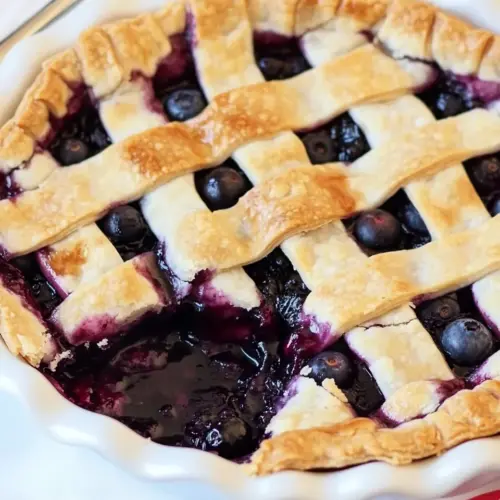
Blueberry Pie
Blueberry Pie delivers a glossy, jam like filling made from fresh berries tucked into flaky, golden pie crusts. Bright, slightly tangy fruit balanced with a tender, buttery crust creates a classic, easy dessert perfect for summer gatherings and easy weeknight treats. Make it for a reliable crowd pleaser that tastes like warm memories and seasonal fruit.
Equipment
- Pie Dish
- Mixing Bowl
- Rolling Pin
- Small Bowl
- Oven
Ingredients
- 2 pie crusts, (homemade or store bought) Provide two ready pie crusts to form the base and top of the pie, offering structure and a flaky texture when baked. Chill before assembling to help maintain shape and prevent shrinking, and blind-bake slightly if a firmer bottom is desired. Choose homemade or store-bought based on time and preference, ensuring they fit the pie dish size.
- 18 ounces fresh blueberries Supply ripe fresh blueberries that create the filling’s flavor, color, and juicy texture while bursting during baking. Rinse gently and drain before use to avoid excess moisture, and pick through to remove stems or spoiled berries for consistent results. Fresh berries yield brighter flavor than frozen when available seasonally.
- 2/3 cups sugar Sweeten the filling and balance acidity from the berries, dissolving into the mixture during cooking for an even taste. Adjust sweetness slightly to suit tartness of the blueberries and personal preference, but maintain this measure to help set the filling. Combine thoroughly with dry thickener to distribute sweetness evenly.
- 1/4 cup cornstarch Thicken the berry juices to produce a glossy, sliceable filling that holds shape after cooling. Dissolve thoroughly with sugar before adding to berries to prevent clumping and cook until translucent to activate full thickening power. Use the specified amount to avoid a runny or overly gelled texture.
- 1/4 teaspoon cinnamon Enhance the filling with warm, aromatic spice that complements the berries without overpowering them. Sprinkle sparingly and taste as you go, since cinnamon can become dominant if overused. Consider pairing with a pinch of nutmeg for complexity only if desired.
- pinch salt Balance the sweetness and enhance overall flavor by slightly elevating the fruit’s natural brightness with a pinch. Dissolve into the filling mixture to bring out deeper berry notes and improve perceived sweetness without adding more sugar. Use sparingly to avoid noticeable salinity.
- 1 tablespoon butter, cut into pieces Add small pieces of butter on top of the filling to enrich flavor and contribute to a silky mouthfeel as it melts during baking. Distribute evenly so pockets of butter create a glossy finish and help bind the filling components. Use unsalted butter if controlling overall salt level.
- 1 egg Bind the egg for creating an egg wash that promotes browning and a glossy finish on the crust when beaten and brushed on. Beat briefly to combine yolk and white for even color, and apply just before baking to avoid soggy dough. Reserve extra egg for sealing edges if needed.
- 1 tablespoon water Dilute the beaten egg to make an easy-to-brush egg wash that ensures even coverage and a shiny, golden crust. Mix thoroughly with the egg to achieve a smooth consistency that doesn’t clump, and apply gently with a pastry brush to prevent tearing the dough. Use cold water for a thinner wash or milk for richer color if desired.
Instructions
- Preheat the oven to 350°F.: As you set the oven, notice the faint hum as it comes to temperature and how the air begins to feel warmer when you open the door. Achieving an accurate oven temperature is essential because pie crusts need that steady heat to create steam for flaky layers while allowing the filling to bubble without burning the edges. A common error is skipping preheating which can cause uneven baking and a soggy bottom crust. Use an oven thermometer if your oven runs hot or cold so 350°F is real.
- Roll the bottom half of the pie crust out to fit your pie dish, and press gently into the dish.: When you roll the dough, it should feel cool and slightly firm under your hands, with a light flour dusting preventing sticking. Press it into the dish gently so it conforms to the shape without stretching, which can cause shrinkage while baking. If the dough feels sticky, chill it briefly rather than overworking it. A typical mistake is stretching the dough, which leads to gaps and uneven edges; press softly and patch gently if needed.
- In a medium bowl, toss the blueberries with the sugar, cornstarch, cinnamon, and salt. Spread the blueberries in the bottom crust. Sprinkle with the pieces of butter, distributing evenly.: As you toss the blueberries with the dry ingredients, you will see the sugar begin to draw juices from the fruit, turning the mixture slightly shiny. This is the moment the structure of the filling forms, the cornstarch distributing to thicken those juices when heated. Make sure the dry mix coats the berries evenly to avoid lumps of cornstarch . A trap is adding the thickener directly to a hot pan where it can clump; mixing it dry with the sugar first prevents that.
- Roll out the top crust in an even layer, and cut vents as desired, or form into a lattice. Place the top crust on top of the blueberries, cut off the excess crust, and fold or crimp the edges together.: Spoon the coated blueberries into the chilled bottom crust, noticing the weight and the glossy sheen of the fruit. Dot the surface with the small pieces of butter , which will melt into rich pockets during baking and add silkiness to the filling. Distribute the butter so every slice has a little richness. Avoid piling the filling too high as it can bubble over during baking.
- In a small bowl, whisk together the egg and water. Brush the egg mixture over the top of the crust, spreading evenly.: Rolling the top crust evenly ensures uniform baking and a pleasing finish. If you choose vents, slice them so steam can escape, and if you weave a lattice, keep strips similar in width for even browning. The visual cues to watch are an even thickness and smooth edges. A common misstep is overwork the dough while rolling, which warms it and makes it tougher; chill if it becomes too soft.
- Bake 55-60 minutes, or until the crust is golden brown and the blueberry filling is bubbling and thick. Let cool completely before slicing and serving.: Lay the top crust carefully so it meets the bottom edge without gaps. Trim excess dough and fold the edges to seal, pinch or crimp decoratively to make a tight seal. Sealing prevents the filling from leaking and helps the pie hold its shape. If edges brown too quickly during baking, shield them with foil to protect the crust while the filling finishes cooking.
- In a small bowl, whisk together the egg and water: The mixture should become homogeneous and slightly frothy, with a smooth consistency that will brush on evenly. This simple emulsion helps the wash adhere and promotes an even golden color on the crust. Use a fork or small whisk to blend fully so there are no streaks of egg white separate from yolk. One mistake is applying an uneven wash which results in patchy browning.
- Brush the egg mixture over the top of the crust, spreading evenly: As you brush, the surface transforms from pale dough to glossy, wet sheen that signals it will brown beautifully. Work quickly but gently so the wash does not pool in the vents or along seams. An even application ensures consistent color. If you see pooling, dab lightly with a paper towel to remove excess.
- Bake 55-60 minutes, or until the crust is golden brown and the blueberry filling is bubbling and thick: During baking pay attention to visual and auditory cues; the crust should deepen to a warm golden tone and you may hear faint bubbling as the filling thickens. That bubbling is a key signal that the cornstarch is activating and the mixture is setting. If the edges brown too quickly, tent with foil to prevent burning while the center finishes. Do not rely solely on time, trust the visual signs for doneness.
- Let cool completely before slicing and serving: Cooling is critical because the filling continues to thicken as it loses heat, transforming from runny to sliceable. The aroma will be rich and fruity, and the steam will gradually subside. If you cut too soon, the slices will slump and the filling will run. Patience here equals neat, photogenic slices and a better texture in every bite.
Notes
- Chill the dough before rolling to keep the pie crusts flaky. Cold dough creates steam pockets while baking, which is what gives pastry its layers. If the dough warms while you work, pop it in the refrigerator for 10 to 15 minutes to firm up. Overhandling leads to a tough crust, so handle gently and quickly.
- Evenly coat the berries with the sugar and cornstarch. Toss until the sugar looks dissolved and the berries are glossy. This prevents clumps and ensures the filling thickens uniformly. If you spot dry patches of thickener, stir again gently to distribute it.
- Use a light hand with the egg wash to avoid pooling in vents or seams. Brush thinly and evenly, ensuring the wash covers the top without dripping. Excess wash can run into the filling vents and burn, leaving dark spots.
- Watch for bubbling near the vents as a doneness indicator. While a timer is useful, the pie is ready when filling bubbles actively and crust is golden. If bubbling is not apparent but crust is browning, tent with foil and continue baking until bubbling begins.
- Cool completely on a rack so air circulates and the filling sets from all sides. This helps achieve neat slices and prevents the filling from being too loose. Expect to wait at least a couple of hours for the best results.