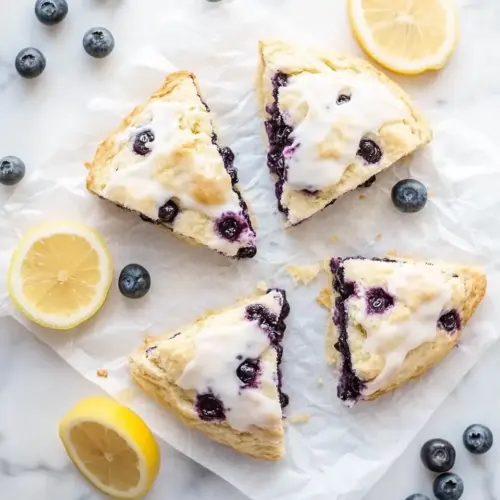
Blueberry Lemon Scones
Blueberry Lemon Scones marry tender, buttery pastry with bursts of juicy blueberry and bright lemon glaze for an easy spring breakfast or brunch. These scones are lightly crisp on the edges and soft inside, offering a bakery quality treat you can make at home, perfect for a relaxed morning or weekend gathering.
Equipment
- Oven
- Food Processor
- Baking Sheet
- Parchment Paper
Ingredients
- 2 cups all purpose flour Provide structure and bulk to the scone dough, ensuring a tender crumb when properly mixed; contributes gluten development that holds the pastry together without becoming tough. Use measured scoops and avoid overworking to maintain flakiness, and sift if lumpy to ensure even texture.
- 1/3 cup granulated white sugar Sweeten the dough uniformly, balancing the tartness of lemon and blueberries while promoting browning on the finished scones. Dissolve into dry ingredients so the sweetness is evenly distributed without causing wet spots in the batter.
- 1 tablespoon lemon zest Contribute bright citrus aroma and concentrated lemon flavor that lifts the overall profile of the scones; zest contains essential oils that are more flavorful than juice alone. Finely grate only the yellow outer peel to avoid bitterness from the white pith and incorporate with dry ingredients for even flavor.
- 1 1/2 teaspoons baking powder Leaven the scones by producing air pockets during baking, creating a light, slightly risen texture; works quickly with acidic components like lemon juice. Measure precisely and ensure it is fresh for reliable rise and even crumb.
- 1/2 teaspoon kosher salt Enhance overall flavor by balancing sweetness and highlighting lemon brightness; also strengthens gluten slightly to aid dough structure. Use kosher salt for consistent saltiness and dissolve into the dry mix for even seasoning.
- 1/2 cup cold unsalted butter Introduce cold fat that creates flaky layers and tender pockets when cut into the flour, yielding the characteristic scone texture; its cold temperature prevents melting into the dough prematurely. Cut or grate into small pieces and work briefly to distribute evenly while preserving pea-sized bits for flakiness.
- 1/2 cup cold heavy cream Provide richness, moisture, and tenderness to the dough while helping to bind dry ingredients; its fat content contributes to a tender crumb and golden exterior. Keep cold for best results and incorporate just until combined to avoid overworking.
- 1 cup fresh blueberries Offer fresh bursts of juicy sweetness and slight tartness that contrast the rich dough, adding texture and visual appeal; handle gently to avoid crushing and staining the batter. Toss with a little flour before folding in to prevent sinking during baking.
- 2 cups powdered sugar Create a smooth, sweet glaze or added sweetness when dusted or drizzled, enhancing presentation and delivering a sweet finish to the scones. Sift to remove lumps and mix with lemon juice to desired consistency for glazing or dusting.
- 3 tablespoons freshly squeezed lemon juice Provide bright, acidic flavor that complements the lemon zest and activates the baking powder slightly for lift; also thins powdered sugar for a glossy glaze. Use freshly squeezed juice for the best vibrant flavor and strain to remove seeds if needed.
Instructions
- Preheat the oven to 375 degrees F, and line a baking sheet with parchment paper.: The oven should be fully hot before the scones go in so they start rising immediately, creating a tender interior and a lightly browned exterior. You will notice a steady warmth in the kitchen and the oven will smell faintly of dry heat. A common mistake is putting scones into an oven that is still heating, which can yield dense centers. Make sure the rack is in the center position and the parchment is flat so the bottoms brown evenly.
- Place the flour, sugar, lemon zest, baking powder, and salt in the bowl of a food processor, and pulse to combine.: Pulsing distributes the dry ingredients and the lemon zest so every forkful has bright citrus notes. You should hear quick, staccato pulses and see a uniform pale mixture. Avoid over-pulverizing which can heat the mixture and degrade the baking powder; short pulses are best.
- Cut the butter into pieces, and add it to the food processor. Pulse the food processor until the mixture resembles coarse meal. With the food processor running on low speed, stream in the cream.: The sound will change to a softer, more continuous hum as the butter breaks down into pea sized bits. These little pieces are essential, they create steam pockets that give flakiness, and the cream binds without melting the butter. A trap is letting the butter warm too much, producing a greasy dough, so work quickly and keep the butter chilled.
- When the dough has gathered itself into a ball, turn off the food processor and divide the dough into two equal portions. Gently knead the blueberries into each portion of dough.: You will feel the dough hold together yet remain slightly tacky, and the blueberries should be folded in gently so they stay intact. Folding by hand prevents smashing the berries and keeps their juices from bleeding through the dough. If you overwork the dough it becomes tough, so use light, patient motions when integrating the fruit.
- Flatten each portion of dough into a disc shape, about 1 1/2-inches thick. Score each disc into 6 triangles with a knife, and pull the triangles slightly away from one another (allowing about 1/2-inch in between).: The discs should feel cool and slightly dense when pressed, and scoring creates defined wedges that bake into individual scones. Pulling the wedges apart creates crisp edges and ensures even heat circulation. Avoid cutting too shallowly which can prevent proper separation, and be careful not to compress the dough when scoring.
- Bake the scones for 14 to 18 minutes, or until set in the centers and slightly golden on the bottoms.: As they bake you will smell a warm, buttery aroma and see the edges turn a soft gold while the tops remain pale. Tap the center lightly, it should feel set but still springy. A common error is overbaking which dries the interior, so check at the shorter end of the time range and watch the bottom color; removing them too late will yield a drier scone.
- Stir the powdered sugar and lemon juice together in a small bowl until smooth, and drizzle the icing over the scones.: The glaze should be glossy and pourable, clinging to the tops and settling into crevices. Use a spoon to create a thin, even drizzle that adds a bright finish without making the scone soggy. If the glaze is too thin it will run off, and if too thick it will clump, so adjust with tiny amounts of lemon juice or powdered sugar for the right consistency.
Notes
- Chill everything: Keeping ingredients cold from start to finish preserves flaky texture and yields superior rise in your scones.
- Measure flour properly: Spoon and level the all purpose flour to avoid a dense dough; packing the cup adds excess flour.
- Handle blueberries gently: Toss the blueberries in a little flour if they seem especially juicy to prevent sinking and color bleed in the dough.
- Temperature check: If your kitchen is warm, briefly chill the formed discs before scoring and baking to keep butter solid until it meets the oven heat.
- Adjust glaze thickness: For a thicker glaze add more powdered sugar, for a thinner one add small drops of lemon juice until you reach the desired sheen.