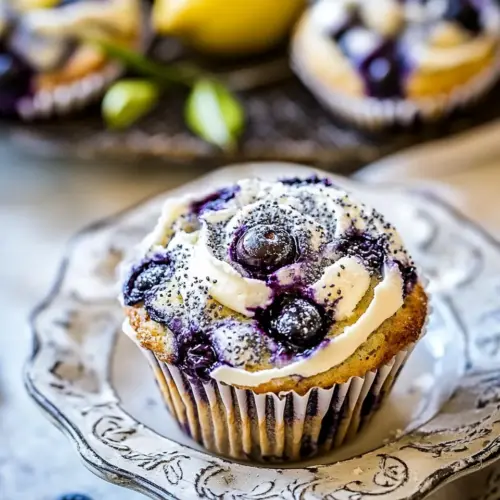
Blueberry Lemon Poppy Seed Muffins
Blueberry Lemon Poppy Seed Muffins are tender, citrus bright, and studded with juicy blueberries and tiny crunch from poppy seeds. The lemon glaze adds a glossy finish and a zippy finish that elevates each bite, making them ideal for brunch or a weekend bake. These easy muffins are reliably moist and perfectly portioned for sharing, so you have every reason to make them today.
Equipment
- Muffin Tin
- Paper liners
- Stand mixer or handheld mixer
- Mixing Bowls
- Whisk
- Cooling rack
Ingredients
- 3 cups plus 2 tablespoons all-purpose flour, divided Sift and measure to ensure lightness, providing the bulk and structure that forms the muffin crumb when combined with leaveners and liquids. Add gradually to prevent overmixing and to achieve a tender, balanced texture in each bite.
- 1 tablespoon baking powder Activate lifting power within the batter by creating carbon dioxide bubbles as it heats, giving muffins their rise and an airy interior. Combine evenly with the dry ingredients to ensure uniform expansion and consistent crumb.
- 1/2 teaspoons salt Season lightly to enhance overall flavor balance and to accentuate the sweetness and citrus notes without becoming detectable on its own. Dissolve into the dry mix so it distributes evenly throughout the muffins.
- 8 tablespoons (4 ounces) unsalted butter, at room temperature Cream until fluffy to incorporate air and create a rich, tender crumb while contributing moisture and buttery flavor. Soften at room temperature for easier blending with sugar and eggs, ensuring a smooth batter.
- 1 and 1/3 cups granulated sugar Beat with butter to add sweetness and help incorporate air for a lighter texture while caramelizing slightly during baking to deepen flavor. Measure precisely to maintain proper batter balance and avoid overly dense muffins.
- 3 teaspoons lemon zest, finely grated Grate finely and mix into batter to infuse bright citrus aromatics and a concentrated lemon flavor throughout, complementing the blueberries. Reserve some for the glaze or topping to amplify fresh lemon presence.
- 2 large eggs, at room temperature Whisk in to provide structure, richness, and emulsification, helping bind ingredients and trap air for lift. Use at room temperature to combine smoothly and produce a uniform, tender muffin crumb.
- 2 teaspoons pure vanilla extract Stir in for subtle sweet-vanilla depth that rounds out the flavor profile and enhances the aromas of butter and lemon. Add with the wet ingredients to disperse flavor evenly through the batter.
- 1 cup full-fat sour cream Fold gently to introduce moisture, tang, and richness while contributing to a tender crumb through its fat and acidity. Use at room temperature and combine carefully to avoid overmixing and to retain lightness.
- 1/3 cup freshly squeezed lemon juice Combine with sour cream and zest to deliver bright acidity and citrus flavor, balancing richness and helping activate baking powder for lift. Freshly squeezed juice yields the most vibrant lemon character throughout the muffins.
- 3 tablespoons poppy seeds Sprinkle into the batter to add delicate crunch and a subtle nutty flavor that pairs with lemon and blueberry while providing visual interest. Distribute evenly to prevent clumping and ensure even texture in each muffin.
- 1 and 1/2 cups blueberries Gently fold in to provide bursts of juicy sweetness and a contrasting texture against the tender crumb; fresh berries yield the best flavor and moisture. Toss with a little flour before folding in to prevent sinking during baking.
- 1 and 1/2 cups confectioners' sugar, sifted Sift and mix into glaze to produce a smooth, lump-free icing that thickens into a glossy finish, adding sweetness and a delicate coating to each muffin. Use sifted sugar to ensure a silky texture and even dissolution.
- 2 tablespoons freshly squeezed lemon juice Whisk in to create a bright, tart glaze that cuts the sweetness of the confectioners' sugar and enhances the lemon notes of the muffins. Adjust quantity for desired glaze consistency and intensity of citrus tang.
- 1 teaspoon lemon zest, finely grated Zest freshly and fold into the glaze or sprinkle on top to provide concentrated lemon oils and aromatic lift that complement the muffin base. Finely grated zest disperses evenly and delivers immediate citrus presence.
- 2 teaspoons whole milk, more if needed to achieve desired consistency Stir in gradually to loosen the glaze to a spreadable consistency while adding a touch of richness and smoothness. Add slightly more if needed to reach the desired pourable texture without thinning the glaze excessively.
Instructions
- Preheat oven to 400 degrees (F). Line a 12 cup muffin tin with paper liners; set aside.: When you step into the kitchen you should immediately notice warmth radiating from the preheated oven and the faint metallic scent of a hot pan. Getting the oven temperature right is crucial because it jump starts the rise, creating the characteristic domed tops and a light crust. A common mistake is to skip preheating, which can lead to flat muffins or uneven bake. If using a dark or glass pan, reduce the temperature by about 25 degrees to prevent overbrowning.
- In a large bowl, sift together 3 cups of the flour, baking powder, and salt; set aside.: You will sense a clean, floury aroma as you sift, and the sifted flour will feel light and airy between your fingers. Sifting distributes the baking powder and salt evenly, which helps each muffin rise consistently. Not sifting can leave pockets of leavening, causing odd textures. Use a whisk if you don't have a sifter to achieve a similar effect.
- In a large bowl using a handheld electric mixer, or in the bowl of a stand mixer fitted with the paddle attachment, combine the butter, sugar, lemon zest, and vanilla extract; beat on medium speed until light and fluffy, about 3 minutes.: As you beat, you'll notice the mixture lighten in color and become airy, with a soft, whipped texture that holds a ribbon when lifted. This aeration is what gives your muffins lift and tenderness. Overbeating after adding flour can make the crumb tough, so stop once the mixture appears pale and voluminous.
- Add in the eggs, one at a time, beating well after each addition and scraping down the sides of the bowl as needed.: The batter will smell richer and slightly eggy, and you should see it smooth out and become more cohesive with each egg incorporated. Scraping down ensures no streaks of unmixed butter remain, which could create uneven pockets. A pitfall here is adding cold eggs which can seize the butter, so use room temperature eggs for best results.
- Turn mixer off and set batter aside for a moment. In a spouted bowl or measuring cup add the sour cream and lemon juice; whisk well to combine and set aside. In a separate bowl combine add the blueberries and remaining flour; toss well to coat the berries in the flour.: The sour cream and lemon juice will smell tangy and fresh, and whisking them creates a smooth, creamy mixture that brightens the batter. Coating the blueberries in the remaining flour helps them stay suspended in the batter, reducing sinking during baking. A common slip is skipping the coating step, which often results in berries clustered at the bottom of the muffins.
- With the mixer speed on low, alternate adding the flour mixture and the sour cream mixture, beginning and ending with flour. Be sure not to over mix here. Fold the blueberries and poppy seeds into the batter, mixing just until evenly combined.: You should hear a quieter, thicker sound as you fold, and visually the batter will move slowly from side to side. Alternating keeps the batter balanced in moisture and structure, producing a tender interior. Overmixing at this point develops gluten and yields a dense muffin, so stop when you see no streaks of flour. When folding in the blueberries , use gentle motions to avoid bursting them.
- Divide the batter evenly among prepared muffin tins.: As you portion the batter, it should fall in heavy spoonfuls that hold shape, with small visible flecks of zest and poppy seeds. Using an ice cream scoop helps ensure consistent sizes so they bake uniformly. Filling liners too full can cause overflow and uneven domes, while underfilling results in small, flatter muffins.
- Bake for 25 to 27 minutes, or until the tops are lightly golden brown and a toothpick inserted in the middle comes out clean, or with a just a few moist crumbs attached. Cool muffins 10 minutes in the pan before transferring to a cooling rack.: While baking you will notice a warm lemon scent filling the kitchen and a gentle crackle as the tops set. Look for a pale golden color and that classic springy touch when pressed. Cooling briefly in the pan helps them set so they won’t collapse when moved. Removing them too quickly can cause tearing, and leaving them too long in the pan can trap steam and make the bottoms soggy.
- In a medium mixing bowl combine the confectioners' sugar, lemon juice, zest, and milk; whisk until smooth, adding more milk as needed to reach desired consistency. Drizzle over the muffins right before serving.: The glaze will smell intensely of lemon and look glossy as you whisk. A thin ribbon of glaze should fall in a continuous stream when drizzled, settling into the nooks on top of each muffin. Glazing while muffins are warm helps the glaze set with a slight soak in, but glazing them too hot can make the glaze run off entirely. Aim for warm, not piping hot, for the best finish.
Notes
- Boost the tang Add a teaspoon more lemon zest to the batter for a brighter citrus note without altering texture.
- Richer crumb Substitute half of the butter with an equal amount of plain yogurt to create a slightly denser, more tender muffin.
- Extra blueberry pockets Fold in an extra quarter cup of blueberries for more juicy bursts, taking care to coat them in flour first to prevent sinking.
- Make it jumbo Use a larger muffin tin and increase bake time slightly, checking with a toothpick for doneness to avoid underbaking the center.
- Sturdier tops Sprinkle a light dusting of granulated sugar on the batter before baking for a delicate sweet crust.