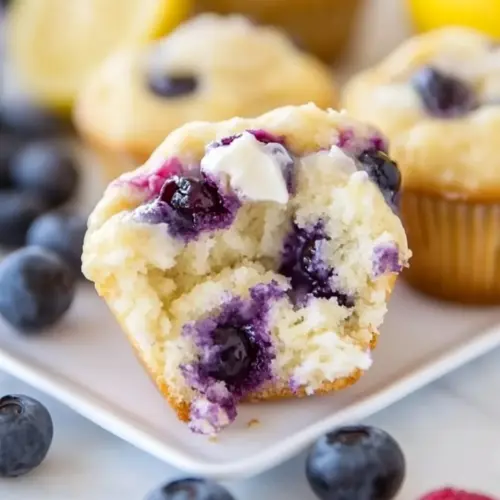
Blueberry Lemon Cream Cheese Muffins
Blueberry Lemon Cream Cheese Muffins are creamy, bright, and tender with bursts of fresh blueberry and a glossy lemon drizzle. This easy sweet bakery style muffin combines tangy cream cheese and zesty lemon for a breakfast or snack that travels well and feels special. Perfect for brunch, potlucks, or make ahead mornings, these muffins are worth making for their flavor and texture.
Equipment
- Muffin Pan
- Tulip Parchment Liners
Ingredients
- 4 ounces cream cheese room temperature Soften and blend into the batter to create a rich, tangy swirl; helps produce moist crumb and creamy pockets when folded in during mixing.
- 4 tablespoons unsalted butter room temperature Cream and aerate with sugar to incorporate fat and flavor; contributes to tender texture and lightness in the muffin structure when beaten.
- 1 tablespoon lemon juice Add bright, acidic flavor to balance sweetness; helps enhance the lemon profile and cut richness when combined with other citrus elements.
- 2 tablespoons lemon zest Provide intense citrus aroma and concentrated lemon flavor; distribute zest throughout batter to create vibrant bursts of lemon in each bite.
- 2 teaspoon vanilla extract Enhance overall flavor with warm, sweet-fragrant notes; works with vanilla-scented sugars to round out and deepen the muffin’s taste.
- 1/2 cup whole milk Loosen batter and add richness while ensuring proper hydration; helps achieve desirable moisture and tender crumb when combined with eggs and fats.
- 2 large eggs room temperature Bind ingredients, trap air for rise, and contribute richness; eggs provide structure and stability to the muffin crumb while aiding leavening.
- 2 cups all-purpose flour Form the structural base by supplying starch and gluten; combines with liquids and leaveners to create the muffin’s framework and texture.
- 2/3 cup granulated sugar Sweeten the batter and aid in browning while contributing bulk; sugar also interacts with fats to help tenderize and create a moist crumb.
- 1 1/2 teaspoon baking powder Provide chemical leavening to help muffins rise and become light; activates when batter is mixed and heated to create lift and open crumb.
- 1/2 teaspoon baking soda React with acidic components to produce carbon dioxide for lift; helps fine-tune rise and contributes to the muffin’s tender texture.
- 1/4 teaspoon salt Enhance and balance flavor while strengthening gluten slightly; small amount of salt improves overall taste perception and offsets sweetness.
- 1 pint fresh blueberries rinsed and picked through Add fresh, juicy bursts of flavor and texture; blueberries contribute moisture, fruity acidity, and visual appeal when folded gently into batter.
- 1/2 cup powdered sugar Dust over finished muffins or blend into glaze to add sweetness and delicate texture; powdered sugar dissolves easily to create smooth icing.
- 2 tablespoons fresh lemon juice Provide bright acidity and pronounced lemon flavor for a glaze; fresh juice thins powdered sugar and adds zesty tang to the topping.
- 1 tablespoon lemon zest Supply concentrated lemon aroma and flavor to finish the glaze; zest lifts the topping with intense citrus oils for fragrance and taste.
Instructions
- Preheat the oven to 350°F. Line muffin tin with parchment liners or grease well. Set aside.: When you open the oven you should feel a steady, dry heat and soon the air carries a faint warm scent, which signals a consistent baking environment. This matters because even oven temperature distribution ensures even rise and uniform golden coloring on the muffin tops. A common mistake is not waiting for full heat, which causes under risen or unevenly baked centers. If your oven runs hot or cool, use an oven thermometer and rotate the pan halfway through baking for consistent results.
- Beat cream cheese and butter in a large mixing bowl or the bowl of a stand mixer until creamy and smooth.: As you beat, the mixture will change from firm and chalky to glossy and whipped, giving off a faint dairy aroma that promises richness in the crumb. Properly creamed cream cheese and butter trap air that contributes to lift, and a lumpy start indicates cold ingredients. Avoid under beating which leaves lumps, or over beating which can warm and separate the fats. If lumps persist, pause to scrape the bowl and beat briefly on moderate speed until uniform.
- Add lemon juice, lemon zest and vanilla extract and continue beating until combined.: The citrus oil released from the zest will perfume the mix immediately, and the tang of the juice brightens the dairy notes. This step layers flavor into the fat base so the muffins taste vibrant through and through. A common mistake is adding too much juice which can loosen the creamed texture, so measure carefully. If the mixture appears slightly looser, a quick chill for five to ten minutes steadies it before continuing.
- Add milk and eggs and beat until well blended.: You will notice the batter become silkier, with a glossy sheen and a slightly lighter texture as the eggs emulsify the fat and milk. This emulsification is crucial for a tender crumb and even rise. Avoid adding cold eggs directly, as they can cause the fats to firm and the batter to appear curdled. If that happens, continue beating briefly at low speed, or let the bowl rest until ingredients harmonize.
- Combine flour, sugar, baking powder, baking soda and salt in a small bowl.: When you whisk these dry ingredients together, you will smell the faint wheaty note of flour and see the powdery contrast between sugar and leaveners. Sifting or whisking ensures even distribution so pockets of leavening do not create uneven lift. A frequent error is neglecting to mix the dry components well, which can lead to salty or bitter spots; take an extra moment to whisk thoroughly.
- Gradually add flour mixture to cream cheese mixture until combined. Fold in the blueberries.: The batter will thicken and take on a velvety texture, and as you fold you should hear a soft, slightly resistant sound from the spoon moving through the mixture. Folding preserves air and prevents overworking gluten, which keeps the muffins tender. When you fold in the blueberry , aim for even distribution without smashing the berries, as burst fruit can make the batter runny. One common mistake is vigorous stirring which breaks berries and creates purple streaks, so use gentle strokes and stop when the last streak of flour disappears.
- Evenly scoop the batter into liners until about 3/4 full.: As you scoop, the batter should hold its shape and mound slightly, indicating the right thickness. Filling to three quarters gives room for an appealing domed top while preventing overflow. If you underfill, muffins will be small and may bake too quickly, if you overfill they can spill and bake unevenly. Use a spoon or scooper for uniform portions and tap the pan gently once to settle the batter.
- Bake muffins for 28 to 30 minutes or until just starting to turn golden brown. Remove from the oven and let cool slightly in muffin pan before transferring to a wire rack to cool completely.: During baking you will notice a sweet, lemony aroma fill the kitchen and tops gaining color. A toothpick inserted in the center should come out with a few moist crumbs but not raw batter. Cooling in the pan for a short time helps the structure set, while transferring too soon can cause collapse. Overbaking dries them out, so watch the color and test early if your oven runs hot.
- Whisk together powdered sugar, lemon juice and lemon zest. Add additional powdered sugar to thicken or additional lemon juice to thin.: The glaze should be silky and glossy, with lemon aroma that complements the muffin. Adjusting thickness changes how the glaze sits on the top, from a thin sheen to a thick ribbon. If it is too thin it will run off the muffins, if too thick it may look clumpy; always add liquid gradually and whisk to achieve a smooth consistency.
- Drizzle over the top of muffins.: As you drizzle, the glaze should form delicate, shiny ribbons that set quickly to a tender crust, adding a tart finishing note. The contrast between the soft crumb and the slightly set glaze is part of the charm. A common mistake is glazing warm muffins which causes the glaze to sink; wait until they are cool to the touch for the best appearance.
Notes
- Room temperature rule: Let the cream cheese, butter, and eggs sit out for about 30 minutes so they blend smoothly, preventing lumps and ensuring a uniform batter.
- Blueberry handling: Gently fold the blueberry in at the end to keep them intact, and if using frozen berries do not thaw completely to avoid extra moisture in the batter.
- Measuring flour: Spoon and level all purpose flour rather than scooping directly to avoid dense muffins from overpacked flour.
- Glaze thickness: Adjust the powdered sugar and lemon juice ratio to get either a pourable glaze or a thicker drizzle that sets on top, adding more sugar to thicken or more juice to thin.
- Storing tips: Cool muffins completely before storing in an airtight container at room temperature for up to two to three days, or freeze after flash freezing on a tray for long term storage.
- Oven differences: If your oven runs hot, lower the temperature by 10 to 15 degrees and check early for doneness to prevent overly browned tops.