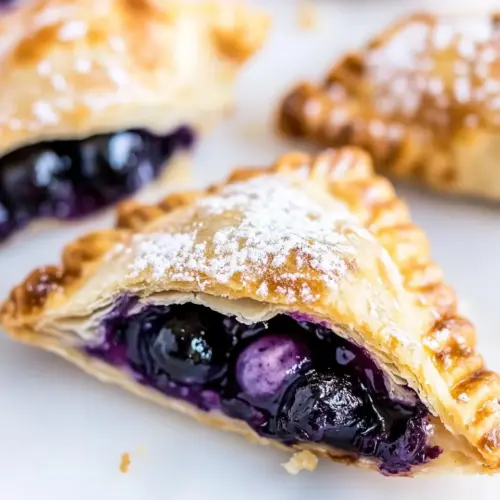
Blueberry Goat Cheese Empanadas
Blueberry Goat Cheese Empanadas are flaky, slightly sweet pastries filled with jammy blueberries and creamy goat cheese for a lovely contrast of textures and flavors, perfect for easy weeknight baking or a crowd pleasing brunch treat, creamy and crispy in every bite, making them irresistible to try.
Equipment
- Food Processor
- Baking Sheet
- Parchment Paper
- Mixing Bowl
- Rolling Pin
Ingredients
- 2 cups all-purpose flour Provide structure and bulk to the dough while developing gluten when mixed; sift or whisk to ensure even incorporation and a tender empanada crust when combined with fats and liquids.
- 3/4 cup whole wheat flour Add nuttiness and a bit denser texture to the pastry while balancing gluten formation; incorporate gradually with all-purpose flour to maintain a tender crumb and slightly hearty bite.
- 2 teaspoons sugar Contribute mild sweetness and help balance flavors in the dough; dissolve into the dry ingredients so it distributes evenly without creating pockets of concentrated sweetness.
- 1/2 teaspoons salt Enhance overall flavor and help control fermentation and browning; whisk into the dry mixture to ensure even seasoning throughout the pastry dough.
- 3 tablespoons butter (cold) Provide flaky layers and richness when kept cold and cut into the flour; work quickly to create pea-sized pieces that melt during baking, producing tender, laminated pockets in the crust.
- 2 egg yolks Enrich the dough, add tenderness, and improve handling by contributing fat and emulsifiers; mix gently to form a cohesive dough without overworking to avoid toughness.
- 2 cups blueberries (fresh) Offer fresh, juicy filling with tart-sweet flavor and vibrant color; toss gently with sugar and flour to macerate and thicken juices for a balanced, spoonable interior.
- 1 tablespoon sugar Sweeten the fruit filling and help macerate the berries for syrupy juices; sprinkle over blueberries early to draw out moisture and enhance the natural sweetness.
- 1 tablespoon all-purpose flour Thicken the blueberry juices and stabilize the filling to prevent soggy pastry; dust over fruit and mix in to absorb excess liquid and create a cohesive filling.
- 1 teaspoon vanilla extract Add aromatic depth and enhance the fruit's natural flavors; stir into the filling mix to infuse a warm, sweet vanilla note without overpowering the berries.
- 1 cup goat cheese (crumbled) Provide a tangy, creamy contrast to the sweet blueberry filling and add richness; crumble and distribute evenly so each empanada gets pockets of soft, savory cheese.
- 1 egg (for egg wash) Seal and glaze the empanadas for golden color and shine while helping toppings adhere; beat and brush over edges and surfaces prior to baking.
- Turbinado sugar (optional) Add sparkling sweetness and a slight crunch to the baked empanadas for visual appeal; sprinkle lightly over the egg-washed surface if desired before baking.
Instructions
- Mix Dough– In a food processor combine the all purpose flour, whole wheat flour, sugar and salt. Add butter and process for another 5 seconds. Add egg yolks and 3/4 cup of cold water and process until dough is soft. Line a baking sheet with parchment paper.: The air is cool and the flour smells faintly of grain, and as you pulse all purpose flour , whole wheat flour , sugar , and salt with bits of cold butter you will hear small clumps collapsing into coarse crumbs, which is the right texture before adding liquid. This texture ensures that pockets of butter remain to create flakiness during baking. If you overprocess, the dough can become too uniform and lose its tender layers, so stop while you still see pea sized bits. A common mistake is warming the butter in your hands, which eliminates those flaky pockets, so work quickly and keep tools chilled.
- Prep– Turn the dough onto a lightly floured surface and knead until smooth. Cover in plastic wrap and let rest for 30 minutes in fridge before using. Preheat oven to 400℉.: When the dough comes together and you knead it gently, you should feel it become smooth and elastic under your palms, not sticky. Wrapping it and resting it in the fridge firms the butter back up and relaxes gluten, which helps when rolling. Preheating the oven to 400℉ ensures a hot environment so the pastry sets quickly and flakes, rather than slowly absorbing filling juices. Avoid skipping the rest period, because warm dough will shrink and resist shaping, making sealing harder. If your kitchen is warm, chill the dough longer to keep the butter solid.
- Mix Filling– In a bowl pour vanilla extract over blueberries and toss. Add flour and sugar over blueberries and toss.: Tossing blueberries with vanilla extract , all purpose flour , and sugar releases a sweet aroma as the juices start to coat the berries; the flour helps those juices turn slightly syrupy while baking. You want the berries coated but not crushed, so handle gently to preserve some whole fruit texture. This step prevents a runny filling that could wet the dough base. A typical error is adding too much flour which makes the filling pasty, so stick to the measured amount for balance.
- Roll Out & Cut Dough– Roll out the empanada dough so that it's about 1/8 of an inch in thickness. Cut the dough into 4 inch rounds.: Rolling the dough to about one eighth of an inch gives a delicate shell that crisps without becoming brittle, and the surface should show slight specks of butter . Use a round cutter to make four inch circles, and work on a lightly floured surface to prevent sticking. Keep unused dough refrigerated as you work to avoid softening. Overworking the dough can make it tough, so roll gently and lift carefully; if it tears, patch with a little dough rather than overworking the patch area.
- Make Empanadas– Spoon about 1 tbsp of goat cheese and a couple tbsp of prepared blueberries onto the center of each round, then fold dough in half enclosing the filling. Press the edges together to seal, then crimp either with your fingers or fork. Transfer empanadas to the prepared baking sheet.: When you spoon about one tablespoon of crumbled goat cheese and a couple tablespoons of the prepared blueberries into each round, you will notice the contrast of creamy and juicy textures, and that is the heart of the flavor. Fold and seal, crimping edges to trap steam and juices inside, which helps the filling become jammy without leaking. If you overfill, the pastry may burst and juices will escape, so keep portions modest. A frequent misstep is sealing with dry edges, which prevents a snug seal; moisten the rim lightly with water or egg wash if needed.
- Bake & Serve– Brush each empanada with egg wash and using a fork poke holes into each empanada. Sprinkle top of empanadas with turbinado sugar. Bake for 15 to 18 minutes or until golden brown. Serve.: Brushing each empanada with an egg wash gives a glossy, golden crust and sprinkling turbinado sugar yields a delightful sparkle and crunch as it caramelizes. As they bake for 15 to 18 minutes, you should hear the quiet tick of cooling pans and see the crust turn a warm golden hue, with sweet steam scenting the air. Bake until the pastry is set and the bottoms are not soggy, rotating the sheet if your oven has hot spots. Avoid opening the oven repeatedly, which drops temperature and can result in underbaked centers. When done, let them rest briefly so the filling sets, then serve warm or at room temperature.
Notes
- Swap flours Try using a different ratio of whole wheat to all purpose flour for a nuttier crust, but keep the total flour quantity the same to preserve dough hydration.
- Cheese amount Adjust how much goat cheese you add to each empanada to control the tanginess; smaller amounts emphasize the fruit while more makes the filling creamier.
- Sugar finish Use turbinado sugar for a crunchy top, or omit it for a subtler look when serving alongside other sweets.
- Make ahead Chill assembled empanadas on a baking sheet, then freeze. Bake from frozen adding a few extra minutes to the baking time for convenience.
- Egg wash alternative If you prefer, brush with a thin milk wash instead of an egg wash for a softer sheen, though color will be less intense.