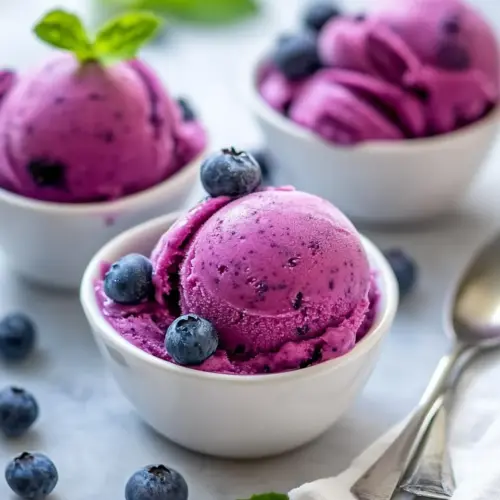
Blueberry Frozen Yogurt
Blueberry Frozen Yogurt delivers creamy, fruity refreshment with a bright blueberry punch and tangy yogurt base. This easy frozen treat is perfect for summer afternoons, offering a light, scoopable texture that is both satisfying and not overly sweet. Ideal as an easy weeknight dessert or a crowd friendly summer snack, try it for a cool, wholesome finish to any meal.
Equipment
- Ninja Creamior
- any ice cream maker
Ingredients
- 1 1/2 cups fresh or frozen blueberries Provide natural sweetness and vibrant color while offering antioxidants and a burst of fruity flavor; can be used fresh or frozen to create a smooth texture when blended and churned in the frozen yogurt base.
- 1/2 cup monk fruit sweetener, or sugar Contribute sweetening power to balance the tartness of yogurt and blueberries; monk fruit sweetener brings zero-calorie sweetness while sugar offers traditional sweetness and can affect freezing point and texture depending on choice.
- 1 tablespoon water Help dissolve the sweetener and create a slightly syrupy consistency that aids incorporation into the blueberry puree; a small amount of water loosens the mixture for better blending and even sweetness distribution.
- 1 teaspoon agave syrup Add a touch of liquid sweetness and enhance overall flavor complexity, helping round out acidity from yogurt and fruit; agave syrup also contributes a bit to the freezing behavior and mouthfeel of the frozen yogurt.
- 1 cup whole milk plain yogurt Provide the creamy, tangy base that gives frozen yogurt its characteristic texture and flavor; whole milk yogurt supplies fat and structure for a rich, smooth finish and stabilizes the mixture during freezing.
Instructions
- In a medium saucepan combine blueberries, monk fruit or sugar and water and cook uncovered medium-low. Simmer stirring until the berries are release their juice and before softened, about 6 to 8 minutes.: You will hear the berries begin to pop and hiss as their skins burst, releasing fragrant, tangy juices that steam and perfume the kitchen. Watch for a few vigorous bubbling points, and stir gently so the fruit cooks evenly and does not scorch on the saucepan surface. This gentle simmer concentrates flavor, creating a syrupy base that will carry through to the frozen yogurt. A common mistake is turning the heat too high, which can reduce the mixture too quickly and give it a jammy thickness rather than a pourable purée. If you see the mixture sticking or browning on the pan bottom, lower the heat immediately and add a splash more water to loosen it.
- Let cool then blend in a blender until smooth and press through a mesh strainer into a large bowl, discard the pulp.: During this phase, you want the skins to loosen and the flesh to soften slightly, keeping some of the berry structure so the flavor stays vibrant instead of cooked flat. The aroma will shift from green and faint to a deep, fruity sweetness that fills the air, and the color becomes a luminous deep purple. Stir every minute or so with a flexible spatula to prevent hot spots, and stop cooking when the berries are tender though not completely collapsed. Overcooking can dull the fresh character and create a darker, caramelized note that masks the fruit, so err on the side of shorter cooking if your berries are very ripe.
- Stir in the agave syrup and yogurt then pour into an empty Ninja Creami pint.: The cooled purée should glide in the blender, giving a glossy, uniform liquid that smells intensely of blueberry. After blending, strain through a fine mesh to remove seeds and bits of skin, yielding a velvety base. You will notice a clean, bright flavor after straining, and the texture should be silky on your tongue. A frequent slip up is skipping the strainer, which can leave a gritty mouthfeel from seeds and small pieces of skin. If your purée seems too thick to pass through, stir in a teaspoon of water to ease it, but avoid thinning it excessively.
- Place storage lid on the pint and freeze flat (make sure it’s not on an angle) for 24 hours.: As you fold in the agave syrup and creamy yogurt , the mixture will take on a glossy sheen and a pleasantly tangy balance. The yogurt tempers the sweetness and builds body, and agave helps maintain a scoopable texture once frozen. Pour carefully into the pint to avoid air bubbles, and wipe the rim clean so the lid seals. Adding the ingredients while the base is warm can curdle the yogurt, so ensure the purée is cooled to touch before combining. Overmixing can incorporate too much air leading to a less dense final product.
- Remove pint from freezer and remove the lid.: Lay the pint flat in the freezer so the mixture sets evenly, creating a consistent texture throughout. During freezing the sugars and dairy crystallize, and a prolonged even freeze yields a smoother outcome when processed. If the pint is tilted, you risk uneven density, with one side softer and the other firmer. Avoid opening the freezer during this period unless necessary, because temperature fluctuations can create ice crystals and a grainy texture.
- Assemble bowl into machine as referred to in the manual and select LITE ICE CREAM.: As you take the pint out, you will feel it firm and cold, with a slight give when pressed lightly. Removing the lid exposes the newly frozen surface which should be firm and opaque. If the surface looks glassy or icy instead of creamy, that is a sign of overfreezing or too much water in the base, and processing will be needed to restore creaminess. A mistake here is letting the pint thaw too long before processing, which can lead to separation and a watery texture.
- When processing is complete, open and if it looks crumbly, add it back to the machine and press the re-spin button and process a little more.: Follow your machine instructions to secure the pint or bowl, then choose the program that matches lighter, scoopable frozen treats. The machine will shave and churn the frozen base into a smooth, spoonable consistency, and you can listen for a steady hum and gentle scraping sounds as the paddle works. If your machine runs too long it may warm the mixture slightly, while too short a cycle can leave it crumbly, so monitor the first run to learn the ideal timing for your model.
- Remove from pint and serve right away.: If the texture is grainy or crumbly right after the first spin, the re spin will help redistribute air and break up ice crystals into a creamier structure. You should see the frozen yogurt transform from coarse bits to a smooth, scoopable mass, with a bright berry scent lifting as air is incorporated. Avoid repeating spins excessively, because over processing can make the mixture too soft or melt it. A common slip is assuming crumbly means failed base, when usually one more short cycle fixes the texture.
- Follow the instructions of your ice cream maker, pouring the mixture in and processing until frozen.: Freshly processed Blueberry Frozen Yogurt should be glossy and soft enough to scoop easily, with vibrant berry notes and a pleasant tang from the yogurt . Serve immediately for the creamiest mouthfeel, and note the contrast between cold creaminess and sharp fruit aroma. If you need to hold it, place it briefly in the freezer to firm slightly, but avoid long storage in a shallow container that invites freezer burn.
- Follow the instructions of your ice cream maker pouring the mixture in and processing until frozen: Your specific machine may have unique load limits, paddle types, or cycle names, so honoring the manual ensures best results. Processing converts the frozen block into aerated frozen yogurt, and different machines produce varying textures depending on churn speed and blade shape. Skipping the manual or overloading the machine can lead to uneven processing and inconsistent texture, so always match capacity to the maker’s guidance.
Notes
- Boost the fruit intensity by stirring in a few tablespoons of concentrated blueberry purée after processing for intense color and fresh bursts of flavor without altering the base texture.
- Adjust sweetness gradually by adding the sweetener in increments and tasting before freezing, this prevents over sweetening and keeps the berry brightness prominent.
- Make it lower sugar by using monk fruit sweetener as suggested in the ingredients, which preserves the final texture while reducing sugar impact.
- Swap the yogurt fat to control richness, whole milk plain yogurt gives the creamiest mouthfeel while lower fat versions freeze firmer and denser.
- Freeze in single serve pints if you want ready portions, they store well and make an elegant grab and go treat for any gathering.
- Repurpose leftovers by blending small scoops into smoothies for a quick, fruity breakfast or snack that echoes the original flavor.