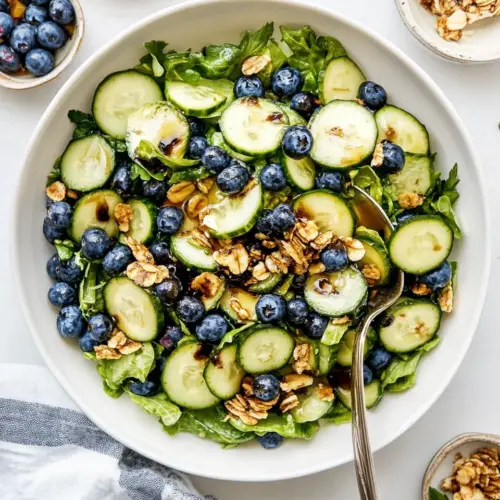
Blueberry Cucumber Summer Salad with Creamy Balsamic Vinaigrette
Blueberry Cucumber Summer Salad with Creamy Balsamic Vinaigrette is a bright, creamy, and crunchy summer salad that pairs sweet blueberry bursts with crisp cucumber and caramelized sliced almonds. This easy weeknight or picnic salad is full of texture and flavor, perfect for light lunches or casual dinners, and worth making for its irresistible seasonal contrast.
Equipment
- nonstick skillet
- Whisk
- Large Bowl
- Parchment Paper
Ingredients
- 2/3 cups sliced almonds Toast until fragrant to add a warm, nutty crunch that contrasts the salad’s tender greens; chopping or slicing controls texture and distribution. Store in an airtight container after cooling to preserve crispness for topping salads or incorporating into dressings.
- 3 tablespoons sugar Add sweetness to balance acidic vinaigrettes and bitter greens, dissolving readily to integrate with wet ingredients; adjust amount to taste for desired sweetness level. Use fine granulated sugar for even mixing and to help mellow sharp flavors in the dressing.
- 8 cups spring greens, baby spinach or your greens of choice Provide a leafy, tender base that offers mild, fresh flavor and a variety of textures; mix varieties like spring greens and baby spinach for complexity. Rinse and dry thoroughly to prevent watering down the salad and to help dressing cling to the leaves.
- salt and pepper Season lightly to enhance and balance the overall flavors, using to taste while assembling the salad and vinaigrette; sprinkle gradually and taste as you go. Use freshly ground pepper for a brighter spice character and kosher or sea salt for cleaner seasoning.
- 4 baby seedless cucumbers, thinly sliced Slice thinly to deliver a crisp, cool bite and refreshing watery crunch that complements sweet blueberries; thin rounds blend seamlessly with greens and dressing. Peel if desired for smoother texture, but keeping the skin adds color and nutrients.
- 4 green onions, thinly sliced Slice finely to add mild oniony sharpness and tender crunch, dispersing flavor without overpowering; both white and green parts contribute different intensities. Scatter across the salad so small bursts of allium brighten each forkful.
- 1 cup blueberries Provide juicy bursts of sweet-tart flavor and vibrant color that contrast the cucumber and greens; add whole or halved depending on fruit size. Select ripe, firm berries for best texture and wash gently to avoid bruising.
- 1/4 cup finely grated parmesan cheese Grate finely to impart a savory, salty, umami richness that binds with the dressing and lifts the salad; sprinkle sparingly to avoid overpowering delicate flavors. Use fresh parmesan for maximum aroma and a slightly granular texture that melts into the vinaigrette.
- 1/4 cup balsamic vinegar Acidify the dressing to add brightness and depth, creating balance with the oil and sweet elements; use as the primary acidic component in the vinaigrette. Choose a quality balsamic for complexity, keeping in mind older balsamics are sweeter and more syrupy.
- 1 garlic clove, minced Mince and incorporate to contribute a pungent aromatic note that enhances savory depth in the vinaigrette; combine with the acid and oil to mellow its sharpness. Crush slightly after mincing to release oils and ensure even distribution throughout the dressing.
- 2 tablespoons heavy cream Enrich the vinaigrette with a silky, creamy texture and subtle richness that softens acidity and adds mouthfeel; stir thoroughly to integrate. Add gradually and taste, as heavy cream can quickly change the dressing’s thickness and flavor balance.
- 2 teaspoons dijon mustard Emulsify and provide a gentle sharpness that helps bind oil and vinegar while adding subtle heat; whisk well to create a stable dressing. Use Dijon for its smooth texture and fermented tang that complements honey and balsamic notes.
- 2 teaspoons honey Sweeten naturally and round out acidic and savory components while contributing a sticky sheen to the vinaigrette; adjust amount to taste. Warm slightly to thin if crystallized, and whisk into vinegar before adding oil for better integration.
- pinch of salt and pepper Season the dressing and salad sparingly to reinforce flavors and provide a finishing touch; use as an additional layer of seasoning beyond general salt and pepper. Use small pinches and taste between additions to avoid oversalting.
- 1/2 cup extra virgin olive oil Provide the fat base for the vinaigrette, lending mouth-coating richness and carrying flavors across the salad; whisk into vinegar and mustard to form an emulsion. Use extra virgin olive oil for fruity, robust character, adjusting quantity for desired dressing consistency.
- 2 tablespoons fresh chives Garnish and impart a mild oniony-herb flavor that brightens the salad and adds a fresh green finish; snip finely to distribute evenly. Scatter over the assembled salad just before serving to preserve color and delicate aroma.
Instructions
- Place the almonds in a nonstick skillet over medium heat. Stir in the sugar and cook, stirring often, until the sugar melts and is caramely, coating all of the almonds - about 6 to 8 minutes. Don’t take your eyes off of this as they can burn quickly! Transfer the almonds to a piece of parchment paper to let them cool. Break them into pieces if they are clumped.: As the sugar melts around the sliced almonds , you will notice a glossy, amber coating forming and a warm, nutty aroma filling the kitchen, a clear sign that caramelization is happening; the sound changes from gentle sizzling to a soft pop as moisture leaves the nuts. This step gives you sweet, crunchy clusters that contrast the salad's tender leaves, and it is why I always use a nonstick skillet to avoid sticking. Keep the heat at medium, and stir constantly with a spatula to distribute the sugar and prevent hot spots. A common mistake is stepping away, which can quickly lead to burned sugar and bitter flavor; if you see any dark smoke or smell an acrid scent, dump the batch and start again. Once the almonds are transferred to parchment, spread them into a single layer so steam escapes, preserving crispness. Let them cool fully until they snap when bent, then break into bite sized pieces. The visual cue is a deep golden color with an even sugary glaze, and the tactile cue is a firm, crunchy bite.
- In a large bowl, toss the greens with a generous pinch of salt and pepper. Sprinkle on the blueberries, cucumbers, green onions and parmesan cheese. Add the almonds on top. Serve immediately with the balsamic dressing!: When you salt the spring greens and baby spinach , they perk up and release a slight moisture that helps the dressing adhere, creating a cohesive mouthfeel. As you toss, notice how the blueberries nestle into the leaves and the thin cucumber slices provide cool contrast. The parmesan cheese melts slightly into the warm almonds, bringing savory depth. A tactile check is to lift a handful and ensure there is a mix of colors and textures, not a single ingredient piled on top. Avoid overdressing at this stage; too much liquid will wilt the leaves and make them limp. I always reserve the almonds to add at the last moment so they remain audibly crunchy. If you see the greens start to look glossy and collapsed, you've overdone the toss; stop and serve immediately to preserve texture.
- Whisk together the vinegar, garlic, cream, mustard, honey and a pinch of salt and pepper. Stream in the olive oil while whisking until emulsified. Stir in the chives. Serve with your favorite salad! This dressing stays great in the fridge. Just shake or whisk it to combine before serving.: The first sensory cue is the bright, acidic tang of balsamic vinegar hit by the sharpness of raw garlic , balanced by the soft roundness of heavy cream and the sweet kiss of honey . As you whisk, you should see the mixture lighten and thicken slightly, evolving into a glossy emulsion once the extra virgin olive oil is incorporated; the whisking sound becomes smoother and the texture should cling to the whisk. The reason for streaming the oil slowly is technical, it forces small droplets to suspend and stabilize, preventing separation. If the dressing breaks and looks watery, try whisking in a teaspoon of dijon mustard or a splash of cream to bring it back together. Taste and adjust with tiny pinches of salt and pepper; the dressing should taste lively but balanced. Finally fold in the chopped chives for a fresh onion note and bright green flecks. Store in a sealed jar in the fridge, where it will thicken slightly; bring to room temperature and shake or whisk before using. If you notice a raw garlic bite that is too strong, let the dressing rest for 30 minutes to mellow.
Notes
- Caramelize with attention: Watch the sliced almonds closely while the sugar melts, stirring constantly to avoid bitterness.
- Prep produce last: Slice the cucumbers and wash the blueberries right before assembly to keep them firm and fresh.
- Emulsify properly: Stream the extra virgin olive oil slowly into the vinegar mixture while whisking to ensure a smooth, clingy dressing.
- Reserve crunch: Add the caramelized almonds just before serving so they remain crisp against the tender greens.
- Taste as you go: Adjust the dressing with small pinches of salt and pepper and a touch more honey if it needs mellowing.