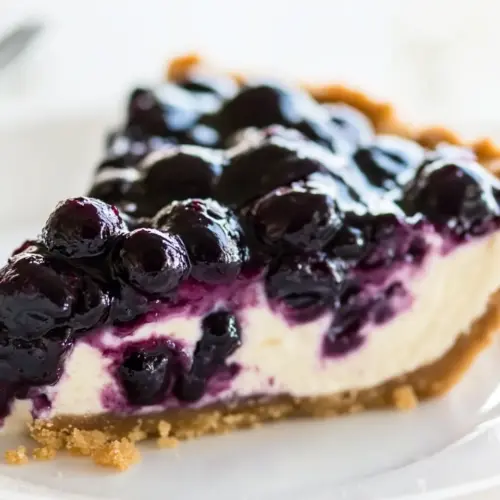
Blueberry Cheesecake Pie
Blueberry Cheesecake Pie is a creamy, tangy dessert with a crunchy graham cracker crust and a glossy, fruity topping. This easy to slice pie blends silky cream cheese filling with bright blueberries, making it ideal for summer gatherings and easy weeknight celebrations. It delivers crowd pleasing texture and flavor, so you will want to make it again and again.
Equipment
- 9-inch pie plate
- Mixing Bowl
- Electric Mixer
- Medium Saucepan
- Wire Rack
Ingredients
- 2 cups (168 g) graham cracker crumbs, about 9 whole graham crackers Provide a crunchy, buttery base when combined with melted butter and pressed into the pan; adds texture contrast to the creamy filling and helps absorb moisture to keep the pie stable. Use finely crushed crumbs for an even crust and press firmly to create a compact layer that bakes evenly.
- 2 tablespoons light brown sugar Add a touch of sweetness and subtle molasses flavor to balance the savory crumbs; helps caramelize slightly during baking to deepen crust flavor. Use sparingly to avoid overpowering the graham crackers while enhancing overall taste.
- 1/4 teaspoon (0.25 teaspoon) ground cinnamon Introduce a warm, aromatic note that complements the sweet crumbs and deepens the crust profile; enhances complexity without making the crust spicy. Measure carefully because ground cinnamon is potent and can dominate delicate flavors if overused.
- Pinch of salt Enhance the overall flavor by balancing sweetness and highlighting other spices; helps elevate the crust and filling without being detectable. Use just a pinch to prevent salinity from overpowering the dessert.
- 1/4 cup (56.75 g) unsalted butter, melted Provide fat to bind the crumbs into a cohesive, sliceable crust and add rich mouthfeel; melted form allows even coating and easier pressing into the pan. Use fully melted and slightly cooled butter to avoid creating soggy spots in the crust.
- 8 ounces (226.8 g) cream cheese, at room temperature Create the rich, creamy body of the filling and supply tanginess that defines cheesecake character; soften to room temperature for smooth, lump-free blending. Beat until light and airy to incorporate air and improve texture before adding other filling ingredients.
- 1/3 cup (66.67 g) granulated sugar Sweeten the cream cheese mixture to balance its tang and contribute to the filling's structure; dissolves into the batter for uniform sweetness. Adjust slightly for personal taste but maintain proportion to preserve cheesecake density.
- 2 eggs, at room temperature Provide structure and leavening to the filling while contributing to a silky texture; incorporate at room temperature to prevent curdling and ensure an even bake. Add eggs one at a time and mix gently to avoid overbeating, which can cause cracks.
- 1 teaspoon lemon juice Brighten and cut through richness with a fresh citrus note that enhances overall flavor complexity; helps balance sweetness in the filling. Use freshly squeezed lemon juice for the best brightness and avoid bottled juice for superior flavor.
- 1 teaspoon vanilla extract Impart aromatic sweetness and roundness to the filling while complementing lemon and cream cheese flavors; vanilla rounds out the overall profile and masks any eggy notes. Use pure vanilla extract for the most natural flavor contribution.
- 2 cups (296 g) fresh blueberries Deliver fresh, juicy bursts of fruity flavor and visual appeal when folded into or topping the cheesecake; whole berries provide texture contrast to the smooth filling. Gently fold or reserve some for a compote to avoid crushing and bleeding blue color into the filling.
- 1/2 cup (125 ml) water Serve as the liquid base to cook down blueberries into a glaze or compote; helps dissolve sugar and activate cornstarch for thickening. Simmer gently to extract berry juices and concentrate flavor without burning.
- 1/3 cup (66.67 g) granulated sugar Sweeten the blueberry mixture to taste and help balance the berries' natural tartness; dissolves into the cooking liquid to create a glossy sauce. Adjust quantity depending on berry sweetness and desired glaze consistency.
- 1 1/2 tablespoons (1.5 tablespoons) cornstarch whisked into 2 tablespoons water Thicken the blueberry cooking liquid into a glossy compote or sauce when whisked into water and added to simmering berries; provides stability and sheen. Combine thoroughly with cold water to prevent lumps and add gradually to hot fruit while stirring until clear and thickened.
Instructions
- Make the Crust: Preheat oven to 350 degrees F. In a bowl, whisk together the graham cracker crumbs, brown sugar, cinnamon and salt. Drizzle in the melted butter and toss together with a fork until all of the crumbs are evenly moistened. Press into a 9-inch pie plate. Bake for 8 minutes. Place on a wire rack and cool completely. Reduce oven temperature to 325 degrees F.: Preheat oven to 350 degrees F : As the oven warms, you will sense a gentle dry heat that helps the graham cracker crumbs crisp. The warm air readies the pie plate so the crust firms quickly once baked. A common mistake is not preheating, which leads to inconsistent crust texture and longer bake times, so always wait until the oven reaches temperature.
- Make the Cheesecake Filling: Using an electric mixer, beat the cream cheese and sugar on medium speed until light and fluffy, about 2 minutes. Add the eggs, lemon juice and vanilla extract, and beat on medium-low speed until smooth and creamy and no lumps remain. Pour the filling into the prepared crust and bake for 25 minutes, or until set (the top shouldn't be browned at all). Place on a wire rack and allow to cool to room temperature, then refrigerate for at least 1 hour.: The mixture should smell toasty and slightly sweet, with the cinnamon adding a warm note. Whisking aerates the crumbs and evenly distributes the brown sugar and spices, preventing clumps. Avoid over mixing to the point of powdering the crumbs, or the crust can become too dense and crumbly after baking.
- Make the Blueberry Topping: Combine the blueberries, 1/2 cup water and sugar in a medium saucepan over medium-high heat. Bring to a boil, then cover, reduce the heat to medium-low and simmer for 5 minutes, stirring once. Uncover, stir in the cornstarch mixture, increase the temperature to medium and bring to a boil. Boil, stirring constantly, for 1 minute. Remove from heat and let cool to room temperature. Spoon topping over chilled cheesecake pie. Refrigerate for at least 1 hour before serving. Cover and refrigerate leftovers for up to 5 days.: You will feel the crumbs begin to clump and take on a glossy sheen as the butter coats them. The oily aroma from the butter mingles with the crackers, promising a rich crust. If you add too much butter , the crust will be greasy and may not set properly, so go slowly and aim for even moisture without saturation.
- Press into a 9-inch pie plate: Pressing the crumb mixture firmly creates an even base that will hold the filling. Use the bottom of a measuring cup to compact the crumbs, feeling the resistance change as the crust firms. An uneven press leads to cracks or thin spots that can leak filling, so work from the edges inward to create a uniform thickness.
- Bake for 8 minutes: During this short bake, the crust deepens in color and releases a warm, toasty scent. You should hear only a faint settling sound, and the edges will feel set when lightly tapped. Underbaking yields a crumbly base, while overbaking can dry it out, so stick close to the time and keep an eye on subtle browning.
- Place on a wire rack and cool completely: The crust cools as air circulates, losing surface steam and becoming firm to the touch. A cool crust prevents the filling from melting into the crumbs and keeps layers distinct. If you rush this and add warm filling, the crust can become soggy, so patience here preserves structure.
- Reduce oven temperature to 325 degrees F: Lowering the oven for the filling ensures a gentler bake that sets the cheesecake without browning the top. The oven will move from a drier heat to a more forgiving environment, which helps retain moisture in the filling. Skipping this step can cause an overbrowned top or cracked surface.
- Using an electric mixer, beat the cream cheese and sugar on medium speed until light and fluffy, about 2 minutes: As you mix, the cream cheese softens and incorporates air, turning from dense to billowy, with a faint tang in the aroma. Properly aerated filling yields a light texture after baking. A frequent error is beating too fast or using cold cream cheese , which results in lumps, so ensure the cream cheese is at room temperature and mix at the suggested speed.
- Add the eggs, lemon juice and vanilla extract, and beat on medium-low speed until smooth and creamy and no lumps remain: The batter will become glossy and smooth, smelling of citrus and vanilla. Mixing at medium-low reduces aeration that could cause cracks, while ensuring eggs are fully incorporated for structure. Overbeating at high speed traps excess air which can lead to a porous, cracked top, so keep the speed moderate and check for a homogenous texture.
- Pour the filling into the prepared crust and bake for 25 minutes, or until set (the top shouldn't be browned at all): The filling will settle and slightly puff, and the center should have a slight wobble like gelatin while the edges are set. You should not see browning. The aroma will be rich and lightly tangy. If you bake until browned, you risk a dry, cracked surface, so stop when the center jiggles gently and the edges are firm.
- Place on a wire rack and allow to cool to room temperature, then refrigerate for at least 1 hour: Cooling slowly lets the filling contract gently, minimizing cracks and allowing flavors to meld. In the fridge the filling firms into the perfect sliceable texture. A common mistake is slicing too warm, which makes the pie collapse; wait until it is properly chilled for clean slices.
- Combine the blueberries, 1/2 cup water and sugar in a medium saucepan over medium-high heat: As the mixture warms, the blueberries release bright, fruity aromas and begin to soften. The bubbling will sound lively as the fruit starts to break down. Watch closely because fruit can go from simmer to scorch quickly, so maintain moderate heat and stir occasionally to prevent sticking.
- Bring to a boil, then cover, reduce the heat to medium-low and simmer for 5 minutes, stirring once: The covered simmer steams the blueberries and encourages juices to flow, resulting in a vibrant, saucy consistency. You will notice a richer berry perfume. Do not over simmer beyond the time given, or the fruit may become overly soft and lose its bright flavor profile.
- Uncover, stir in the cornstarch mixture, increase the temperature to medium and bring to a boil: Adding the cornstarch slurry will thicken the sauce rapidly, going from runny to glossy as it reaches a boil. Stirring constantly now prevents lumps and ensures a smooth glaze. A common pitfall is not whisking the cornstarch into water first, which can produce gritty bits in the topping.
- Boil, stirring constantly, for 1 minute: In that minute the sauce will gel and deepen in color, smelling sweet and intensely fruity. Continuous stirring keeps it uniform and prevents scorching at the pan edges. If you boil longer than recommended, the mixture can become too thick and lose fresh berry brightness.
- Remove from heat and let cool to room temperature: Cooling allows the topping to thicken slightly and lose excess steam so it sets nicely on the chilled pie. The texture should be glossy and spoonable, not syrupy hot. Pouring it while too hot may melt or soften the filling, so waiting ensures clean layers and better texture.
- Spoon topping over chilled cheesecake pie: The contrast of cool creamy filling and slightly chilled, glossy blueberry topping is delightful. Use a spoon to spread gently, leaving an even layer that glistens under light. A common slipup is piling on too much topping, which can make slices fall apart, so aim for a balanced amount.
- Refrigerate for at least 1 hour before serving: Chilling gives the topping time to set and the flavors to integrate, which improves slicing and presentation. The pie will become firmer and the topping will hold without sliding. Cutting before this rest can yield messy slices that do not hold their shape.
- Cover and refrigerate leftovers for up to 5 days: Stored properly, the pie keeps its texture and flavor, and chilling allows the filling to remain stable. Use a pie saver or plastic wrap to prevent odor absorption. Avoid long storage beyond the timeframe, as the crust can soften and the topping may lose freshness.
Notes
- Swap crust texture Try pulsing the graham crackers a little coarser for a chunkier bite, pressing firmly so the crust still holds.
- Sugar level If you prefer less sweetness, reduce the filling sugar by a tablespoon and taste the topping before adding it to the pie.
- Room temperature ingredients Always let the cream cheese and eggs sit out for at least 30 minutes so they blend smoothly and avoid overworking the batter.
- Topping thickness For a looser fruit topping, slightly reduce the cornstarch slurry; for a firmer glaze, add another half teaspoon cornstarch mixed into a little water.
- Make ahead timing You can bake the crust and filling the day before, chill overnight, and add the topping just before serving for the freshest appearance.