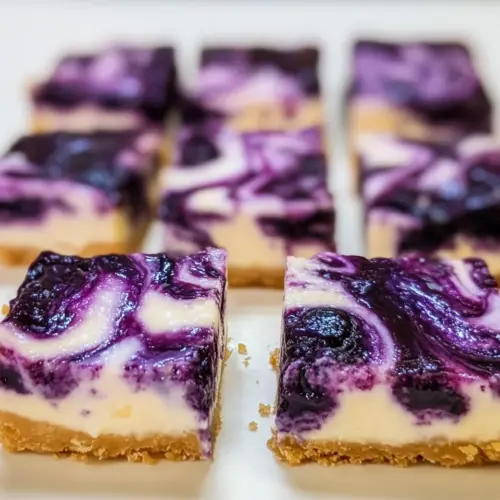
Blueberry Cheesecake Bars
Blueberry Cheesecake Bars are creamy, slightly tangy, and topped with a bright blueberry swirl that adds fresh fruit flavor. This easy make ahead dessert delivers a silky filling and optional crust for texture, perfect for summer gatherings or a casual weeknight treat. Try it chilled for clean slices and a crowd pleasing finish that keeps everyone asking for seconds.
Equipment
- 8 inch baking pan
- Parchment Paper
- Small Saucepan
- Mixing Bowl
- Immersion blender or fork
Ingredients
- 1/2 cup blueberries Freshly pick or rinse and gently fold to add bright, juicy bursts of flavor and little pockets of sweetness throughout the bars.
- 1 tbsp sweetener of choice Granulate and sprinkle to provide sweetness while allowing control over sugar type and intensity in both filling and topping.
- 2 tsp lemon juice (optional) Squeeze and stir in to brighten the filling with acidity and balance the sweetness; optional for a tangier blueberry note.
- optional zest of one lemon Zest and grate lightly to introduce concentrated citrus oils that lift aroma and enhance overall flavor complexity when used.
- 12 oz cream cheese or vegan cream cheese Soften and beat until smooth to create the rich, creamy base that gives the bars their classic cheesecake texture and body.
- 3/4 cup plain yogurt Whisk until combined to contribute tanginess, moisture, and a slightly lighter texture, helping balance the richness of the cream cheese.
- 1/2 cup sweetener of choice (see above for options) Measure and blend to sweeten the filling; offers flexibility in sweetness level and type depending on dietary choices.
- 1 1/2 tsp pure vanilla extract Add and mix in for warm aromatic depth and to enhance the perceived sweetness and overall flavor balance in the filling.
- 1 tbsp cornstarch (or 4 tbsp almond flour) Starch and thicken or swap with almond flour to stabilize the filling, prevent weeping, and produce a firmer sliceable texture.
- optional crust (two options are listed above) Prepare or omit as preferred to provide a crunchy or nutty base option that supports the creamy filling and adds contrast.
Instructions
- Line an 8 inch pan with parchment. If using a crust, press it into the pan. Bring cream cheese to room temperature. Preheat the oven to 350 F. If you have an extra baking pan (of any size), fill it halfway with water and place it on the lower rack of the oven. This optional step adds moisture to the oven and helps prevent the blueberry cheesecake bars from cracking. Whisk the blueberries, lemon, and 1 tbsp sweetener in a small saucepan over medium heat, stirring constantly. Mash with a fork or immersion blender. Set aside. Blend all filling ingredients just until smooth. Do not over-blend. Smooth filling into the prepared pan. Add spoonfuls of blueberry topping, then use a knife or toothpick to swirl it into the filling. (You can see a visual in the recipe video above.) Place on the oven's center rack. Bake 25 minutes, then do not open the oven door even a crack, but let the bars sit in the turned-off oven for an additional ten minutes. Remove from the oven, and allow to cool fully before transferring to the refrigerator for a few hours (or overnight). The still-jiggly bars will firm up considerably as they cool in the fridge.: The aroma of baking is comforting, and lining the pan makes unmolding effortless, ensuring neat edges when you lift the bars out later. Use parchment that extends over the sides to create handles, and press it snugly into the corners so the filling cannot seep underneath. A common mistake is not smoothing the parchment, which can cause the filling to pool unevenly. If your pan is slightly larger, use extra parchment to compensate so you can lift the final bars cleanly.
- If using a crust, press it into the pan.: Pressing the crust creates a stable base that supports the filling and gives a satisfying bite contrast. I press firmly with the bottom of a measuring cup so the crust is compact and even. You should feel resistance under the cup as the crust compacts, and the surface should look uniform. Rushed pressing can leave gaps that allow the filling to seep, so take your time to ensure an even, packed layer.
- Bring cream cheese to room temperature.: A room temperature cream cheese blends smoothly, preventing lumps and giving a silky texture to the filling. It should be soft enough that a spoon glides through with little resistance, yet not melting. If you skip this step, you risk a grainy filling from over mixing to break up cold chunks. If you are short on time, cut the block into small pieces to speed softening, but avoid using heat which can change texture.
- Preheat the oven to 350 F.: Preheating ensures even baking from the start, so the filling sets uniformly rather than baking unevenly from the edges in. You should feel warm air and see the oven indicator reach temperature. A common issue is placing the pan in before the oven is ready, which lengthens bake time and can alter texture. Always wait until the oven signals it is fully preheated.
- If you have an extra baking pan of any size, fill it halfway with water and place it on the lower rack of the oven.: Adding that pan of water creates steam which tempers the oven heat and helps prevent the filling from cracking by keeping the environment humid. The water should sit calmly and not splash as you place the cheesecake on the center rack. Avoid boiling water spills which can be hazardous, and do not skip this if you live in a very dry climate, as cracking becomes more likely.
- Whisk the blueberries, lemon, and 1 tbsp sweetener in a small saucepan over medium heat, stirring constantly.: As the mixture heats, you will hear a soft simmer and see the berries begin to burst, releasing their juices. Constant stirring prevents scorching and helps break down the fruit evenly. Cook until it becomes jam like, taking on a glossy sheen. A typical mistake is turning the heat too high, which can burn the sugars and produce a bitter taste, so keep it moderate and attentive.
- Mash with a fork or immersion blender.: Mashing creates texture, giving you both smooth swirls and small fruit bits that pop with flavor. If you prefer a completely smooth topping, use an immersion blender briefly, watching for a puree that still holds some body. Over blending will make the topping too thin, while under mashing can leave large chunks that may make swirling harder, so aim for a balance that pleases you visually and on the palate.
- Set aside.: Letting the topping cool slightly stops it from dissolving the filling when swirled in, preserving visual contrast and preventing the filling from becoming too wet. The cooled fruit will still be warm, offering aroma and softness without melting the cream layer. A common slip is adding piping hot topping which can thin the filling and change bake behavior, so patience here makes a big difference.
- Blend all filling ingredients just until smooth.: Blending briefly gives you a luxuriously smooth filling with a tender mouthfeel, and prevents over aeration which can lead to cracking. Watch for no visible lumps of cream cheese and a glossy, homogenous batter. Over blending incorporates excess air, which causes the filling to puff and then sink or crack, so stop as soon as smooth.
- Do not over-blend.: The texture will remain dense and creamy when you avoid over mixing, and the filling will hold without trapping too much air. If you notice bubbles or foamy peaks, reduce mixing time next time and scrape the sides of the bowl gently. Overwork the batter and the finished bars may develop an undesirable texture and surface cracks, so be gentle.
- Smooth filling into the prepared pan.: Spreading the filling evenly ensures consistent bake and thickness across the pan so every square pulls apart uniformly. Use an offset spatula or the back of a spoon to level the surface, watching for a flat, glossy top. If you leave high spots, they may brown or bake quicker, so take the extra minute to smooth carefully.
- Add spoonfuls of blueberry topping, then use a knife or toothpick to swirl it into the filling.: The contrast of deep purple swirls against the pale filling is as much for looks as flavor, concentrating blueberry in each bite. Drop the topping in small dollops so it distributes evenly, and drag a knife through in a figure eight to create pretty veins. Avoid over swirling which can blend the topping away and mute its punch.
- Place on the oven's center rack.: Positioning centrally allows even heat circulation, which helps the filling set uniformly. You want the pan level and clear of walls so air moves freely around it. A common error is placing too close to the back or top, causing uneven browning or undercooked centers, so always choose the middle rack when in doubt.
- Bake 25 minutes, then do not open the oven door even a crack, but let the bars sit in the turned off oven for an additional ten minutes.: During baking you will see the edges set and the center remain slightly jiggly, which is exactly what you want. Letting the bars rest in the warm oven gradually completes the set while preventing a sudden temperature drop that causes cracks. Opening the oven too soon leads to a collapse, so resist the urge to peek until the oven has cooled down a bit.
- Remove from the oven, and allow to cool fully before transferring to the refrigerator for a few hours or overnight.: Cooling on the counter first lets residual steam escape slowly, and chilling firms the bars for clean slicing. The texture tightens as the temperature drops, and the flavors meld. A frequent mistake is trying to slice warm bars which results in sticky, messy pieces, so plan ahead and chill adequately.
- The still jiggly bars will firm up considerably as they cool in the fridge.: That final chill creates a creamy, sliceable consistency that holds together when plated. You want the center to feel set but slightly yielding when nudged, indicating a smooth, custardy interior. Cutting too early gives a loose texture and ragged slices, so wait until chilled through for best presentation.
Notes
- Use vegan cream cheese: Replace the dairy cream cheese with a plant based alternative to make the bars suitable for vegan guests, watching for slight differences in texture which may need extra chilling time.
- Try almond flour as a thickener: Swap the 1 tablespoon of cornstarch for 4 tablespoons of almond flour to add a gentle nuttiness and a denser set, which I like when I want more body without changing flavor.
- Make a crumb crust: Press a simple crumb crust into the pan for added texture, compacting it firmly to support the filling and help produce tidy slices when serving.
- Adjust sweetness to taste: Use your preferred sweetener and taste the filling before baking, remembering that chilling slightly mutes sweetness so err on the lighter side if unsure.
- Double the batch for a crowd: Use a larger pan or bake two pans simultaneously, increasing bake time slightly and checking for a tender set in the center to avoid overbaking.