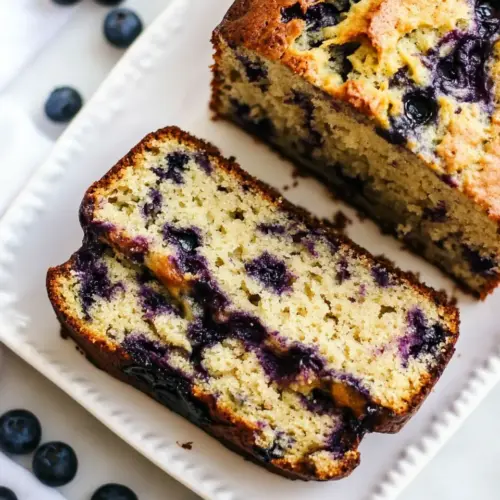
Blueberry Banana Bread
Blueberry Banana Bread is a moist, fruity loaf blending creamy banana sweetness with juicy blueberries. This easy, comforting bake offers tender crumb, light crust, and bright berry bursts, ideal for breakfast or an easy weeknight snack. Make it to enjoy dependable results and a loaf that travels well for sharing.
Equipment
- Oven
- 9x5 loaf pans
- Electric Mixer
- Mixing Bowls
- Spatula
Ingredients
- 1/2 cups softened (1 stick butter) Softened to creaming consistency, provides rich fat and structure while helping incorporate air when beaten with sugar. Enhances tenderness and contributes to moist crumb and flavor throughout the bread.
- 1 cup granulated sugar Granulated sugar sweetens the batter and aids in browning, contributing to the loaf's color and flavor development. Works with butter to create a lighter texture by trapping air during creaming.
- 2 large eggs beaten Beaten to combine whites and yolks for even distribution, contributes moisture and protein that set the loaf's structure during baking. Helps bind ingredients and adds richness and a tender crumb.
- 3 ripe bananas smashed Smashed for natural sweetness and moisture, adds banana flavor and soft texture while contributing to the loaf's density. Provides fruitiness and helps keep the bread moist over several days.
- 2 cups flour Used as the primary dry component to give the loaf its body and structure by forming the gluten network when mixed with liquids. Balances wet ingredients and affects final texture depending on mixing.
- 1 teaspoon baking soda Leavened as a chemical rising agent to release carbon dioxide when reacting with moisture and acidic components, helping the bread rise. Controls crumb openness and lightness without yeast fermentation.
- 1/2 teaspoon salt Seasoned minimally to enhance overall flavor balance and strengthen gluten slightly, aiding in dough control and taste clarity. Prevents the loaf from tasting flat by accenting sweetness and fruit notes.
- 1 1/2 cups fresh blueberries tossed in 1 tablespoon of flour Tossed in flour to prevent sinking, provides bursts of fresh fruit flavor and moisture while distributing evenly through the batter. Adds color contrast and a juicy texture that complements the banana bread.
Instructions
- Preheat oven to 375 F degrees. Spray two 9×5 loaf pans with nonstick spray. Set aside.: The kitchen will fill with a warm, anticipatory scent as the oven comes up to temperature, which primes the baking environment for even rise and browning. A properly preheated oven ensures the batter begins setting right away, which helps the loaf develop a good crust and internal structure. One common mistake is putting the loaf into an oven that is not fully up to temperature, which can cause under rise and an uneven crust.
- In a large bowl, using an electric or stand mixer with paddle attachment cream butter and sugar together until light and fluffy.: When you prepare the pans, the surface should glint slightly from the spray, which helps the loaves release cleanly after cooling. Properly greased pans encourage the edges to pull away without tearing, and they also promote even browning on the sides. Avoid over greasing, since excess can pool and create greasy spots on the crust.
- In a small bowl, beat eggs using a fork. Add eggs to the sugar mixture and beat until combined. Add mashed bananas and mix until combined.: As you cream the butter and sugar , listen for a gentle softening sound and watch the mixture become pale and slightly airy, signaling that air has been incorporated to lighten the crumb. This step builds the loaf’s tender texture by entraining small bubbles. A frequent error is under creaming, which yields a dense crumb, or over creaming, which can make the batter too soft to hold structure.
- Sift all dry ingredients: flour, baking soda, and salt. Slowly add sifted dry ingredients to the banana mixture and mix until flour is just combined. DO NOT OVERMIX! Fold in floured covered blueberries.: Beating the eggs briefly helps them combine smoothly into the batter without causing curdling. You should see them become uniform in color and a bit frothy at the edges, which indicates good incorporation readiness. Failing to beat the eggs can lead to streaks and inconsistent texture in the loaf.
- Pour batter into prepared loaf pans and bake at 375 F for 15 minutes. REDUCE heat to 350 F and bake for an additional 30 minutes until edges are slightly brown or until come out clean. Let cool completely before removing from loaf pans.: The mixture should look cohesive and glossy once the eggs are worked in, and the batter will loosen slightly. This step harmonizes fats and liquids so the final crumb is tender and even. A common slip is adding the eggs too quickly to cold butter , which can cause separation, so ensure the butter is properly softened.
- Add mashed bananas and mix until combined: When you fold in the mashed bananas , the batter will smell sweet and slightly fruity, and you will see streaks of banana distributed through the dough. These contribute moisture and depth; if you leave large chunks, you will get concentrated pockets of banana which is fine if you like pronounced flavor. Overmixing at this stage can deflate the batter and lead to a tougher loaf.
- Sift all dry ingredients flour, baking soda, and salt: Sifting brings air into the flour and helps the baking soda and salt distribute evenly, preventing localized bitter or overly salty bites. Visually, the sifted mix should be light and uniform, making it easier to fold into the wet ingredients. Skipping sifting can result in lumps of leavener that create odd textures.
- Slowly add sifted dry ingredients to the banana mixture and mix until flour is just combined: As you incorporate the dry mix, you will notice the batter thicken and change from glossy to a slightly denser texture. The key is to stop when you no longer see streaks of dry flour ; this prevents gluten overdevelopment, which keeps the crumb tender. Overmixing at this point causes a chewy, dense loaf, so resist the urge to keep stirring.
- Fold in floured covered blueberries: Gently folding in the floured blueberries preserves their shape, so you will get intact juicy bursts rather than bleeding. You should use a light hand and a rubber spatula, watching the batter take on faint blue speckles without turning completely purple. A usual mistake is stirring vigorously, which can burst the berries and tint the entire loaf.
- Pour batter into prepared loaf pans and bake at 375 F for 15 minutes: When the pans go into the oven, the surface will begin to set and create initial oven spring, sending a lovely aroma through the kitchen. That first high temperature jump helps set the crust and encourage rise. Putting the pans in before the oven is fully hot will reduce this spring, so be sure the oven reads correctly.
- Reduce heat to 350 F and bake for an additional 30 minutes until edges are slightly brown or until come out clean: After the initial period, lowering the temperature prevents overbrowning while allowing the center to finish cooking. You will notice the crust deepen to a warm golden and the loaf no longer jiggles in the middle. Use a skewer to test doneness, and avoid removing too early, which yields gummy centers, or baking too long, which dries the loaf out.
- Let cool completely before removing from loaf pans: Cooling lets the crumb set and tighten, making slicing neater and preventing the loaf from collapsing. The smell will calm into a steady warm fruit aroma, and the loaf will firm to the touch. Trying to unmold while hot risks breakage and a gummy interior, so patience here rewards you with clean slices.
Notes
- Use very ripe bananas for maximum sweetness and moisture, which enhances the banana flavor without adding extra sugar.
- Freeze fresh blueberries briefly if they are overripe, then toss in flour to maintain structure and minimize leaking into the batter.
- Swap granulated sugar for a mix of half brown sugar for a deeper, caramel like taste while keeping moisture.
- Lightly toast your flour in the oven for a nuttier aroma, but cool thoroughly before using to avoid activating the leavener.
- Mix by hand for a rustic crumb if you prefer a denser, more artisanal texture compared to beating with a mixer.
- Chill the batter briefly for cleaner slices and more controlled berry distribution if your kitchen is very warm.