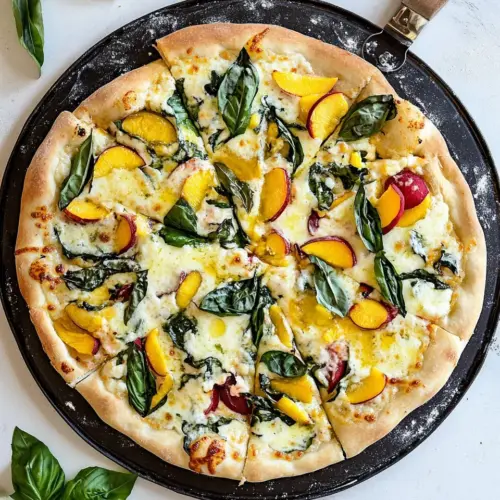
Blue Cheese Peach Pizza with Honey
Blue Cheese Peach Pizza with Honey pairs creamy mozzarella, tangy blue cheese, and juicy peach on a blistered crust for a sweet and savory easy weeknight dinner. The final honey drizzle and fresh basil lift each bite, creating a balance of creamy, crispy, and bright flavors that will make it a repeat summer favorite. Try it for a crowd pleasing, unique pizza experience.
Equipment
- Oven
- Pizza Stone
- Small skillet
- Pizza Peel
Ingredients
- 3 tablespoons olive oil Brushes the dough and toppings with fruit-friendly richness; olive oil promotes browning and prevents sticking while adding a subtle fruity note that complements peach and cheese. Use it sparingly to avoid soggy crust, and choose extra-virgin for brighter flavor or regular for a neutral base.
- 1 clove garlic (sliced in half lengthwise) Adds a fragrant garlic backbone; sliced clove imparts gentle savory aromatics without overpowering the delicate sweetness of peach when placed cut-side down or removed after infusing oil. Allow it to warm briefly in the oil to release flavor, avoiding prolonged charring that creates bitterness.
- 1 store-bought or homemade pizza dough Provides the structural base for the pizza; store-bought or homemade dough determines crust thickness, chew, and overall texture of the finished pie. Proof and shape according to preference, and preheat the baking surface to ensure a crisp bottom and tender interior.
- 1 large (just-ripe peach) Contributes juicy sweetness and a tender, caramelizing fruit layer; a just-ripe large peach slices thinly to meld with cheese and char at high heat. Pit and slice evenly so each bite balances sweet fruit with savory cheeses, and consider brushing lightly with oil to promote browning.
- 6 ounces mozzarella cheese Melts into a gooey, milky layer that binds toppings; six ounces of mozzarella provides mild creaminess and excellent melting performance for even coverage. Shred or tear to encourage uniform melting and pair it under or over peach slices depending on desired texture contrast.
- 1 to 2 ounces blue cheese Offers pungent, tangy contrast in a small amount; one to two ounces of blue cheese delivers sharp umami and saline bite that balances the peach's sweetness. Crumble sparingly to dot the pizza so pockets of intense flavor pop without dominating the overall profile.
- 1 to 2 tablespoons honey (for serving) Adds sticky floral sweetness when drizzled after baking; one to two tablespoons of honey brightens flavors and ties together cheese and fruit with a glossy finish. Apply sparingly to taste to avoid excessive sweetness and preserve textural contrast.
- 2 to 3 tablespoons julienned basil (for serving) Provides a bright herbal finish and fresh aroma; two to three tablespoons of julienned basil sprinkled after baking lifts richness and adds a peppery, aromatic note. Tear or chiffonade to release oils and add immediately before serving for maximum fragrance.
- Chili Flakes or Pickled Jalapenos Introduces heat or tangy heat as an optional accent; chili flakes or pickled jalapenos contribute spiciness and acidity that can cut richness and amplify flavor layers. Offer sparingly so spice complements rather than overwhelms the sweet-savory balance.
Instructions
- Heat your oven to 475˚F with a pizza stone. Heat olive oil in a small skillet. Add the garlic and fry until the garlic is golden. Remove from heat and let rest until ready to use. Before using, remove garlic.: When the oven and pizza stone roar with heat, you will get a crisp, bubbly crust that cooks quickly and seats the toppings without sogginess. You should notice the oven air feels noticeably hot when you open it, and the stone will radiate warmth. The technique matters because a cold stone makes for a limp base, which ruins the contrast between crunchy edge and tender center. One common mistake is not letting the stone preheat long enough, which leads to uneven browning; patience here equals texture payoff.
- Prepare the pizza topping. Thinly slice the peaches and grate the mozzarella cheese.: As the oil warms, it will shimmer and exude a soft, fruity aroma, indicating it is ready to receive the garlic . This step infuses the oil so the crust picks up subtle savory notes without raw garlic. Watch the oil carefully, because overheated oil can smoke and give off a bitter taste. If the oil starts to smoke, discard and start over at a lower temperature.
- On a good non-stick surface (like a pizza peel sprinkled with cornmeal), stretch and roll the dough into a circle roughly 12 to 14” in size. Spread the garlic-infused olive oil over the pizza dough then layer with the thinly sliced peaches, grated mozzarella cheese, and crumbled blue cheese.: The garlic will sizzle softly and the edges will turn a warm golden hue; that color signals the sugars are caramelizing and flavor is developing. Pull it off the heat before the slices brown too dark, as they can turn bitter. A common error is leaving the garlic in the oil until it darkens, which produces an unpleasant burnt note that lingers on the palate.
- Transfer the pizza to a pizza stone and bake until the cheese has melted and the crust is golden.: Let the skillet cool so the infused olive oil can mellow, and the garlic continues to release aroma without further cooking. The oil will retain the garlic essence and coat the dough lightly when applied. If you apply piping hot oil to dough, it may cause the dough to become greasy or cook unevenly, so allow it to rest briefly.
- Remove the pizza from the oven and drizzle with honey and sprinkle with julienned basil.: Take out the garlic halves so they do not char in the oven and become bitter on the pizza. This keeps the oil's flavor balanced and prevents unexpected sharp bites. Many people leave the pieces in, which can lead to crunchy, overcooked garlic bits that distract from the tenderness of the peach .
- Prepare the pizza topping: As you thinly slice the peach and grate the mozzarella , you will feel the contrast between supple fruit and springy cheese. Thinner peach slices heat through evenly and release less juice, while freshly grated mozzarella melts more smoothly. Avoid slicing peaches too thick, otherwise they may remain cold in the center when the crust is done.
- Thinly slice the peaches and grate the mozzarella cheese: The sound of the knife through a ripe peach is soft and yielding, and grated mozzarella piles into light ribbons that melt beautifully. Properly prepared toppings ensure even cooking and balanced bites. A frequent slip is shredding cheese too coarsely, which delays melting and leaves the pizza uneven.
- On a good non-stick surface stretch and roll the dough into a circle roughly 12 to 14” in size: As you stretch, you should feel the dough relax and thin, forming a slightly thicker rim. The surface will show a gentle film of flour or cornmeal to prevent sticking, and the rounded edge traps air so you get those classic oven bubbles. Overstretching will tear the dough, while under stretching yields a small, thick base that may not cook through fully.
- Spread the garlic-infused olive oil over the pizza dough then layer with the thinly sliced peaches, grated mozzarella cheese, and crumbled blue cheese: Once the dough is dressed with warm, aromatic olive oil , arrange the peach slices so they overlap slightly and the mozzarella forms a molten cushion. Crumble the blue cheese sparingly so pockets of tang emerge as it softens. If you pile toppings too densely, the crust can become soggy, so aim for balance and visual spacing.
- Transfer the pizza to a pizza stone and bake until the cheese has melted and the crust is golden: When the pizza hits the stone, you will hear a faint sizzle and the crust should begin to puff within minutes. Look for bubbling mozzarella and golden edges; the aroma will shift to toasty and caramelized. Don’t overbake, because char can become bitter and the peach may dry out. Using a peel to slide the pizza on and off the stone helps prevent tearing.
- Remove the pizza from the oven and drizzle with honey and sprinkle with julienned basil: Freshly out of the oven, drizzle the warm pie with honey so it glazes the top, then scatter the bright basil ribbons for fragrance and color. The contrast between hot and cool, sweet and savory is what makes each bite sing. A common mistake is drizzling too much honey, which makes slices sticky and masks the savory contrasts you worked to build.
Notes
- Use burrata for creaminess, swap in a small ball of burrata in place of some mozzarella for a luscious, creamy center that melds beautifully with the peach.
- Try a whole wheat dough if you want more bite and a nuttier flavor; it will brown differently, so watch the oven a touch more closely.
- Add a crunchy finish by sprinkling toasted pine nuts after baking for texture contrast against the soft peach.
- Turn up the heat by adding a light dusting of Chili Flakes or Pickled Jalapenos to a few slices for those who crave a spicy counterpoint to the honey.
- Make it vegetarian friendly by keeping the composition focused on peach, cheeses, and herbs so vegetarians can enjoy a refined pizza experience.
- Serve open faced as individual flatbreads for a party presentation that looks elegant and invites sharing.