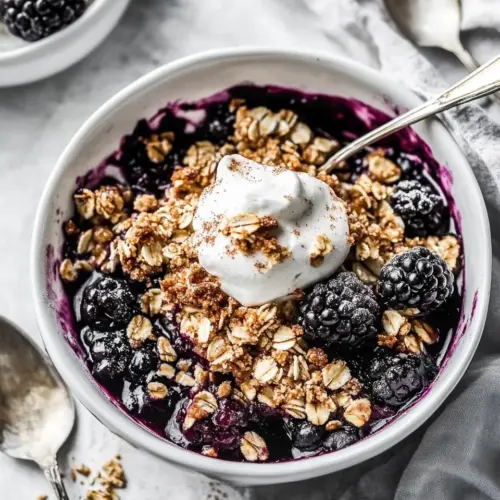
Blackberry Crisp
Blackberry Crisp is a warm, crispy topped dessert with juicy blackberries, toasty oats, and crunchy nuts. This easy crowd pleasing treat pairs floral honey and aromatic vanilla with a nutty oat coconut topping, perfect for an easy weeknight dessert or a relaxed weekend breakfast. Make it with fresh or frozen berries for an approachable, comforting bake that's worth sharing.
Equipment
- Oven
- 8×8 inch baking dish
- Mixing Bowls
- Spatula
Ingredients
- 6 cups blackberries, fresh or frozen—do not thaw if frozen Provide juicy, tart-sweet fruit that forms the base of the crisp, releasing juices as it bakes and creating the filling’s texture and flavor; fresh or frozen both work, though frozen should remain unthawed to prevent excess sogginess.
- 2 tablespoons cornstarch Thicken the fruit juices by absorbing excess liquid during baking, helping the filling set and preventing a runny texture while allowing the berries to remain vibrant and intact.
- 1/3 cup honey or pure maple syrup Sweeten the fruit naturally while adding moisture and a glossy finish to the filling; honey or maple syrup also contributes subtle floral or caramel notes that complement the blackberries.
- 1 1/2 teaspoons pure vanilla extract Enhance and deepen the overall flavor profile with warm, aromatic notes that round out the sweetness and brighten the fruit, contributing a familiar baked-dessert aroma.
- 1 cup old fashioned rolled oats Add hearty texture and chew to the topping, providing structure and a wholesome mouthfeel that crisps up in the oven to contrast the tender fruit.
- 3/4 cup chopped walnuts, almonds, or pecans (untoasted) Contribute crunch and a toasty, nutty richness to the topping while providing healthy fats and a satisfying contrast to the soft filling; leave untoasted to control final roast level.
- 1/2 cup almond flour or almond meal Provide tender, buttery crumb structure and bind the topping ingredients together while contributing a mild nutty flavor and some additional fat for tenderness.
- 1/2 cup flaked coconut (I prefer unsweetened; sweetened works too) Introduce a light, tropical chew and subtle sweetness to the topping, balancing the nuts and oats while crisping up to add more textural contrast.
- 1/2 teaspoon ground cinnamon Warm and aromatic spice that complements the fruit and nuts, enhancing the overall flavor without overpowering the natural blackberry brightness.
- 1/4 teaspoon kosher salt Balance sweetness and amplify flavors by providing a small savory backbone that elevates the fruit and topping components without tasting salty.
- 1/3 cup extra virgin olive oil or melted coconut oil Replace butter with a neutral oil to moisten and help bind the topping while adding richness and ensuring the topping crisps rather than remains greasy; choose oil for desired flavor notes.
- 1/3 cup honey or pure maple syrup Add additional sweetening and help caramelize the topping during baking, creating a glossy, cohesive crumble that holds together and provides pleasant chew and crisp edges.
- Vanilla ice cream, frozen yogurt, or Greek yogurt or nonfat plain greek yogurt for breakfast Serve as a cool, creamy accompaniment that contrasts the warm crisp; choose vanilla ice cream, frozen yogurt, or Greek yogurt to add creaminess, acidity, or protein depending on desired indulgence or breakfast suitability.
Instructions
- Place a rack in the center of your oven and preheat to 350 degrees F. Lightly coat a deep 8×8-inch or similar baking dish with nonstick spray. Set aside.: As the oven warms to a steady 350 degrees F, you will notice the room gain a faint warmth and the oven indicator reach its set point. Preparing the dish ahead means you can work confidently when the fruit and topping are ready to assemble. Use a deep 8×8 inch baking dish so the filling has room to bubble without overflowing, and a light coat of nonstick spray prevents the sugars from sticking to the sides. A common mistake is waiting to preheat until after assembly, which can lengthen bake time and affect texture; always preheat first. If you hear any popping from the oven when it first heats, that is normal metal expansion. Visually, the interior should be evenly heated before you slide the dish in, and having the rack centered promotes even browning on the topping.
- Place the blackberries in a large mixing bowl, then scatter the cornstarch over the top. Add the honey and vanilla, then fold gently to combine.: When you scatter the cornstarch over cold or room temperature blackberries , you will see a powdery dusting that helps absorb juices as they release heat during baking. Drizzling the honey and adding the vanilla brings a glossy sheen and aromatic warmth to the berries. Fold gently so the berries remain intact and you do not crush them into puree; this keeps the texture interesting. You should notice a light, sticky coating on the fruit, and the mixture will smell floral and sweet from the honey and vanilla . A pitfall is overmixing, which breaks berries and makes the filling too thin; fold just until combined. If using frozen berries, do not thaw them first so they hold shape better and release juices gradually.
- Transfer to the prepared baking dish.: As you scrape the bowl into the dish the berries will settle into a glossy bed, and you may hear a soft sliding sound as the fruit shifts. Spreading them evenly helps the topping sit uniformly and bake consistently. Visually, aim for a level layer with berries reaching near the dish edges, leaving a little space so bubbling juices can rise without spilling heavily. Avoid piling fruit too high in the center, which can delay even cooking. If you notice too much excess syrup pooling, gently redistribute some berries to absorb it; the goal is an even, not soupy, layer.
- In a medium bowl, combine the oats, walnuts, almond meal, coconut, cinnamon, and salt.: When you mix these dry components, the aroma of cinnamon and toasted nuts will start to come forward, even before the oven is on. The texture will be coarse and crumbly, with visible flakes of coconut and pieces of chopped walnuts or chosen nuts. Combining them dry ensures even distribution so each bite gets oats, nuts, and coconut. A common error is adding wet ingredients too soon, which can clump the mixture; keep them separate until you are ready to moisten. Use a spoon or your fingers to check for uniformity; the mixture should look cohesive but not wet at this point.
- Drizzle the olive oil and honey over the top, then use a spatula to combine until the dry ingredients are evenly moistened. It will be thick and sticky.: As you add the oil and honey , watch the dry mix transform; the flakes and crumbs will take on a sheen and begin to cling together. The scent will deepen, with the oil lending roundness and the honey creating caramel notes during baking. Mixing until evenly moistened ensures the topping toasts uniformly and binds into crisp clusters, which is what gives that wonderful crackly texture. Avoid over wetting, which can make the topping soggy; it should be thick and sticky but not runny. If you see large pools of oil, fold a bit more to absorb them. A troubleshooting note: if your topping seems too dry once combined, add a teaspoon of oil at a time until the right consistency is reached.
- Spread the filling over the top.: Spoon and gently press the topping over the berry layer so it covers completely, creating pockets and peaks that will brown beautifully. The contrast between the ruby filling below and the pale oat topping above is delightful to see, and spreading by hand or spatula helps you control thickness for even baking. Expect a tactile feedback as the topping compresses slightly; that is normal. Do not press so hard that you compact the berries beneath, which can steam rather than bubble. If any fruit is exposed at the edges, tuck a few topping bits over to prevent excessive bubbling over the rim.
- Bake the crisp until the filling is hot and bubbly, about 45-55 minutes. Check the crisp at the 30-minute mark. If the topping becomes too brown, tent with foil, then continue baking until ready. Let rest for 10 minutes, then serve warm, smothered with vanilla ice cream, homemade whipped cream, or Greek yogurt.: During baking, you will notice the kitchen fill with a warm, fruity perfume and the topping slowly deepen to a golden brown. The telltale sign the crisp is done is vigorous bubbling from the center and edges, with the topping evenly browned. At 30 minutes check for over browning; if the peaks are getting too dark, gently tent foil to protect them while the interior finishes. Letting the dish rest for 10 minutes is crucial, because the filling will thicken as it cools slightly, making it easier to serve neat portions. A common mistake is slicing immediately, which yields loose, runny servings. Serve warm with a scoop of cold frozen treat or a dollop of Greek yogurt for contrast, and listen for the crunch as you serve: that sound is pure joy.
Notes
- Swap nuts freely Use walnuts, almonds, or pecans interchangeably to change the topping's flavor profile without altering texture, choosing what's freshest or most affordable.
- Choose your sweetener Opt for honey for floral notes or pure maple syrup for a deeper caramel nuance, both will brown nicely in the topping and pair beautifully with the fruit.
- Make it gluten friendly The recipe already leans gluten friendly when using almond flour and oats labeled gluten free, offering a hearty crisp without wheat.
- Adjust sweetness for tart berries If your blackberries are very tart, add a tablespoon more honey to the filling, tasting as you go to hit your preferred balance.
- Toasting adds depth Lightly toast the chopped nuts and coconut before mixing into the topping for intensified nutty notes and extra crunch.
- Make ahead option Assemble the topping and store it separately in an airtight container, then sprinkle over the berries and bake right before serving for fresh texture.