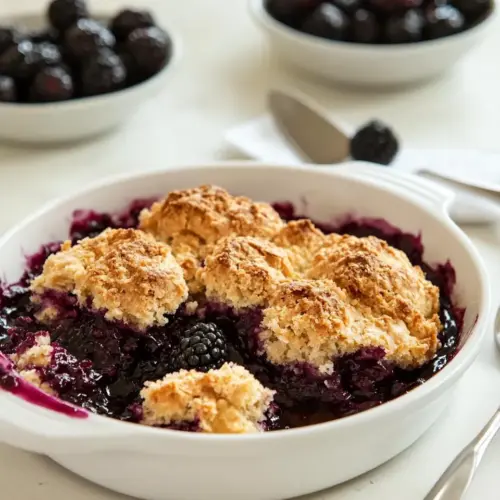
Blackberry Cobbler
Blackberry Cobbler delivers jammy blackberries with a golden oat studded topping, offering a warm, cozy dessert that is easy to pull together. This simple, rustic bake balances sweet and tart, creating a creamy syrupy filling and a slightly crunchy top, ideal for easy weeknight dinners or relaxed weekend gatherings. Make it whenever you want a comforting, fruit forward dessert that impresses without fuss.
Equipment
- Baking Dish
- Mixing Bowls
- Pastry blender
- Wire Rack
- Oven
Ingredients
- 2 pounds (about 907 grams) fresh blackberries or other berries (about 6 cups) Provide juicy sweetness and body to the filling; macerate with sugar to draw out juices and supply the primary berry flavor and texture that defines the cobbler.
- cup (133 grams) plus 4 tablespoons (48 grams) granulated sugar, divided Sweeten and balance berry tartness while creating syrup when combined with fruit juices; divided use allows part for macerating the berries and part for sprinkling into the topping for light caramelization.
- 1/4 cup (24 grams) cornstarch Thicken the berry juices into a glossy filling; mix with sugar before combining with fruit to prevent lumps and ensure a stable, spoonable consistency when baked.
- 1 tablespoon (15 grams) fresh lemon juice Brighten and lift the fruit flavors while adding a touch of acidity; incorporate into the filling to balance sweetness and enhance the overall brightness of the cobbler.
- 1 teaspoon (3 grams) kosher salt, divided Enhance overall flavor complexity and control sweetness perception; divide salt between filling and topping to deepen flavors without making the dessert salty.
- 1 cup (125 grams) all-purpose flour Provide structure and tenderness to the biscuit-like topping; combine with leavening and butter to create the base of the cobbler’s crust.
- 1/2 cup (55 grams) old-fashioned oats Add rustic texture and nutty flavor to the topping while absorbing some moisture; oats contribute chew and contrast to the soft baked dough.
- 2 teaspoons (10 grams) baking powder Leaven the topping so it rises and becomes light and pillowy; distribute evenly in the dry mix to ensure consistent rise throughout the cobbler crust.
- 5 tablespoons (70 grams) cold unsalted butter Create flakiness and richness in the topping by cutting cold butter into the dry ingredients; small cold pieces produce pockets of buttery steam that yield tender layers.
- 1/2 cup (120 grams) whole milk Moisten and bind the topping ingredients while contributing richness; use cold milk to hydrate the dough and form a cohesive batter that bakes into a tender crust.
Instructions
- Preheat oven to 375°F (190°C). Lightly spray a 1 1/2- to 2-quart baking dish with baking spray with flour.: Warm air envelops the oven as it comes to temperature, and you might notice a faint toasty scent when it reaches heat. Preheating ensures the butter in the topping hits a hot environment immediately, which helps create small steam pockets and an even rise. One common mistake is sliding the pan into an oven that is not fully preheated, which can lead to slower browning and a denser topping, so always wait until the oven signals it is ready.
- In a large bowl, stir together berries, ? cup (133 grams) sugar, cornstarch, lemon juice, and 1/2 teaspoon (1.5 grams) salt until combined, slightly mashing berries to release juices. Pour mixture into prepared pan.: The first smells here are bright and fruity, with sugar drawing moisture out of the blackberries and cornstarch starting to dissolve into the juices. As you gently mash a few berries, you will see deeper purple streaks and a glossy sheen forming, and the mixture should feel syrupy rather than watery. The reason for slight mashing is to release enough juice to mingle with the sugar while still retaining some whole berries for textural contrast. A frequent error is overmashing and losing berry texture, which makes the filling too uniform, so stop as soon as some juice is visible and a few berries are crushed.
- In a medium bowl, whisk together flour, oats, 2 tablespoons (24 grams) sugar, baking powder, and remaining 1/2 teaspoon (1.5 grams) salt. Using a pastry blender or your hands, cut in cold butter until butter pieces are pea-size; stir in milk. Using a 3-tablespoon spring-loaded scoop, scoop dough, and drop onto berry mixture in pan. Using your hands, slightly flatten dough, if desired. Sprinkle remaining 2 tablespoons (24 grams) sugar onto dough.: As you work the cold butter into the dry mix, you will feel coarse pebbles of dough, and little flecks of butter will remain visible. Those pea sized lumps are the secret to a flaky texture, since they melt during baking, creating steam. After adding milk , the dough will come together into a soft, slightly sticky mass, smelling of oats and warm grain. People sometimes overwork this dough, which can develop gluten and make the topping tough, so aim for just combined.
- Bake until topping is golden and berry mixture is thick and bubbly, 40 to 45 minutes, covering with foil during final 20 minutes of baking to prevent excess browning. Let cool on a wire rack for at least 30 minutes. Serve warm or at room temperature.: Dropping the dough yields an irregular, rustic top that bakes into golden islands. When the pieces hit the bubbling fruit they will sink just a touch, creating pockets where syrup gathers. Lightly flattening helps the topping brown more evenly and melds the surface with the fruit juices. The sugar on top carmelizes and creates a pleasant crunchy finish. Avoid pressing too hard or spreading the dough thin, as that can cause uneven baking and a soggy center under the topping.
- Bake until topping is golden and berry mixture is thick and bubbly, 40 to 45 minutes, covering with foil during final 20 minutes of baking to prevent excess browning. Let cool on a wire rack for at least 30 minutes. Serve warm or at room temperature.: During baking you will hear gentle bubbling and smell caramelizing sugars and toasty oats, signals that the filling is reducing and the topping is crisping. The bubbling indicates the cornstarch has activated, thickening the juices, while the topping will go from pale to a warm golden brown. Covering with foil in the final stage avoids an overly dark crust while still letting the center cook through. After removing from the oven, resting on a wire rack lets the filling settle and thicken further; cutting in too soon can result in runny portions, so wait the recommended time. A typical oversight is underbaking slightly, which leaves a slippery filling, so rely on those audible bubbles and a golden topping to know it is done.
Notes
- If berries are very juicy reduce the initial sugar by a tablespoon to avoid an overly loose filling, since extra juice combined with sugar can thin the mixture and require longer baking time.
- If you do not have fresh blackberries frozen blackberries work well, but do not thaw them completely before mixing, as partial freezing helps prevent the filling from becoming overly watery during assembly.
- For a crisper topping sprinkle the assembled dough with a teaspoon of extra sugar before baking to encourage caramelization and a crunchy finish without changing the interior texture.
- If you prefer less sweetness reduce the sugar in the filling by up to one quarter cup, tasting as you go if you are working with especially sweet berries.
- To make ahead prepare the filling and store it covered in the baking dish for up to twelve hours in the refrigerator, then add the topping and bake when ready to serve.