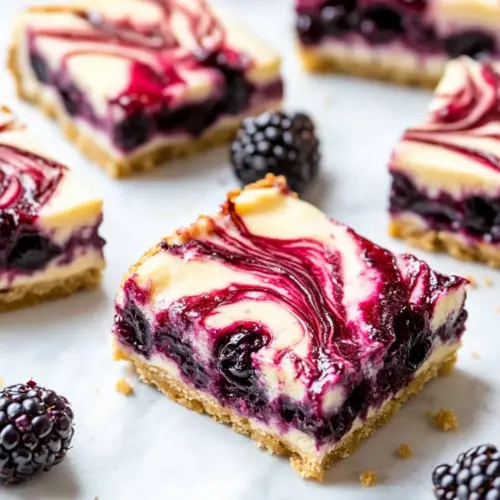
Blackberry Cheesecake Bars
Blackberry Cheesecake Bars are creamy, tangy, and visually stunning, combining a buttery graham crust with a silky cream cheese filling and a bright blackberry swirl. This easy dessert is perfect for summer gatherings or weeknight treats, offering a delightful balance of sweet and tart that keeps everyone coming back for seconds. Make it for a crowd and enjoy a reliably impressive finish.
Equipment
- Oven
- 9x13-inch Baking Pan
- Aluminum Foil
- Food Processor
- Handheld electric mixer
- Fine-mesh strainer
- wire cooling rack
Ingredients
- 2 and 1/4 cups graham crackers, pulsed into crumbs Crushed to form the base, provides structure and a toasty flavor that holds the crust together when combined with butter. Use fine crumbs for an even, compact crust that presses firmly into the pan. Pulsing ensures uniform texture and quicker mixing with melted butter.
- 1/2 cup granulated sugar Sweetens the crust and balances the tanginess of the filling while aiding caramelization during baking. Sprinkle evenly into crumbs before adding butter to distribute sweetness uniformly. Adjust slightly if using sweeter crackers or toppings.
- 1/4 teaspoons salt Enhances overall flavor by balancing sweetness and accentuating other ingredients; also strengthens the crust slightly. Dissolve into the crumb mixture to ensure even salt distribution. Use measured amounts to avoid overpowering the cheesecake's delicate taste.
- 1/2 cup (8 tablespoons) unsalted butter, melted Binds the graham crumbs when mixed, creating a cohesive, sliceable crust and contributing rich, buttery flavor. Melt completely and pour evenly over crumbs before pressing into the pan for an even layer. Cool slightly so it combines without cooking the crumbs.
- (4) 8 ounce blocks of full-fat cream cheese, very soft Softened to a very smooth, creamy consistency to create the rich, silky cheesecake filling; provides primary fat and tang. Beat at medium speed to eliminate lumps and incorporate air for a lighter texture. Bring to room temperature to ensure uniform mixing and prevent graininess.
- 1 and 1/4 cups granulated sugar Sweetens the cream cheese filling and helps achieve a balanced flavor profile while contributing to the filling's structure. Add gradually while whipping to dissolve fully and maintain a creamy texture. Use measured amount to prevent over-sweetening.
- 3 large eggs plus 2 egg yolks, at room temperature Adds richness and helps set the filling by contributing proteins that coagulate during baking for a custard-like texture. Beat one at a time into the cream cheese to ensure even incorporation and avoid curdling. Use room-temperature eggs for smooth blending.
- 2 teaspoons fresh lemon zest Brightens the filling with citrus aroma and a subtle acidic note that cuts through richness for a fresher taste. Finely grate only the yellow part to avoid bitterness from the pith and distribute zest evenly into the batter. Adds complexity without thinning the mixture.
- 1/4 cup fresh lemon juice Provides acidity to balance richness and slightly stabilize the filling by interacting with dairy proteins. Strain if needed to remove seeds, and mix with other wet ingredients for even dispersion. Freshly squeezed juice offers the best bright flavor.
- 1 and 1/2 tablespoons all-purpose flour Lightly thickens the filling and helps stabilize it, yielding a firmer set and smoother texture without graininess. Sift or whisk in to avoid lumps and incorporate just until combined to prevent overworking the batter. Small amounts are sufficient for structure.
- 1 cup fresh blackberries Adds small pockets of fresh fruity flavor and a tart-sweet contrast to the creamy filling; offers visual appeal and bursts of juice. Gently fold in to keep berries intact and prevent color bleeding throughout the batter. Rinse and pat dry to avoid excess moisture.
- 1/4 cup granulated sugar Sprinkles over berries or filling to enhance sweetness and balance berry tartness while also helping to stabilize the fruit during baking. Toss with berries or stir into the top layer gently to ensure even sweetness. Can caramelize slightly on the surface for extra flavor.
Instructions
- Preheat oven to 350 degrees (F).: The room fills with gentle warmth as the oven comes up to temperature, and preheating ensures the crust begins to bake immediately for a crisp edge. I always wait until the oven signals ready, because putting the pan into a cold oven changes baking times and can lead to a soggy crust. A common mistake is assuming the oven is ready after a short beep, so allow the full preheat cycle.
- Line a 9×13-inch baking pan with aluminum foil, allowing two of the sides to overlap. Spray foil and any exposed pan with non-stick baking spray; set aside.: The foil creates a convenient sling for lifting the bars out after chilling, and the spray prevents sticking. I press the foil so it lies flat and the overlap gives me handles for removal. If you skip the spray, the butter in the crust can glue the edges to the pan, making it hard to release clean bars.
- In the body of a blender or food processor, combine graham crackers, sugar, and salt; pulse until the crackers have been completely transformed into fine crumbs. Add melted butter and stir well to combine. Press down evenly into prepared pan. Bake in preheated oven for 10 minutes; set aside to cool.: As you pulse, the kitchen will smell warm and biscuity, a good sign you are creating a fragrant base. The crumbs should be fine like wet sand so they bind with the melted butter . Press firmly and evenly with the bottom of a measuring cup to compact the crust, which prevents crumbling later. Watch the crust while it bakes for a light golden color, since overbaking can harden it while underbaking leaves it loose.
- In a large bowl using a handheld electric mixer (or in the bowl of a stand mixer fitted with the paddle attachment) beat the cream cheese until completely smooth, scraping down the sides of the bowl as needed; about 3 minutes. Add in the sugar, eggs, and egg yolks and beat until smooth and creamy; about 2 minutes. Turn the mixer off. Using a rubber spatula, fold in the lemon zest and lemon juice, stirring until combined. Quickly fold in the flour, stirring just until combined. Pour the cheesecake batter on top of the partially baked crust. Set aside to make your blackberry swirl.: When you beat the cream cheese , the texture should become glossy and lump free, which indicates it is thoroughly softened. Adding the sugar and eggs should result in a silky, homogenous batter that ribbons slightly off the beaters. Scrape the bowl often so no pockets of unwhipped cream cheese remain. Folding in the lemon zest and juice brightens the batter, and the small amount of flour stabilizes the set without making it cakey. A typical error is overbeating after the eggs are added, which traps air and can cause cracking in the oven.
- In a small food processor or blender, puree the blackberries until completely smooth. Press the mixture through a fine mesh strainer, discarding seeds and pulp. Stir in the granulated sugar.: The puree should be a vivid deep purple with an aromatic, tart fragrance. Straining removes seeds that would create an unpleasant gritty texture, leaving a glossy sauce that swirls beautifully. Stirring in the sugar mellows the tartness, but taste first because berry ripeness affects sweetness. If you skip straining, seeds will interrupt the silkiness of each bite.
- Spoon the blackberry mixture on top of the unbaked cheesecake layer, a few dollops at a time. Use a skewer to swirl the mixture gently.: When you spoon the puree, dot the surface in an even pattern so the color distributes across the pan. Using a skewer, draw gentle S shaped motions to create marbling without overmixing; you want distinct streaks. The visual cue is a balanced contrast, not a homogenous purple. Over swirling will blend the colors and lose the attractive ribboning effect.
- Bake for 35-40 minutes, or until the cheesecake layer is set at the edges and only slightly wiggly in the center. Place the pan of cheesecake bars on top of a wire cooling rack and cool at room temperature until the pan is no longer hot.: As the bars bake the edges will firm and take on a faint ivory color, while the center will jiggle like gelatin when nudged, indicating it is not overdone. A thermally consistent oven helps here, and the sound is a quiet, steady oven hum rather than a loud fan. Removing too early leaves the center unset, while overbaking creates dryness and small cracks.
- Place cheesecake bars in the fridge until completely cooled, about 2 hours. When ready to serve, use the overlapped aluminum foil to lift the cheesecake out and onto a large cutting board.: Chilling firms the filling so slices cut cleanly and flavors meld. You will feel a cool, solid texture under the foil when it is fully chilled. Use the foil sling to lift slowly, keeping the slab level to avoid slumping. Cutting before adequate chilling creates messy slices and a softer mouthfeel than intended.
- Cut cheesecake into 16 bars and serve.: A sharp knife warmed under hot water and wiped dry makes neat slices, producing glossy edges and minimal crumbs. Each bar should reveal a defined crust, creamy interior, and a beautiful blackberry swirl. If the knife drags, wipe it between cuts to maintain tidy portions. Serving too soon can result in squashed bars that lose their elegant shape.
Notes
- Room temperature ingredients: Ensure the cream cheese and eggs are at room temperature so the batter becomes ultra smooth without lumps, which prevents overmixing and reduces the risk of cracks.
- Fine crumb crust: Pulse the graham crackers until very fine so the butter can coat every particle, giving a cohesive crust that holds together when sliced and does not crumble apart.
- Strain the puree: For a professional look and silky mouthfeel, press the blackberry puree through a fine mesh sieve to remove seeds that would otherwise create an uneven texture.
- Gentle swirling: Use a skewer for delicate S shaped swirls to create distinct ribbons of fruit, and stop before the colors fully blend to preserve visual contrast.
- Even baking: Place the pan on the center rack and avoid opening the oven during the final bake to maintain steady heat, which helps the filling set evenly without cracking.
- Pre make puree: You can prepare the blackberry puree a day ahead and refrigerate it, which saves time on bake day and allows the flavors to mellow.