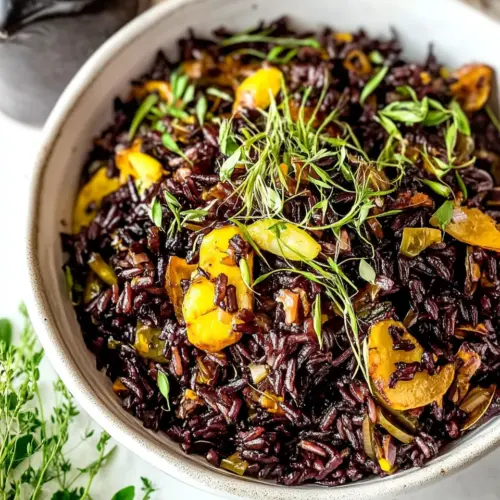
Black Rice Recipe
Black Rice Recipe is a nutty, chewy grain dish accented with roasted acorn squash, toasted pecans, bright orange zest, and fresh thyme. This easy fall side is visually striking and perfect for an easy weeknight dinner or a holiday spread, offering a balance of textures and cozy flavors worth making again and again.
Equipment
- Sauce pot
- Baking Sheet
- Oven
Ingredients
- 1 1/2 cups black rice wild or forbidden Rinse and simmer to unlock nutty, chewy grains that provide the dish’s hearty base; cook in a 2:1 liquid ratio until tender and slightly al dente. Retain any excess cooking liquid to adjust texture and enhance the final plate’s moistness.
- 2 tablespoons butter oil for vegan Melt or heat to enrich and bind flavors while helping to sauté aromatics; contributes a silky mouthfeel and depth. Substitute with neutral oil for a vegan option without losing richness.
- 2 shallots peeled and diced Peel and mince to add a mild onion-like sweetness and aromatic lift when softened; sautée until translucent to release sugars and fragrance. Incorporate early in cooking to form the flavor foundation alongside fats.
- 1 cup pecan pieces Toast or briefly pan-roast to develop toasty, buttery notes and crunchy texture that contrast the rice’s chew. Chop further if desired to distribute nutty bursts through every bite.
- Zest of 1 orange Zest to impart bright, citrusy aroma and a hint of floral bitterness that lifts the overall flavor profile; use only the colored peel to avoid pith. Scatter over the finished dish to add freshness and a visual pop.
- 2 tablespoons fresh thyme leaves Strip and chop leaves to contribute an earthy, savory herbaceousness with subtle lemony accents; add toward the end to preserve fresh flavor and color. Use whole leaves for garnish or mix into the rice for integrated aroma.
- 2 tablespoons vegetable oil Heat to create a hot skillet surface for roasting squash and crisping components; provides a neutral frying medium that won’t overpower other flavors. Use sparingly to achieve golden browning without smoking.
- 1 acorn squash peeled, seeded, and diced Peel, seed, and dice to offer sweet, tender chunks that bring seasonal sweetness and body; roast or sauté until caramelized to concentrate sugars and deepen flavor. Pair with nuts and herbs for balanced texture and taste.
- Salt and pepper Season to enhance and balance all elements by amplifying natural flavors and controlling overall taste; adjust gradually and taste as you cook. Use freshly ground pepper to add mild heat and complexity.
Instructions
- Set a medium sauce pot over medium heat. Add the butter and shallot and saute for 2 minutes. Then add the rice and toss to coat in butter. Add the appropriate amount of water as directed on the rice package (from 3-4 cups depending on the variety of rice). Add 1 1/2 teaspoons salt, cover, and bring to a boil.: The moment you warm the pot you should notice a light shimmer if using oil, or a gentle foaming if you are melting butter . This heat level is important so the shallots soften without burning, releasing their sweet aromatics into the fat. Listen for a faint sizzle as you add the shallots , and watch them turn translucent, which usually takes a couple of minutes. If they brown too quickly, your heat is too high, and that can add unwanted bitterness. A common mistake is rushing this step, leading to raw shallot pockets in the finished rice.
- Once boiling, stir, lower the heat to medium-low, cover, and simmer until cooked through—follow time directed on rice package.: As the butter melts the aroma will lift, a warm, nutty scent that signals flavor development. After about two minutes, the shallots will give up their sharp edge and become tender. This gentle sauté ensures the rice will pick up that savory background note. Avoid letting the shallots caramelize deeply at this stage, because you want their sweetness balanced rather than dominant.
- Meanwhile, preheat the oven to 450 degrees F. Toss the peeled and diced acorn squash in oil and spread over a baking sheet. Roast in the oven for 15 minutes. Turn and spread the acorn squash again and roast another 10 minutes. In the last 2-3 minutes sprinkle the pecans over the acorn squash so the pieces can toast.: When you add the black rice you will notice the grains glisten as they take on the buttery sheen. Toasting them briefly in the fat helps develop a hint of roasted nuttiness, and it also encourages even cooking later. Use a wooden spoon to stir so the grains are well coated and separated. Do not let them sit without stirring, or clumps can form and cook unevenly.
- Once the rice and roasted acorn squash are ready, toss together with orange zest and thyme. Then salt and pepper to taste. Serve warm or at room temperature!: Different black rice varieties call for different water ratios, often between 3 to 4 cups for this quantity. When you pour the water in, you should see the pot fill and the grains start to move freely. The correct water amount is crucial to avoid a gummy result, so consult your rice package and err on slightly less water rather than more. Overly wet rice will be sticky, and rescuing it is difficult without drying it out.
- Add 1 1/2 teaspoons salt cover and bring to a boil: Salt at this point seasons the entire pot, not just the surface, so it infuses the grains as they cook. When the mixture comes to a boil you will see steady bubbles across the surface and a rising steam. Put the lid on to trap heat and steam, which will cook the rice efficiently. A frequent error is lifting the lid too often during this phase, which releases steam and increases cooking time.
- Once boiling stir lower the heat to medium low cover and simmer until cooked through: After stirring to prevent any grains sticking, reduce heat so the pot simmers gently, producing occasional small bubbles. This low, steady simmer lets the rice absorb the water slowly, producing tender yet separate grains. Visual cues include the surface appearing less liquid and the rice swelling. If you see vigorous bubbling, reduce the heat, because a rolling boil can break down the grains and make them mushy.
- Meanwhile preheat the oven to 450 degrees F: A hot oven is what creates those caramelized edges on the acorn squash . You will feel the kitchen heat up, and soon the oven will hum and release a dry heat that encourages browning. Preheating fully is essential, because placing the squash into an underheated oven will cause steaming rather than roasting. The common misstep is putting the tray in too early, which prevents proper texture development.
- Toss the peeled and diced acorn squash in oil and spread over a baking sheet: When coated in vegetable oil each cube will gleam and slide slightly on the pan, ensuring direct contact with the hot surface for caramelization. Spread them into a single layer so air circulates and they roast rather than steam. You want the squash edges to develop golden brown spots, a sign their natural sugars are caramelizing. If they are crowded they will release moisture and become soft rather than crisp at the edges.
- Roast in the oven for 15 minutes turn and spread the acorn squash again and roast another 10 minutes: As the squash roasts you will notice a sweet aroma and the edges darkening gradually. Turning them midway encourages even browning and prevents any one side from charring. After the total time the cubes should be tender when pierced but still hold their shape, with pockets of browned caramel. If they remain pale, give them a few extra minutes, but monitor closely, since overroasting will dry them out.
- In the last 2 3 minutes sprinkle the pecans over the acorn squash so the pieces can toast: Adding the pecans at the end allows them to warm and take on a toasty sheen without burning. You will hear a faint toasting scent and see the nuts deepen in color slightly. This brief exposure is enough to bring out their oils and crunch. If you add them too early they can char and become bitter, so timing here matters.
- Once the rice and roasted acorn squash are ready toss together with orange zest and thyme: As you combine the warm black rice with roasted acorn squash , the heat will evaporate volatile citrus oils from the orange zest, releasing bright aromatics that lift the dish. The fresh thyme will wilt slightly into the warmth, marrying with the other flavors. This final toss encourages the textures to mingle, creating contrasts between chewy grains and tender roasted cubes. A mistake people make is adding herbs too early; they lose their fresh lift if heated for too long.
- Then salt and pepper to taste serve warm or at room temperature: Finishing with seasoning allows you to balance the flavors after everything has come together. Taste a few bites, then add more salt or freshly ground pepper as needed to sharpen the profile. Serving warm emphasizes the roasted aromas, while room temperature lets the flavors settle and meld, making it convenient for gatherings. Over-salting is easy to do, so season incrementally and taste before serving.
Notes
- Swap the fat for dietary needs Use 2 tablespoons of neutral vegetable oil instead of butter if you need a vegan option, which keeps the grains glossy and avoids dairy flavors.
- Adjust sweetness with squash timing If you prefer more caramelization, roast the acorn squash an extra 5 minutes, but check frequently to prevent drying out the cubes.
- Boost crunch selectively Add the pecans at the very end or toast them separately in a skillet for more controlled browning and a nuttier aroma.
- Brighten with citrus variations Try the zest of a mandarin or lime instead of orange for a different citrus lift, adding it after you toss the components together.
- Herb adjustments If you don't have fresh thyme, use the same amount of another delicate herb like flat leaf parsley at the end to preserve fresh aroma.