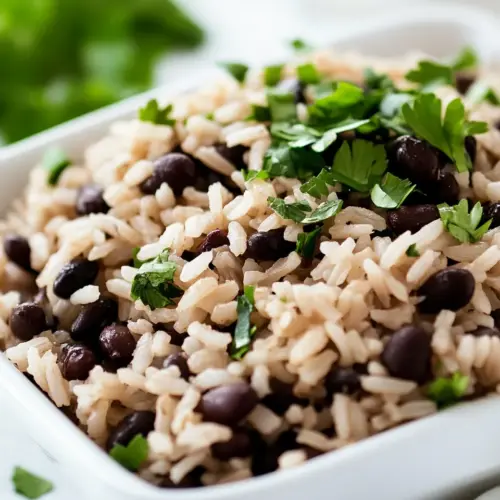
Black Beans Rice Recipe
Black Beans Rice Recipe is a creamy, hearty, and easy dish that marries tender rice with protein rich black beans and warm cumin. Perfect for an easy weeknight dinner or a flavorful side, it brightens with lime juice and fresh herbs, and is ready in about thirty minutes, making it a go to for busy homes.
Equipment
- Stockpot
- Saucepan
Ingredients
- 2 tablespoons olive oil Heat and sauté in a pan to provide the cooking fat that helps soften aromatics and toast spices for flavor development.
- 1 onion finely chopped Finely chop and sweat in oil until translucent to build a sweet, savory base and release natural sugars for depth.
- 5 cloves garlic minced Mince and add near the beginning of cooking to deliver pungent, aromatic heat and enhance overall savory complexity.
- 1 1/2 teaspoons ground cumin Measure and sprinkle to introduce warm, earthy, and slightly nutty notes that complement beans and rice while enhancing savory balance.
- 2 cup uncooked white rice long grain or jasmine rice Rinse and cook according to package directions; serves as the main starch that soaks up broth and flavors for a hearty dish.
- 4 cups chicken broth or stock Pour and simmer with rice to infuse salt and savory richness; acts as the cooking liquid that imparts body and depth.
- 2 x 14 ounce cans black beans drained and rinsed Drain and rinse before adding to prevent excess sodium and cloudiness while contributing protein, texture, and earthy flavor.
- 3 -4 tablespoons lime juice (adjust to your tastes) Squeeze and adjust to taste near the end of cooking to brighten the dish with fresh, acidic contrast and lift flavors.
- 4 tablespoons cilantro or parsley, finely chopped to garnish Chop finely and sprinkle as a fresh garnish to add herbaceous aroma, color contrast, and a lively finishing note.
Instructions
- Heat oil in a stockpot or saucepan over medium-high heat. Add the onion and sauté until onion is transparent. Add the garlic and sauté for a further minute. Add the cumin and rice, mix the flavours through and sauté for a further minute.: You will smell the faint fruity note of the olive oil as it warms and see it shimmer when it reaches the right temperature, that is the cue to proceed. The medium-high heat helps the onion soften quickly without becoming limp, sealing in sugars that give a sweet base. One common mistake is overheating the oil until it smokes, which will burn the aromatics later; if the oil smokes, lower the heat and start again. Use a roomy pot so you can stir freely, and keep a spatula handy to move ingredients so nothing sits and scorches.
- Pour in the broth and beans, bring to a boil, cover, reduce heat and simmer for 20 minutes, or until rice is tender (stirring half way through).: As the onion cooks you'll hear gentle sizzling and notice it transitioning from opaque to translucent, releasing a sweet fragrance that fills the kitchen. The visual cue to stop is when the edges soften and the pieces lose their raw sheen. Overcooking to a deep brown will shift the flavor profile, so aim for gentle translucence. Stir every minute or so to promote even cooking and to prevent any pieces from crisping at the pan edges.
- Remove from heat and drizzle with a small amount of olive oil (about 2 teaspoons), lime juice and cilantro. Taste test; season with a little salt and pepper, only if needed and as desired.: The aroma will quickly turn garlicky and bright as the minced garlic hits the warm oil, a sign flavors are marrying. Listen for a subtle increase in sizzling; the garlic should become fragrant in about sixty seconds. Avoid lingering beyond that minute, because browned garlic brings bitterness and can derail the dish. If the garlic starts to brown, reduce heat immediately and continue with the next step to disperse the heat.
- Add the cumin and rice, mix the flavours through and sauté for a further minute: You will smell the cumin bloom as its essential oils release into the oil, creating a warm, toasty note. Tossing the rice with the spices and aromatics for a short minute coats each grain, building a foundation of flavor and helping the grains stay separate later. A common misstep is skimping on this step, which results in a flatter final taste. Keep stirring so the rice toasts evenly, and watch for a faint nutty scent to signal readiness.
- Pour in the broth and beans, bring to a boil, cover, reduce heat and simmer for 20 minutes, or until rice is tender (stirring half way through): You will hear the pot go from quiet to a rolling bubble as the chicken broth heats, and the steam will carry concentrated savory aromas. Once covered and reduced to a gentle simmer, the pot should emit soft, steady steam with occasional subtle bubbling; that means the heat is right. Stir halfway to ensure even hydration and to prevent beans settling and sticking at the bottom. A common problem is lifting the lid too often, which lets heat escape and lengthens cooking time; resist peeking unless you must. When the rice is tender and the liquid mostly absorbed, the textures will be creamy yet distinct, which is the sign you want.
- Remove from heat and drizzle with a small amount of olive oil about 2 teaspoons lime juice and cilantro: At this point the pot will exhale a concentrated aroma blending the black beans , spices, and broth. Drizzling a little olive oil adds a silky finish that helps the grains glide and carry flavor. The bright perfume of fresh lime juice and the herbaceous pop of chopped cilantro or parsley provide contrast, cutting through the starch and rounding the bowl. Taste and season with a small amount of salt and pepper only if needed, because the canned black beans and chicken broth can already contribute sodium. Avoid over-salting; start with less and adjust slowly. Serve warm, and enjoy the interplay of texture and brightness.
Notes
- Spice it up: Add chopped jalapeños or a pinch of cayenne to the pan with the onion for heat. Start small and increase to taste so the spice complements rather than overwhelms.
- Herb choice: Swap cilantro for parsley if you prefer a milder, greener finish. Both add freshness, but cilantro gives a citrusy lift while parsley stays bright and grassy.
- Rice texture: Rinse the rice until the water runs clear to keep the grains separate. If you like a creamier result, use slightly less rinsing and a tiny bit more liquid.
- Broth control: Use low sodium chicken broth to better manage final seasoning. Taste before adding salt since canned black beans may already be salty.
- Finish with oil: Drizzle a teaspoon of good olive oil at the end to add sheen and mouthfeel, making each bite feel richer without adding heaviness.