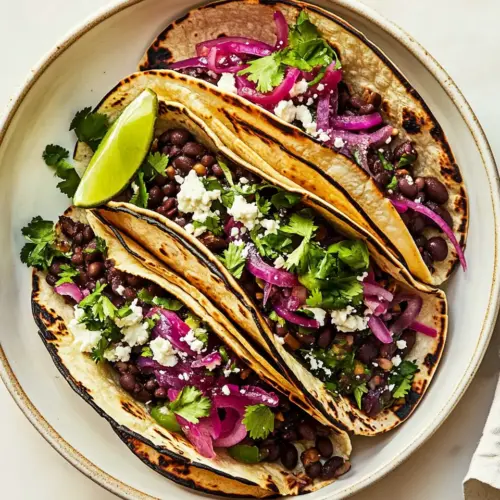
Black Bean Tacos
Black Bean Tacos are a creamy, smoky, and easy weeknight dinner favorite, combining hearty black beans with warm tortillas, bright lime, and crisp pickled cabbage. This filling is both comforting and vibrant, delivering layered textures and bold seasoning in under 30 minutes. Perfect for busy evenings or casual gatherings, these tacos invite everyone to customize and enjoy a satisfying, flavorful meal.
Equipment
- Medium pot or large skillet
- Wooden Spoon
Ingredients
- 2 tablespoons avocado oil Sauté to develop a neutral, high-heat fat that helps brown aromatics and prevent sticking; adds a subtle richness without overpowering other flavors. Use at medium-high heat to toast spices and soften onions for a balanced taco filling.
- 1/2 medium white onion, diced Dice to provide a sweet, savory base that softens and caramelizes when cooked; releases moisture and natural sugars essential for depth. Incorporate early in the cooking process so its texture and flavor meld with spices and beans.
- 1 jalapeño pepper, diced Mince to add bright heat and a vegetal kick that complements the onions and beans; balances richness with sharpness. Add with the onions to release capsicum oils and integrate spiciness throughout the filling.
- 3 garlic cloves, chopped Chop to impart aromatic pungency and umami; helps build savory layers when cooked briefly with oil. Add near the beginning to lightly brown and round out the overall flavor profile without burning.
- 1 teaspoon salt Season to enhance and brighten the natural flavors of vegetables and beans; helps control overall taste balance in the tacos. Add gradually and adjust to taste after combining all components.
- 1 1/2 tablespoons Taco Seasoning Season to infuse the filling with a familiar Mexican-inspired spice blend; contributes aroma, warmth, and complexity. Stir in while sautéing to bloom the spices and maximize flavor absorption by the beans.
- Pinch cayenne pepper, optional Sprinkle optionally to introduce concentrated heat and smoky warmth for those who want extra kick; complements the taco seasoning. Use sparingly and taste, as a small pinch significantly increases spiciness.
- 3 cups cooked black beans, drained and rinsed, reserve 1/2 cup bean liquid Combine as the hearty protein and textural backbone of the tacos; provides fiber, creaminess, and a savory base when seasoned. Rinse and reserve some bean liquid to adjust consistency and bind the filling if needed.
- 1 tablespoon fresh lime juice, plus wedges for serving Squeeze to add bright acidity that lifts the richness of beans and oil; balances flavors and enhances freshness. Add at the end of cooking so the citrus brightness remains vibrant in the finished filling.
- 6 to 8 tortillas, warmed Warm to make tortillas pliable and enhance mouthfeel for assembling tacos; improves texture and prevents cracking when filled. Heat briefly on a skillet or directly over flame for best flavor and flexibility.
- Pickled Cabbage Serve as a tangy, crunchy topping that brings acidity and color contrast; pickling softens cabbage while retaining crispness. Use to cut through richness and add a refreshing counterpoint to the warm filling.
- Cilantro Lime Crema, see note Drizzle as a cool, creamy sauce to mellow heat and add tang; provides a silky finish and cohesive element for bites. Make ahead or prepare shortly before serving to maintain smooth texture and bright flavor.
- Cotija cheese, see note Crumble to add salty, milky contrast and a crumbly texture that enhances each bite; offers a savory accent without overpowering. Sprinkle sparingly over assembled tacos for an authentic finishing touch.
- Sliced jalapeño peppers Slice to garnish with fresh, sharp heat and crunchy texture; complements the pickled cabbage and crema. Add as desired for extra spice and visual appeal, adjusting amount based on heat preference.
- Fresh cilantro Chop to add herbaceous brightness and aromatic lift to finished tacos; finishes dishes with a fresh, verdant note. Scatter over tacos just before serving to preserve its vibrant color and flavor.
Instructions
- Heat the avocado oil in a medium pot or large skillet over medium heat. Add the onion, jalapeño, garlic, and salt and cook, stirring occasionally, for 8 minutes, or until softened.: You will hear a gentle sizzle when the pan reaches the correct warmth, and the oil will shimmer slightly, signaling it is ready. This is crucial because a properly heated pan helps the onion soften evenly rather than steaming, which preserves subtle caramelization notes. If the oil smokes, lower the heat immediately, because overheated oil will impart a bitter flavor. Use a pan that conducts heat evenly so you do not get hot spots.
- Stir in the taco seasoning and cayenne, if using, and cook for 1 minute. Add the beans and 1/4 cup of the reserved bean liquid and cook for 5 to 8 minutes, or until the vegetables are totally soft and the mixture is thick. If the pan becomes dry, add the remaining 1/4 cup bean liquid.: As these aromatics cook, your kitchen will fill with an onion sweat scent and the jalapeño will release a vegetal fragrance that rounds out the smell. Stir occasionally to ensure even softening and prevent sticking, and watch for the garlic turning golden, which means it is toasted and flavorful. A common mistake is rushing this step at high heat, which can lead to burnt bits and bitterness, so keep the heat at medium and be patient.
- Mash some of the beans with the back of a wooden spoon to make the mixture lightly creamy. Stir in the lime juice and season to taste.: You will notice the spices bloom, releasing warm, toasty aromas that deepen the pan. This quick toasting is important because it wakes up the dried spices and integrates them with the softened aromatics. Avoid leaving them too long alone in the pan or they can burn and taste acrid, so stir constantly during this short step to coat everything evenly.
- Assemble tacos in the tortillas with the beans, pickled cabbage, crema, Cotija cheese, jalapeños, and cilantro.: As the beans warm, the pan will give off a hearty, earthy scent and you may hear a gentle bubbling. The reserved bean liquid helps the mixture reach a saucy consistency without becoming watery, allowing the flavors to meld. If the pan dries out before the filling thickens, add the remaining bean liquid to maintain a creamy texture. A frequent misstep is adding too much liquid at once, which dilutes the flavor, so add gradually and watch the consistency.
- Mash some of the beans with the back of a wooden spoon to make the mixture lightly creamy: When you press against the beans, listen for a soft squish and watch as some beans break down to create a luxuriously creamy base while others remain whole for bite. This contrast gives you both body and texture in the filling and prevents the taco from becoming mushy. If you over mash, you will lose that delightful textural contrast, so aim for partial mashing. I find pushing gently and checking often keeps the balance right.
- Stir in the lime juice and season to taste: Adding lime at the end brightens the dish instantly with a citrusy pop, which balances the earthy beans and rich spices. Taste carefully and adjust salt or cayenne as needed, because the final seasoning shapes the whole experience. A mistake here is overdoing the acid; add a little at a time and taste, because you can always add more but cannot take it away.
- Assemble tacos in the tortillas with the beans, pickled cabbage, crema, Cotija cheese, jalapeños, and cilantro: As you build each taco, the warm tortilla will release a light toasty aroma and the contrast of hot beans with cool crema creates satisfying temperature play. Layer the pickled cabbage for crunch and acidity, then add Cotija cheese for salty pops and sliced jalapeños for fresh heat. Avoid overfilling the tortillas, which makes them tear and becomes messy to eat; distribute evenly so each taco holds together and every bite gets a little of each element.
Notes
- Make it vegan: Omit the Cotija cheese and swap the crema for mashed avocado or a vegan avocado sauce to maintain creaminess without dairy.
- Control the heat: Remove jalapeño seeds for milder flavor, or add a pinch more cayenne to the filling if you want a uniform spiciness throughout.
- Stretch the filling: Add an extra cup of cooked black beans or serve with more tortillas so the meal feeds a crowd without losing flavor balance.
- Prep ahead: Cook the bean filling earlier in the day and rewarm gently on the stovetop, adding a splash of reserved bean liquid to revive creaminess.
- Save leftovers smartly: Store filling separately from tortillas and toppings; reheat the beans with a bit of reserved liquid to restore texture before assembling.