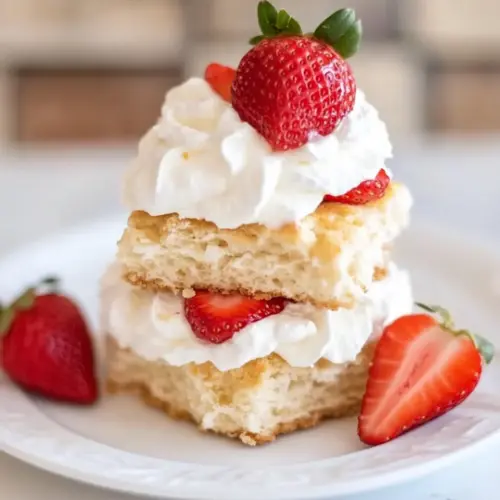
Bisquick Strawberry Shortcake
Bisquick Strawberry Shortcake is an easy, nostalgic dessert with tender, buttery biscuits topped with syrupy sliced strawberries and cloudlike whipped cream. Bright, fresh fruit and quick baked biscuits make this a perfect easy weeknight dessert or springtime treat. It is fast to prepare yet feels celebratory, a persuasive reason to make it for family and friends.
Equipment
- Mixing Bowl
- Cookie Sheet
- Electric Mixer
Ingredients
- 1 quart strawberries, sliced Provide bright, sweet-tart flavor and juicy texture when sliced; macerate with sugar to release natural juices that soak into the shortcakes. Enhance visual appeal and freshness, and serve as the primary fruit component for the dessert.
- 1/4 cup sugar Add sweetness and help macerate the strawberries to draw out juice; dissolve with the fruit to create a syrupy topping. Balance tartness and integrate into the dessert for a pleasant overall sweetness level.
- 2 1/3 cups Original Bisquick Mix Contribute structure and leavening to the shortcake batter when combined with liquid and fat; supply the characteristic Bisquick texture and rise. Contain baking powder and flour to produce tender, slightly crumbly shortcakes with even cooking.
- 1/3 cup milk Provide liquid to hydrate the mix and develop the dough; help bind dry ingredients while affecting tenderness. Add a mild dairy flavor and contribute to the shortcake's soft crumb when combined with the mix.
- 3 tablespoons sugar Impart additional sweetness to the dough or topping and assist in browning during baking; blend into the batter or sprinkling to achieve desired sweetness. Help balance flavors between the fruit and the baked shortcakes.
- 4 tablespoons butter, melted Introduce fat to tenderize the dough and promote moistness; melted form integrates smoothly into the batter for a consistent texture. Encourage a richer flavor and aid in achieving a golden-brown exterior on the shortcakes.
- 1/2 cup heavy whipping cream Whip to soft peaks to create a light, airy topping that complements the strawberries and shortcakes; add richness and creamy texture to each serving. Sweeten slightly if desired and use as a finishing component for the dessert.
Instructions
- Preheat the oven to 425°F.: As the oven comes up to 425°F , you will notice the kitchen warming and the air taking on a faint dry heat, which helps the biscuits rise and form a golden crust. This high temperature encourages immediate steam formation in the dough, creating lift and a flaky interior. A common mistake is not allowing the oven to fully preheat, which can lead to dense biscuits. Give the oven its full time to reach temperature, and position a rack in the center so heat circulates evenly.
- Add the sliced strawberries and 1/4 cup sugar to a mixing bowl. Set aside.: When you toss the sliced strawberries with the 1/4 cup sugar , you will hear the faint, wet scraping of fruit against bowl, and within minutes a bright red syrup begins to appear. This maceration releases fragrant, sweet juices that will soak into the biscuit. Avoid macerating for too long, or the berries will become overly watery, making the shortcakes soggy; thirty to forty five minutes is usually ideal. Stir gently so the slices keep their shape and do not break down completely.
- In a separate bowl, stir in the Bisquick mix, milk, 3 tablespoons sugar, and butter. Mix until soft and forms a dough.: As you combine the Bisquick mix , milk , 3 tablespoons sugar , and melted butter , you will notice the dough take on a soft, slightly tacky texture. The mix should come together without excessive mixing, which keeps the final biscuit tender. The scent of warm butter will mingle with the faint sweetness of sugar, hinting at the baked aroma to come. Overworking here is a frequent error, so stir just until cohesive and do not knead.
- Use an ungreased cookie sheet and drop 6 spoonfuls of dough per biscuit. You should be able to get 6-8 separate biscuits.: Dropping the dough onto an ungreased cookie sheet allows the bottoms to develop a slight crisp and prevents sliding, while the scooping action creates rustic, uneven tops that brown attractively. You should hear little thumps as spoonfuls hit the metal. Space them so there is room for expansion. A common misstep is making dollops too close, which can cause them to bake into one another. Aim for about six evenly spaced spoonfuls.
- Bake 10-12 minutes, or until golden brown.: As the biscuits bake, the kitchen fills with the warm aroma of butter and browned sugar, and you will see edges turn a deep golden color. The sound is mostly quiet, but when you tap a biscuit it should sound slightly hollow. If they remain pale or feel dense, they likely need a few more minutes. Keep a close eye in the last minutes to avoid over browning, which dries them out.
- While the dough is baking, add the heavy cream to a small mixing bowl. Beat with an electric mixer, on high speed, until soft peaks form.: The cold heavy whipping cream will hiss slightly as it meets the mixer beaters, and within moments it thickens to a snowy texture. Whip on high until soft peaks form, when the cream holds a floppy tip on the beater and looks glossy. Underbeating leaves it loose and runny, while overbeating will turn it grainy and buttery, so stop when you see gentle peaks that fold over.
- Split the biscuits in half and fill with cream and berries. Top with cream and berries as well. Enjoy!: When you split a warm biscuit, you feel the tender crumb give way, and steam will rise with a sweet, wheaty scent. Spoon on some of the macerated strawberries and a generous dollop of whipped cream , then replace the top and add more for presentation. Assemble just before serving to keep the biscuit from getting soggy. A typical error is assembling too early, which causes the biscuit to absorb too much juice; keep components separate until the last minute.
- Top with cream and berries as well: Finishing each shortcake with extra whipped heavy whipping cream and a few whole or halved strawberries adds visual appeal and a contrast of textures. The sight of glossy red berries against white cream is irresistible. Serve immediately so the biscuit stays warm and the cream retains its lightness. If plated too long in advance, the cream can begin to soften and lose volume.
Notes
- On dough consistency The dough should be soft but not sticky, it should hold together when you scoop it. If it seems crumbly, add milk a teaspoon at a time until it binds. Avoid adding too much or the biscuits will spread and lose height.
- Maceration timing Allow the sliced strawberries to macerate for about thirty to forty five minutes for ideal syrup formation. Any longer and they can release too much juice, which may make the finished shortcakes soggy.
- Whipped cream cues Watch for soft peaks when whipping the heavy whipping cream, the cream will droop slightly when you lift the beaters. If you prefer a firmer cream, whip a little longer, but stop before it becomes grainy and starts to separate.
- Storage tips Store baked biscuits for one to two days in an airtight container at room temperature. Keep sliced strawberries refrigerated in a separate airtight container and assemble just before serving to preserve texture.
- Make ahead options You can prepare the whipped cream a day ahead and keep it chilled in an airtight container. Rewhip briefly if it loses some volume before serving.