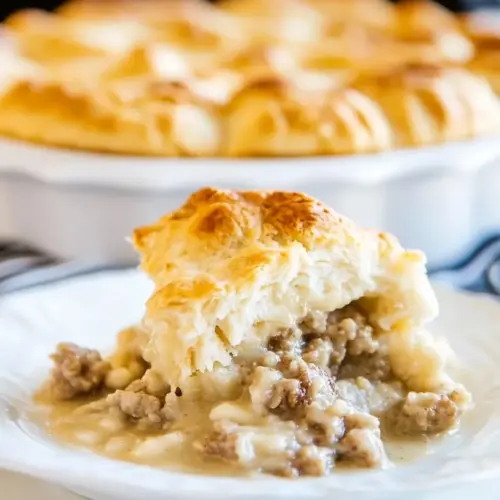
Biscuits and Gravy Pie
Biscuits and Gravy Pie is a creamy, savory pie layered with flaky crust and tender biscuits over a peppery sausage gravy. It delivers crispy edges, silky filling, and comforting flavors ideal for an easy weeknight dinner or a lazy weekend brunch. Try it for gatherings when you want a crowd pleasing dish that feels both rustic and special.
Equipment
- Large Nonstick Skillet
- 9-inch pie plate
Ingredients
- 1 pound breakfast sausage Brown and crumble to render fat and provide the savory, meaty base for the gravy; cook until no pink remains and edges are slightly crisp for best texture in the pie.
- 1/3 cup all-purpose flour Thicken the sausage drippings into a roux when combined with fat, creating body for the gravy; whisk in gradually to avoid lumps and cook briefly to remove raw flour taste.
- 3 cups whole milk Simmer with the roux to create a creamy gravy; add gradually while whisking until smooth and cooked to a velvety consistency that coats the back of a spoon.
- salt and pepper Season the gravy to taste by enhancing and balancing flavors; adjust quantities sparingly to avoid overpowering the delicate milk-based sauce.
- pinch of garlic powder Add a subtle savory note and depth to the gravy; use a small pinch to complement the sausage without dominating other spices.
- pinch of cayenne pepper Introduce a gentle heat and warmth to brighten the overall flavor profile; a pinch is enough to provide a lingering kick without overwhelming the dish.
- 1 refrigerated pie crust Line the pie dish to form a flaky, buttery crust that contains the sausage gravy filling; press into the pan and crimp edges to seal before baking.
- 1 (5-count) Grands refrigerated biscuits Create tender, flaky biscuit pieces to incorporate texture and layers within the pie; separate or tear biscuits before arranging in the crust for even distribution.
Instructions
- Brown sausage in a nonstick skillet, breaking it apart as it cooks.: As the sausage hits the hot skillet you will hear a lively sizzle and smell a toasty, meaty aroma that signals flavor is developing. Use a sturdy spatula to break the meat into small crumbles so it browns evenly, creating plenty of little crispy bits that will add texture to the gravy. Browning rather than steaming the meat is important because it produces fond on the pan which deepens the overall taste. A common mistake is crowding the pan, which causes the meat to release juices and steam instead of brown; if that happens, work in batches or increase heat briefly to encourage browning. Keep an eye on color; you want a rich brown without charring, and if the pan starts to smoke, lower the heat and remove some fat if it seems excessive.
- When no pink is left, sprinkle flour over sausage. Cook and stir for 1 minute.: At this point the sizzling calms and the aroma becomes nuttier as the flour toasts. The quick cook time is meant to remove any raw flour taste while letting it absorb fat, forming the base of your roux. Stir constantly so the flour browns slightly and coats every bit of sausage , which helps the gravy thicken uniformly later. Overcooking the flour can make the roux taste bitter, so watch for a light golden hue and a pleasantly toasty smell. If lumps form in the pan, stir vigorously and break them up before proceeding, because lumps will create uneven texture in the gravy.
- Gradually stir in the milk. Bring to a simmer. Add salt and pepper to taste. Add garlic powder and cayenne pepper.: As you pour in the milk slowly, whisk or stir constantly so the mixture emulsifies and remains smooth. You will notice the liquid start to gloss over the meat and the aroma will shift toward creamy comfort. Bringing it to a gentle simmer is crucial, because it activates the thickening power of the roux; avoid a full boil since that can cause the milk to scald or separate. Season incrementally, tasting after each addition, because the sausage contributes saltiness on its own. A typical pitfall here is adding the entire milk at once, which can cause lumps. If that occurs, reduce heat and whisk energetically until smooth, then continue heating slowly.
- Simmer for 3 to 5 minutes to thicken. Remove from heat and let cool.: During the simmer the gravy will thicken and cling to the back of a spoon, releasing a cozy, creamy aroma that tells you it is nearly ready. This short simmer ensures the starch in the roux fully gelatinizes, giving you that luscious body without becoming gluey. Remove from heat as soon as the texture looks glossy and coats evenly, because overheating can overthicken or break the emulsion. Letting the gravy cool slightly is important for assembly; piping very hot gravy into the crust can lead to sogginess. A common mistake is simmering too long, which overreduces the liquid and concentrates the starch flavor, so keep close watch and test by lifting a spoon to see how it falls.
- Unroll pie dough and fit into a 9-inch pie plate. Crimp the edges, place a piece of parchment paper in the bottom and fill with dried beans. Place in a 450 degree oven for 6 to 8 minutes. Remove beans and parchment paper.: When you press the pie crust into the plate you will feel the cool, supple dough give way to the pan, and crimping creates a decorative seal. Blind baking with parchment and beans produces a dry, slightly firm shell that will hold up to the moist gravy; when the crust puffs and the edges take on a faint golden color you will know it is ready. Using a very hot oven jumpstarts the crust and sets it quickly, which prevents a soggy bottom later. The main mistake here is skipping blind baking, which often leads to a soggy base once gravy is added. Carefully remove the beans and parchment while the crust is warm so you do not dent the bottom.
- Transfer the sausage gravy into the pie crust. Place a whole biscuit on top of the gravy in the middle of the pie. Cut remaining biscuits to fit the empty spaces.: As you spoon the warm gravy into the pre baked pie crust , you will notice steam rise and a comforting scent fill the kitchen; distribute it so the base is evenly covered but not overflowing. Nestling a whole biscuit in the center and trimming others to fit creates pleasing slices and ensures each portion has biscuit to gravy ratio you expect. Lay the biscuits gently so they make contact with the gravy, allowing some absorption without sinking. Common errors include overfilling the crust, which can bubble over while baking, so leave a small margin at the top. If the biscuits are crowded, they will bake into a single dense mass rather than maintain their separate golden tops.
- Bake in 375 degree oven for 15 to 18 minutes.: During this bake the tops of the biscuits will puff and develop a rich golden brown, and the edges of the crust will crisp further, releasing a warm, toasty scent that signals doneness. The internal steam from the gravy helps finish cooking the biscuits while the oven creates a dry heat that browns and texturizes the exterior. Avoid opening the oven repeatedly, which lowers temperature and can prevent proper browning; instead use the oven light to check progress. A common pitfall is baking too long, which dries the biscuits and can make the gravy overly reduced, so aim for a golden top and bubbling edges as your cue to remove it. Let the pie rest briefly after baking so the gravy settles, making slicing cleaner and safer.
Notes
- Brown in batches if needed If your skillet becomes crowded the sausage will steam instead of brown, so give it room to develop those caramelized bits that add depth to the gravy.
- Measure the flour accurately Too much will make the gravy pasty, while too little will leave it runny; spoon it into the cup and level it off for consistent results.
- Warm the milk slightly Bringing milk to near warm before adding helps it incorporate smoothly with the roux and reduces the risk of scorching on the pan.
- Reserve some sausage fat Use the rendered fat to make the roux for the best flavor, but if there is excess, remove a tablespoon or two so the gravy is not greasy.
- Use chilled pie crust Cold dough holds its shape better during blind baking and results in flakier texture; keep it refrigerated until the last moment.
- Check oven temperature An accurate oven ensures consistent browning of the biscuits and crust; use an oven thermometer if your oven runs hot or cold.