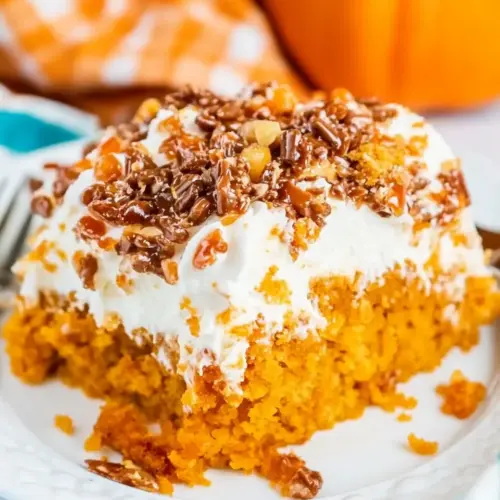
Better Than Anything Pumpkin Cake
Better Than Anything Pumpkin Cake is a creamy, easy to assemble autumn dessert that combines tender pumpkin cake, pockets of sweetened condensed milk, and a pillowy whipped topping with crunchy toffee and glossy caramel sauce. Perfect for holiday gatherings and make ahead entertaining, this crowd pleasing cake offers moist texture and nostalgic spice, making it a must-make for seasonal celebrations.
Equipment
- 9 x 13 inch baking dish
- Wire Rack
- Large Bowl
- Hand Mixer
Ingredients
- 15.25 ounces yellow cake mix 1 box, your favorite brand Provides structure and sweetness for the cake batter; use a standard yellow cake mix to supply flour, leavening agents, and sugar that create a light crumb when baked. Enhance the mix by following package directions while incorporating wet ingredients evenly to avoid lumps and ensure uniform rise.
- 15 ounces pumpkin puree Adds moistness and rich pumpkin flavor while contributing dense texture and natural moisture; use pure pumpkin puree rather than pumpkin pie filling for correct sweetness and consistency. Fold into the batter thoroughly to distribute flavor and prevent pockets of dry mix.
- 2 tablespoons brown sugar Adds a touch of caramelized sweetness and depth to the batter; brown sugar contains molasses that complements pumpkin spice and enhances overall richness. Sprinkle or stir in evenly so the sugary flavor melds with the pumpkin without creating overly sweet spots.
- 1 teaspoon pumpkin pie spice Provides warm, autumnal spice notes that amplify pumpkin flavor; pumpkin pie spice blends cinnamon, nutmeg, ginger, and cloves for balanced seasoning. Measure carefully to avoid overpowering the batter and sift or mix in to prevent clumping.
- 14 ounces sweetened condensed milk 1 can Contributes creaminess and concentrated sweetness to produce a dense, custard-like topping or filling; sweetened condensed milk caramelizes slightly when baked and helps set textures. Pour evenly over the baked layer or incorporate as directed to achieve a glossy, sweet finish.
- 8 ounces frozen whipped topping thawed Delivers light, airy creaminess and cooling contrast to the dense pumpkin cake; thawed frozen whipped topping offers a quick whipped cream substitute with stable volume. Fold gently or dollop on top to maintain fluffiness and add visual appeal.
- 1 cup toffee bits or Skor bits or chop up w Heath bars Provides crunchy, buttery toffee flavor and textural contrast; toffee or Skor bits bring sweet, brittle shards that complement the soft cake and creamy toppings. Scatter evenly to ensure each bite includes crunchy morsels without sinking into the batter.
- 1 cup caramel sauce plus additional for serving Adds sticky, buttery-sweet sauce for drizzling and richness; caramel sauce enhances the dessert with glossy sweetness and pairs well with pumpkin and toffee. Warm slightly for easier pouring and offer extra for serving so guests can add more to their slices.
Instructions
- Preheat the oven to 350°F. Spray a 9 X 13 inch baking dish with non-stick cooking spray and set aside.: As the oven warms you will notice a dry heat that primes the pan to promote even baking. The right oven temperature ensures the edges brown gently while the center cooks through, creating a uniformly tender crumb. Use an oven thermometer if yours runs hot or cold to avoid an overly dark crust or an underbaked middle. A common mistake is skipping the spray which can make removal messy; coat the dish well so slices lift cleanly.
- In a large bowl, mix together the yellow cake mix, pumpkin puree, brown sugar and pumpkin pie spice until combined and smooth but do not over mix. You can use a hand mixer here to make things easier.: The batter will smell warmly spiced as the pumpkin pie spice blooms and the pumpkin gives off a faint, earthy scent. Mixing until smooth distributes the moisture and flavor without developing gluten, which keeps the cake tender. If you overmix, the crumb can become gummy, so stop when streaks disappear and texture is uniform. A typical error is vigorous mixing; use short pulses with a hand mixer to maintain lightness.
- Transfer the cake batter to the prepared baking dish and spread evenly. Bake the cake for 20 to 25 minutes. An inserted toothpick should come out clean.: As the batter bakes you will see it rise slightly and the surface take on a pale golden color, releasing a sweet, spiced aroma. The toothpick test is your best cue for doneness; look for golden edges that pull away from the pan and a springy center. If the top is browning too quickly, tent with foil to prevent overcoloring. People sometimes underbake the center, so trust the toothpick rather than just time.
- Allow the cake to cool for 15 minutes on a wire rack.: During this rest the cake firms up and the internal steam redistributes, which makes it easier to poke and to hold the sweetened condensed milk. The surface will stop steaming and feel slightly springy to the touch. Removing it too soon from the pan can cause it to crumble, so let it settle on the rack. Avoid rushing to the next step while it is hot, because the holes will not hold properly.
- Poke holes all over the top of the cake about 1 inch apart and about halfway through the cake. You don't want to poke the holes through to the bottom of the cake. You can use the end of a wooden spoon or spatula to poke the holes.: The act of poking lets the sweetened condensed milk sink into the crumb, creating pockets of concentrated sweetness. Aim for even spacing so the soak distributes uniformly and each slice benefits. If you poke too deep you may create channels to the pan, which will make the milk pool on the bottom instead of soaking. Be deliberate and use a tool with a rounded end to control depth.
- Evenly pour the sweetened condensed milk over the top of the cake making sure it fills all of the holes you just created. Chill the cake in the fridge for 30 minutes to allow the sweetened condensed milk to soak into the cake.: As the milk settles it will sink with a glossy sheen into the tiny tunnels you created, and the surface will look moist but not drowned. Cooling the cake helps the milk stay where it should, soaking gradually into the crumb for a creamy interior. A common blunder is pouring too fast which leaves uneven saturation; take your time and tilt the pan slightly if needed for balance.
- Remove the cake from the fridge and carefully spread the whipped topping evenly over the top of the cake.: The whipped topping should be cool and airy, providing a cloudlike contrast to the dense, soaked cake below. Spread gently to keep its volume and create a smooth, even layer that will hold the toffee bits without sinking. If the topping is still too soft, chill briefly before spreading, because a runny layer will mix into the milk soaked top and lose its texture.
- Sprinkle the Heath bits over the top. Next, drizzle the caramel sauce over the top of the cake.: The toffee bits add a crisp, crunchy counterpoint and the caramel introduces a sticky, buttery gloss that binds the elements. Sprinkle evenly to avoid clumps of candy in one slice, and drizzle the caramel sauce in ribbons for visual appeal. Beware of overdoing the caramel, which can overwhelm the gentler pumpkin notes; a light hand creates balance.
- Finally, place the cake back in the fridge and allow it to chill for a minimum of 3 hours. If you have the time, this cake is truly at its best when it is made the day before and chilled overnight. Serve and enjoy!: As it chills the flavors meld and the textures unify into a sliceable, cohesive dessert with creamy pockets and crunchy accents. Overnight chilling encourages full absorption and a cleaner slice when serving. Cutting too soon will yield loose slices, so be patient and chill for the recommended time to get neat pieces. A final tip is to warm the caramel sauce slightly if it firms, for easy drizzling when serving.
Notes
- Stabilized whipped topping: Use the gelatin method from the notes to stabilize the whipped topping for firmer slices when serving later in the day.
- Even drizzle: Warm the caramel sauce slightly so it flows into elegant ribbons rather than clumping in one spot, which also helps with presentation.
- Toffee distribution: Toss toffee bits with a tiny sprinkle of flour before adding to the top to prevent sinking into the whipped layer during chilling.
- Make ahead: Fully assemble the day before and chill overnight for best texture and flavor melding; this also frees up time on your serving day.
- Serving temperature: Serve chilled, but take the cake out 10 to 15 minutes before slicing to make cutting easier and to let the caramel sauce soften slightly.