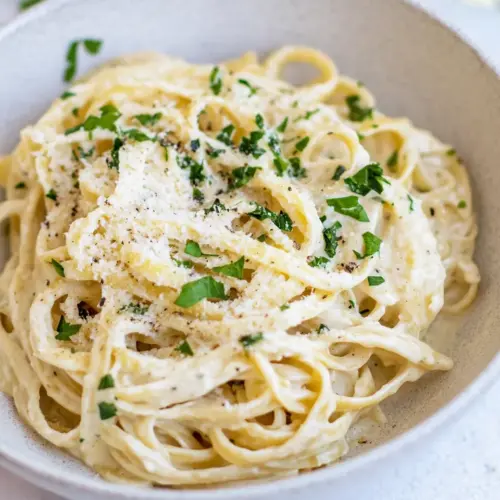
Best Ever Fettuccine Alfredo
Best Ever Fettuccine Alfredo delivers a creamy, silky sauce made with butter, cream cheese, heavy cream, and Parmesan Cheese that clings to broad fettuccine ribbons. This easy weeknight dinner feels indulgent yet comes together quickly, offering a rich, comforting bite with delicate garlic and oregano notes. Make it for a cozy family meal or a simple dinner party to impress without fuss.
Equipment
- Saucepan
- Whisk
- Large Pot
- Colander
Ingredients
- 1 stick of butter Melted to create a rich, silky base that carries flavor and helps emulsify the sauce; adds depth and a creamy mouthfeel when combined with cheeses and cream.
- 18 oz block of cream cheese – cut into 1 inch cubes. Cubed to melt evenly and contribute dense creaminess and tang; blends into the sauce to thicken and create a velvety, smooth texture when heated gently.
- 1/4 cup of Parmesan Cheese Grated for a sharp, nutty umami bite that brightens the sauce; dissolves into the cream to provide authentic Alfredo flavor and savory complexity.
- 1 cup of heavy cream Poured in to loosen and enrich the sauce while adding luxurious body; helps achieve a smooth, saucy consistency that coats the pasta evenly.
- 1 teaspoon garlic powder Sprinkled to impart a warm, savory note without overpowering; provides consistent garlic flavor and convenience compared with fresh garlic when seasoning the sauce.
- 1/2 teaspoon cracked black pepper Cracked to introduce a bold, peppery finish that balances the richness; offers texture and a layered spiciness to sharpen the overall flavor profile.
- 1/2 teaspoon dried oregano Added dried to lend subtle herbal earthiness and Mediterranean nuance; complements the creamy elements without adding moisture or altering texture.
- 1 small box of fettuccine noodles enough for 8 servings Boiled to provide the vehicle for the sauce, delivering comforting starch that helps the sauce adhere; portioned to serve eight and ensure proper sauce-to-pasta ratio.
- Fresh oregano for garnish Chopped fresh to garnish and brighten the finished dish with aromatic, herbaceous notes; used sparingly to add color contrast and a lively, fresh finish.
- Salt and pepper to taste the tasting is very important – see the instructions Adjusted during cooking to balance and enhance all flavors; used carefully to season the sauce while tasting frequently to avoid over-salting rich dairy components.
Instructions
- In a heavy medium sized sauce pan, heat the butter and cream cheese over low heat.: The moment you begin, notice how the butter softens and releases a warm aroma that signals the start of the sauce building, while the cubed cream cheese slowly loosens at the edges and collapses into creamy pools; this low steady heat prevents the dairy from separating and keeps the texture smooth, which is essential for a glossy sauce, and the common mistake to avoid here is turning the heat too high which can cause the fats to split or the edges to brown, so keep the flame low and stir gently so the pieces melt uniformly.
- Add the parmesan cheese and cream. Stir frequently. Whisk briskly if there are lumps.: As you pour in the Parmesan Cheese and the heavy cream , you will see the sauce become lighter and more fluid, and the fine cheese will begin to dissolve into the warm mixture creating ribbons of melted cheese, which contributes to that clinging, creamy coating, and if you notice any small clumps forming use a brisk whisking motion to break them down quickly because letting lumps set will give an uneven texture; a frequent pitfall is adding the cheese too quickly which can shock the mixture and cause clumps, so add gradually and keep the pan moving.
- Add garlic powder, black cracked pepper and dried oregano.: When you sprinkle in the garlic powder , freshly cracked black pepper , and dried oregano , inhale the change in aroma as herbs and spice lift the fat forward; these seasonings layer savory notes that keep the sauce from tasting flat, and the tiny flecks of pepper will offer gentle heat across the palate, and a typical error is over seasoning early, so add these measured amounts first and then adjust after tasting the finished sauce to avoid overpowering the delicate dairy balance.
- Stir frequently so that sauce does not stick to the bottom of the pan. If it is starting to stick, turn the temperature down.: While the sauce cooks, it will make a soft sizzling sound at the base of the pan and small bubbles may appear at the edges when the temperature is correct; continuous stirring keeps the mixture moving and prevents scorching which would impart a burnt flavor, so if you feel resistance or see browning at the bottom immediately lower the heat and continue stirring, because a scorched sauce cannot be rescued easily and that is the most common problem at this stage.
- While the ingredients in step one are melting, cook the fettuccini noodles according to package instructions except DO NOT SALT THE WATER.: As the boiling water agitates the pasta you will notice the ribbons unfurl and release a faint wheaty steam; cooking without salt is advised because the Parmesan Cheese contributes significant salt to the finished dish, and a misstep here is over salting the pasta water which can make the assembled plate too salty, so follow the package timing for al dente and drain the pasta while it is still warm so it accepts the sauce readily.
- When ready to serve, TASTE the sauce. Add salt if needed. Salt likely won't be needed because parmesan is usually so salty on it's own. THEN, dip one of the cooked noodles into the sauce and taste that to see if it is salty enough. Add salt to the sauce if needed to make the combination taste right.: The tasting ritual is crucial because the sauce alone can taste different than sauce combined with fettuccine ; scoop up a single noodle, coat it thoroughly and put it to your palate to judge true seasoning and balance, and only then add a pinch of salt if the combined bite needs it, because too much salt is hard to reverse and a common oversight is seasoning the sauce in isolation without sampling the paired noodle which can lead to an overly seasoned final dish.
- At the table, pour the sauce over the noodles and mix gently and serve immediately.: Serving straight away ensures the sauce is warm and glossy and clings perfectly to the fettuccine , and you will see the steam rise as you toss which intensifies the aromas; use gentle folding motions so the ribbons stay intact and each strand is evenly coated, because vigorous stirring can break the pasta and change the mouthfeel, and remember this sauce firms as it cools so serving right away avoids a clumpy texture which is the most frequent complaint when plating later.
Notes
- Start with cubed cream cheese to ensure even melting. Cutting the cream cheese into 1 inch cubes helps it soften uniformly and keeps the sauce lump free as it warms into the butter and heavy cream.
- Keep the heat low because gentle warmth keeps dairy emulsified. High heat can cause the fats to separate, resulting in a greasy or curdled sauce that loses its glossy sheen.
- Add Parmesan slowly to avoid clumping. Sprinkle the Parmesan Cheese in small amounts and stir until fully incorporated, which gives the sauce a creamy consistency and even flavor.
- Taste with a sauced noodle for accurate seasoning. The correct salt level becomes clear only when the sauce and fettuccine are combined, so always sample that pairing before adjusting salt.
- Reserve pasta water even if you usually do not salt it. A spoonful of starchy pasta water can help loosen a sauce that tightens up and improve adherence to the noodles.
- Garnish sparingly with fresh oregano. A little Fresh oregano adds a bright herbal note and a pleasant visual contrast without taking attention from the creamy sauce.
- Reheat gently with a splash of milk or cream to restore texture. If the sauce firms on standing, warming slowly while whisking brings it back to saucy life without breaking it.