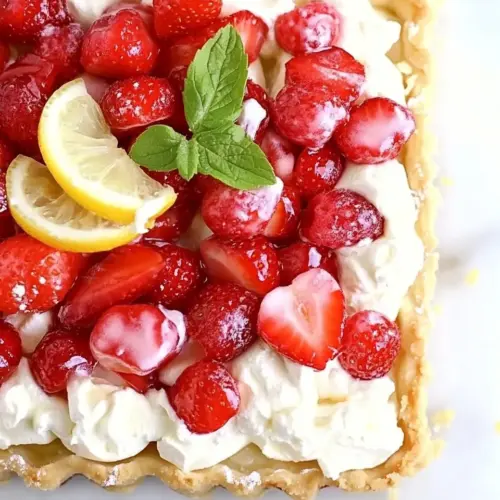
Berry Tart With Lemon Curd Mascarpone
Berry Tart With Lemon Curd Mascarpone is a creamy and bright spring dessert with a crisp, almond kissed crust, silky mascarpone filling, and a zesty lemon curd lift. Fresh strawberries and raspberries add juicy texture and color, while a light preserves glaze gives shine. Perfect for easy entertaining or a pretty weekend treat, it balances richness and freshness for a tempting finish.
Equipment
- Mixing Bowl
- Whisk
- Hand mixer or stand mixer
- tart pan with removable bottom
- Wooden Spoon
Ingredients
- 1 1/2 cups all purpose flour Provide structure and bulk to the tart crust, combining with fats and liquids to form a cohesive dough that bakes to a tender, flaky base for the tart.
- 1/2 cup almond flour Add a subtle nuttiness and tenderizing effect to the crust, contributing moisture and a delicate crumb texture while balancing the wheat flour.
- 1 teaspoon kosher salt Season the dough to enhance overall flavor, helping to bring out the sweetness and balance the richness of the butter and fillings when used sparingly.
- 2 teaspoons powdered sugar Contribute a touch of sweetness to the pastry dough, aiding in browning and flavor without overpowering the tart’s delicate balance.
- 1/2 cup unsalted butter, (1 stick), very cold and diced into 1/4 inch pieces Incorporate cold fat into the flour to create flaky layers in the crust; cold, diced butter melts during baking to produce pockets of tenderness and rich flavor.
- 1 egg yolk Bind dough components together and add tenderness to the crust; the yolk contributes richness, color, and helps with dough cohesion during mixing.
- 1 -2 tablespoons cold water Adjust dough consistency by providing the necessary moisture to bring the flour mixture together; cold water helps prevent melting the butter while blending ingredients.
- 3/4 cup whipping cream Whip to soft peaks and fold into mascarpone for a lighter, creamier filling; whipping cream adds volume, silkiness, and a rich mouthfeel to the tart topping.
- 1 8 ounce container mascarpone cheese, at room temperature Provide a rich, creamy base for the filling with a tangy-sweet profile; room-temperature mascarpone blends smoothly with whipped cream and lemon curd for velvety texture.
- 1 heaping tablespoon powdered sugar Sweeten and stabilize the mascarpone mixture slightly, enhancing flavor and helping to achieve a balanced sweetness in the creamy filling without graininess.
- 1 cup lemon curd, store bought, or I used this recipe Offer bright, tart lemon flavor and a glossy, spreadable consistency for the filling; store-bought or homemade curd adds concentrated citrus punch and moisture contrast.
- 1 pint strawberries, hulled and sliced Bring fresh berry sweetness and firm texture to the topping; hulled and sliced strawberries add visual appeal, juiciness, and a familiar fruity note to each bite.
- 1 pint raspberries Provide delicate tang and soft texture to the surface of the tart; raspberries add vibrant color, tartness, and complementary acidity to the sweeter berries and curd.
- 1/4 cup strawberry preserves Add sheen and help secure fruit on the tart while contributing an extra layer of concentrated strawberry flavor; preserves also offer gentle sweetness and stickiness.
- Mint leaves for garnish Offer a fresh, aromatic garnish that brightens the finished tart visually and aromatically, adding a pleasant herbal contrast to the fruity and creamy components.
Instructions
- Mix the all purpose flour, almond flour, kosher salt and powdered sugar in a large bowl. Add the unsalted butter pieces and work into the flour, creating thin sheets of butter in the flour. Mix the egg yolk with 1 tablespoon water in a small bowl and add to the flour and butter mix. Continue to work with your fingers until the mixture sticks together when pinched. Add another tablespoon of water if needed.: The aroma here is subtle and toasty when the dry ingredients combine, and the mixture should look uniform, with no streaks of sugar or clumps of almond flour. I use a whisk or fork to aerate and ensure an even distribution, which prevents pockets of sweetness or salt. This matters because even mixing creates a consistent crumb. A common mistake is rushing and leaving clumps, which leads to uneven texture in the crust.
- Press the dough into a buttered tart pan with a removable bottom (I used a long tart pan but you can use a 10-inch round pan) or 4-6 individual tart pans with removable bottoms. Prick the bottom with a fork and then refrigerate for about an hour.: When you work the butter into the flour, aim for thin, irregular shards rather than fully incorporated fat. The visual cue is small, flat pieces coated in flour. These sheets are what create flakiness as they melt in the oven, releasing steam that puffs layers. If you overwork the dough and let the butter melt, you will end up with a dense, biscuit like crust instead of a tender, flaky one.
- Preheat the oven to 375 degrees. Bake the tart for 12-15 minutes or until golden brown. Allow to cool completely before filling with mascarpone filling.: The glossy mix of yolk and water acts as a binder and adds tenderness. After adding it, the bowl should look slightly tacky but not wet. The yolk helps the dough brown and gives a richer flavor. If the dough resists coming together, you can add the second tablespoon of water sparingly, because too much liquid makes the dough sticky and difficult to handle.
- Whip the cream on high with a hand mixer or a stand mixer. Add the softened mascarpone cheese and powdered sugar and beat to mix well. Fold in the lemon curd with a wooden spoon.: As you press, you should see the dough hold its shape and feel cohesive, yet still cool to the touch. This is the tactile check that tells you the butter pieces remain chilled and the dough has the right hydration. The why is simple: cohesive dough bakes evenly. Avoid over kneading, which warms the butter and results in a tough crust.
- In a separate bowl, mix the raspberries and sliced strawberries. Heat the strawberry preserves until thinned and mix into the berries. Spoon the mascarpone into the cooled tart crust and top with the berries. Garnish with mint leaves if desired.: Pressing should be done gently, starting from the center and moving outward to ensure even thickness. A firm but gentle touch yields a smooth surface and uniform edges. Use a fork to prick the bottom so steam can escape, preventing bubbles. Rushing this step or pressing too hard can compress the dough, making the crust dense.
- Prick the bottom with a fork and then refrigerate for about an hour: Chill time firms the butter again, so the crust holds its shape and flakes during baking. The dough should feel cold and slightly stiff after refrigeration. This step also helps relax gluten, preventing shrinkage. A common oversight is skipping the chill, which often leads to a misshapen, shrunken shell.
- Preheat the oven to 375 degrees: You want the oven fully up to temperature so the crust gets an immediate blast of heat, which encourages proper rise and browning. The smell of warm butter and toasted flour will be faintly present early in baking. Not preheating can yield an underbaked, pale crust.
- Bake the tart for 12-15 minutes or until golden brown: Watch for edges turning a warm golden hue and the center setting; the shell should look dry and sound slightly hollow when tapped. Evenness of color is the visual cue to pull it. If you bake too long, the crust can become overly crisp and brittle, while underbaking leaves a soggy bottom once you add the filling.
- Allow to cool completely before filling with mascarpone filling: Cooling is crucial because a warm shell will soften the filling and make it slide or become runny. The crust should be room temperature and firm to the touch. Patience here preserves the crispness; a common pitfall is hurried assembly which ruins the textural contrast.
- Whip the cream on high with a hand mixer or a stand mixer: As the whipping cream transforms, pay attention to peaks; you want soft peaks that hold shape but are still supple. The sound changes from thin to fuller, and the cream will look glossy. Overwhipping leads to grainy, separated cream, which will affect the filling's silkiness.
- Add the softened mascarpone cheese and powdered sugar and beat to mix well: When the mascarpone is at room temperature, it blends smoothly into the whipped cream, creating a homogenous, velvety texture. The mixture should be lump free and airy. Cold mascarpone resists blending and can lead to lumps, so soften accordingly. If you see small curdled bits, temper gently at low speed to bring it together.
- Fold in the lemon curd with a wooden spoon: Folding preserves the air you whipped into the cream while bringing in bright citrus flavor. Visually, you will see ribbons of pale yellow fold into the white cream until blended yet still light. Stirring vigorously will deflate the mixture and make the filling heavy, so fold patiently.
- In a separate bowl, mix the raspberries and sliced strawberries: Combining the berries lets juices mingle and allows you to taste for sweetness balance. The bowl should hold vibrant, juicy fruit that glints in the light. Overmixing will bruise the fruit and make it mushy, so toss gently.
- Heat the strawberry preserves until thinned and mix into the berries: Warmed preserves become glossy and syrupy, turning the berries shiny and helping them adhere to the filling. The aroma will be intensely berry scented, and the preserves should be just fluid enough to coat the fruit. If you overheat, the preserves can become too thin and overly sweet, so warm cautiously.
- Spoon the mascarpone into the cooled tart crust and top with the berries: When assembled, the filling should look plush and smooth, holding the fruit without sliding. The contrast between the pale filling and bright fruit is striking. If the filling feels too soft, chill briefly before topping to avoid sliding.
- Garnish with mint leaves if desired: Fresh mint adds an herbal brightness and a fragrant top note. Place leaves sparingly so they complement rather than compete with the fruit. Avoid overgarnishing which can distract from the tart's clean presentation.
Notes
- Swap nut flour proportion: Adjust the amount of almond flour to tweak the crust texture, keeping the overall dry weight similar so the dough holds together.
- Use single serving pans: Make individual tarts in small removable bottom pans for elegant plating and easier portion control for gatherings.
- Make lemon curd ahead: Prepare lemon curd a day in advance and chill, it deepens in flavor and streamlines assembly on the day you serve.
- Keep fruit extra fresh: Only wash berries right before topping to prevent excess moisture, preserving texture and shine.
- Glaze before serving: Warm the strawberry preserves and brush lightly to create a gleaming finish that helps berries stay put.
- Chill assembled tart: If you need cleaner slices for serving, refrigerate the completed tart for 30 to 60 minutes to firm the filling.