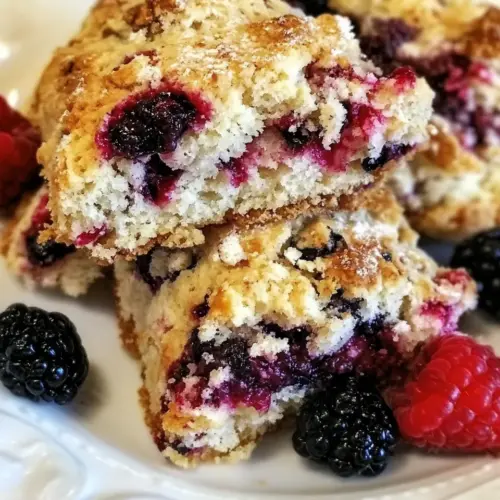
Berry Scones
Berry Scones offer tender, flaky texture with bright bursts of blueberries and raspberries. Easy to make and ideal for brunch or a quick treat, these scones combine rich heavy whipping cream and cold unsalted butter for a perfectly tender crumb. Make a batch for a cozy morning or small gathering, they are simple to scale and bake to golden perfection.
Equipment
- Mixing Bowl
- Whisk
- Pastry Cutter
- Baking Sheet
- Parchment Paper
Ingredients
- 2/3 cup heavy whipping cream Adds rich fat and moisture to the dough while contributing a tender crumb and slight richness; helps bind ingredients and creates steam during baking for flakiness when chilled and incorporated properly.
- 1 large egg Provides structure and richness while helping to bind the dough; beaten lightly it adds moisture and aids browning and a tender texture to the scones.
- 2 cups all purpose flour Forms the structural base of the scone, supplying gluten and bulk; must be measured properly and mixed gently to avoid developing too much gluten for tender results.
- 2 tablespoons granulated white sugar Sweetens the dough slightly, enhancing flavor and helping with browning; also balances the tartness of berries and can contribute a subtle crispness to the exterior.
- 1 tablespoon baking powder Leavens the scones by releasing gas when heated, producing lift and a light, airy crumb; must be fresh and evenly distributed through the dry ingredients for consistent rise.
- 1/4 teaspoons salt Balances flavor and enhances the other ingredients while controlling fermentation and protein interactions; small amount strengthens taste and prevents blandness.
- 5 tablespoons unsalted butter, chilled and cut into small pieces Adds cold fat to create flaky layers and richness; when cut into small pieces and kept chilled, it produces tender, layered texture as it melts during baking.
- 1 to 1 1/2 cups mix of blueberries and halved raspberries Provides juicy bursts of flavor and natural sweetness along with color contrast; folding gently preserves berry integrity and prevents excess liquid from weighing down the dough.
- sugar or chunky sugar crystals, optional Provides an optional crunchy, sweet topping that enhances appearance and adds a pleasant textural contrast when sprinkled before baking.
Instructions
- Preheat the oven to 400°F. Line a baking sheet with parchment or a silicone mat.: When you place the rack in the center of the oven and set it to 400°F , you should smell a neutral warmth as it comes up to temperature. A properly preheated oven ensures a quick burst of heat that lifts the scones, creating a golden exterior. The baking sheet covered with parchment prevents sticking and allows the bottoms to brown evenly. A common mistake is not preheating long enough, which leads to flatter, tougher scones.
- In a small bowl, stir the cream and egg together.: As you whisk the heavy whipping cream and the large egg , the mixture will turn glossy and slightly thick. This blend will be the rich wet component that hydrates the dry ingredients, so achieving a uniform mixture ensures even distribution. If the cream and egg are very cold, it helps the dough stay firm, making shaping easier. Overwhisking is unnecessary and will not improve texture, so stop as soon as they are combined.
- In a large bowl, whisk together the flour, sugar, baking powder and salt. Drop in the butter and, using your fingers or a pastry cutter, cut and rub the butter into the dry ingredients until the mixture is crumbly.: As you work the unsalted butter into the all purpose flour mixture, you should see pea sized pieces of butter coated in flour. This creates pockets that steam during baking and leave flaky layers. The dry mix should look sandy and crumbly, with no large slabs of butter. If the butter melts in your hands and becomes greasy, chill the bowl briefly and continue. Rubbing in too much will warm the butter and reduce flakiness, so work quickly.
- Pour the cream/egg mixture over the dry ingredients and stir gently with a fork just until the dough, which will be wet and sticky, comes together. Don't over-work it. Sprinkle in the berries, and still in the bowl, gently knead them into the dough.: After adding the wet mixture, you will notice the dough becomes cohesive but intentionally sticky, almost tacky to the touch. Stirring with a fork preserves the texture, preventing development of excess gluten that would yield tough scones. When you fold in the blueberries and raspberries , do so with gentle turns so the berries remain mostly intact and not completely squashed. A frequent error is overmixing, which releases berry juices and makes the dough soggy.
- Lightly dust a work surface with flour and turn out the dough. Pat the dough into a rough circle that's about 10 inches in diameter, use a cutter to cut rounds and place them on the baking sheet (alternately, you can divide the dough in half, pat-out two rounds and cut wedges instead). Sprinkle with sugar, if desired.: As you pat the dough, you should feel a cool, slightly sticky mass that holds shape but yields to pressure. The surface will have small flecks of butter visible. Cutting rounds or wedges gives different edge textures, but both bake similarly. Sprinkle a little sugar to add a sparkling crust. Avoid pressing the dough too thin, which will produce dry scones, and do not rework scraps excessively or the texture will tighten.
- Bake the scones for 15 to 20 minutes, or until their tops are golden and firm. Transfer them to a rack and cool for 10 minutes before serving, or wait for them to cool to room temperature. They are very good served warm with a generous smudge of butter.: As they bake you will see the tops turn a warm golden shade and hear a faint crackle as the edges set; the aroma will be buttery and faintly sweet with berry notes. Bake until the centers feel firm when gently pressed. Cooling on a rack prevents a soggy bottom from trapped steam. A common issue is removing them too early, resulting in underbaked centers, so be patient. They are very good served warm with a smudge of butter; if you prefer room temperature, allow the full cool down.
Notes
- Try different berry ratios. Increasing the proportion of blueberries makes the scones sweeter, while adding more halved raspberries boosts tartness, which pairs beautifully with a smear of butter.
- Chill the dough before cutting. If your kitchen is warm, refrigerate the mixed dough for 15 minutes to firm the butter and make clean cuts without crushing the berries.
- Top with sugar crystals. Sprinkling chunky sugar before baking creates a crunchy, glossy finish that mimics bakery scones and adds a pleasant contrast to the soft interior.
- Cut wedges for a rustic look. Dividing the dough into two rounds and cutting wedges gives a more irregular, homey appearance and slightly crisper outer edges.
- Use thawed frozen berries. If using frozen, toss them lightly in a tablespoon of flour to reduce bleeding and fold gently to avoid turning the dough purple.
- Make mini scones. Reduce the cutter size to produce smaller scones for serving at brunch, they bake a little quicker so watch timing closely.
- Brush with cream for shine. A light brush of the cream and egg mixture on top before baking enhances browning and promotes a glossy finish.