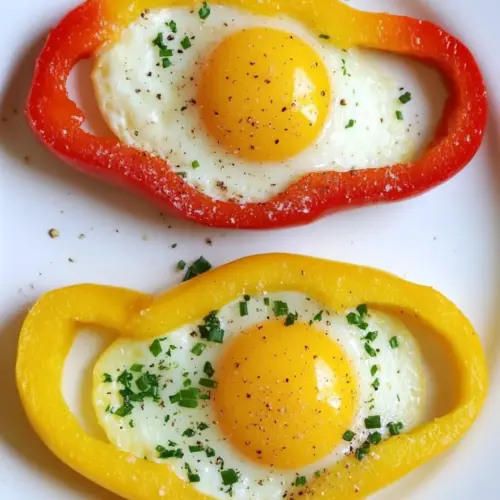
Bell Pepper Egg Flowers
Bell Pepper Egg Flowers are a colorful, easy breakfast that pairs sweet roasted bell pepper with creamy eggs and a salty sprinkle of Parmesan Cheese. This quick and satisfying recipe is perfect for easy weeknight dinner or a charming brunch, offering crisp edges, tender pepper, and luscious yolks that make every bite feel special. Try it when you want an impressive yet simple meal.
Equipment
- Skillet
- Lid
- Knife
- Spatula
Ingredients
- 1 Large Bell Pepper Provide a crisp, hollowed ring to hold the egg mixture and create an attractive edible cup for baking or frying. Use a firm bell pepper to retain shape during cooking and to add mild sweetness and color contrast to the dish.
- 4 Medium eggs Add structure, richness, and protein while setting into tender curds that form the flower-shaped interior; whisk slightly to combine whites and yolks for even cooking. Adjust cooking time to achieve desired doneness, whether soft-set or fully cooked.
- 1 tablespoon Parmesan Cheese or any other cheese Contribute savory umami and a lightly salty finish that enhances the egg's flavor without overpowering it; grate finely for quick melting. Sprinkle modestly so the cheese melts into the eggs and creates a subtle golden top and added richness.
- 2 tsp olive oil Coat the pepper ring lightly to prevent sticking and promote even browning while adding a fruity, slightly peppery background note. Heat gently to avoid burning and to help conduct heat for a uniform cook on the egg surfaces.
Instructions
- Take 1 large bell pepper, slice into four 1/2 -thick rounds (or “flowers”) and remove the inner membranes (or white part).: The scent of fresh bell pepper is bright and almost grassy, and when you slice it you should see a clean, firm flesh. Use a sharp knife to make half inch rings so they hold their shape; the white membranes are bitter and will make the cups collapse if left in place. A common mistake is cutting rings too thin, which leads to tearing during cooking, so aim for consistent thickness and trim any ragged edges for neat presentation.
- Heat 2 tsp of olive oil in a skillet over medium heat and cook the flowers for 2 minutes on one side.: As the olive oil warms it will shimmer slightly and give off a warm, fruity scent, then the pepper slices will hiss softly when they hit the pan. After about two minutes you should see the edges become glossy and slightly charred, which deepens their sweetness. Avoid crowding the pan, which causes steaming rather than searing, and resist turning up the heat too high, which can scorch the pepper before it softens.
- Flip the flowers over and crack an egg into the middle of each flower.: When you turn the pepper it should have a touch of color and a tender bite. Crack each egg close to the surface so the white settles inside the ring; the quiet sound of the white hitting the pan tells you it is sealing into place. If the ring has split, gently nestle the egg so the white does not flow out. A frequent error is cracking from too high above the pan, which can scatter bits of shell or send the white spilling past the ring, so crack low and steady.
- Cover skillet and cook for 2-3 minutes for runny eggs or for 5 minutes for firm eggs.: The steam trapped under the lid will gently set the whites and warm the yolks to your preferred doneness, you will hear a soft sizzle and see tiny bubbles along the whites' edges when they are approaching readiness. For runny yolks, check at two minutes and lift the lid briefly to peek at the whites; for firmer results wait closer to five minutes. Opening the lid too often lets heat escape and lengthens cooking time, so rely on timing and occasional visual checks rather than constant peeking.
- Sprinkle each flower with Parmesan a few seconds before you are ready to remove it from the pan.: The aroma of melted Parmesan Cheese is toasty and savory, and adding it at the end lets it soften without burning. A light scatter will briefly melt into the warm white and create little savory pockets against the pepper. Do not add the cheese too early, because it can overbake and develop a bitter edge; timing this last flourish makes the finish bright and balanced.
- Serve.: The final sound is the gentle scrape of a spatula as you lift each flower from the pan, revealing glossy peppers and softly set eggs . Plate them while they are warm so the yolk is luscious on the first cut, and notice the contrast between the pepper's sweet char and the creamy egg . A typical mistake is letting them sit too long uncovered, which cools the yolk and diminishes that pleasing textural contrast, so serve promptly for the best experience.
Notes
- Adjusting yolk doneness Use the covered skillet technique to control yolk texture, for runny yolks check at two minutes, for jammy aim for about three to four minutes, and for fully set yolks cook closer to five minutes; timing matters because trapped steam sets the whites faster than direct heat alone.
- Bell pepper thickness Thicker rings hold the eggs better and stay firmer, while thinner slices will soften more quickly; aim for roughly half inch thickness for the best balance between structure and tenderness.
- Oil choice While the recipe uses olive oil, you can use a neutral oil with a higher smoke point if you prefer a cleaner pan flavor, but keep the amount to around two teaspoons to prevent excess spreading of the egg whites.
- Cheese timing Sprinkle Parmesan Cheese just before removing from the pan so it softens without burning, this preserves its nutty notes and prevents a grainy texture from overheating.
- Keeping presentation neat Use a thin metal spatula to lift each flower from under the ring to avoid breaking the pepper cup, and wipe any stray white from the plate edge for a tidy serving.