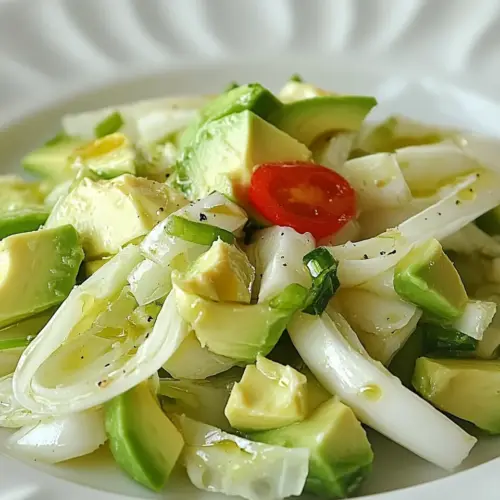
Belgian Endive and Avocado Salad
Belgian Endive and Avocado Salad is a creamy yet crisp spring salad that balances buttery avocado with crunchy Belgian endive and a bright lemon juice and Dijon mustard vinaigrette. Easy to make and elegant to serve, it s perfect for light lunches and easy weeknight dinners, offering fresh, clean flavors that make it a repeat favorite.
Equipment
- Whisk
- Mixing Bowl
- Knife
- Cutting Board
Ingredients
- 1 1/2 tablespoons Dijon mustard Whisk together to form the tangy base for the salad dressing, balancing flavors and helping emulsify oil and lemon juice into a cohesive vinaigrette. Provide a sharp, savory note that brightens the mild bitterness of the endive and the creaminess of the avocado.
- 1/4 cup lemon juice Provide bright acidity to cut through richness and add freshness; combine with mustard to create a lively dressing. Help preserve the avocado's color briefly and lift the overall flavor profile.
- 3/4 teaspoons salt Season the dressing and salad to enhance and balance flavors; dissolve into the lemon-mustard mixture for even distribution. Help tame bitterness and highlight natural sweetness in the avocados and endive.
- 1/2 teaspoon ground pepper Add subtle heat and aromatics to the dish; grind into the dressing to provide a gentle background spice. Contrast the creamy and bitter elements without overpowering them.
- 4 heads of Belgian endive Serve as the crisp, slightly bitter leafy component that creates structure and crunch for the salad; separate and trim leaves for presentation. Offer a sturdy vessel for dressing and complement the avocado's texture with refreshing snap.
- 4 Haas avocado, ripe, peeled and seeded Contribute rich, buttery creaminess and mild, nutty flavor; slice or cube and toss gently with endive to add body and luxurious mouthfeel. Provide nutritional fats that carry flavors and make the salad satisfying.
- 3 tablespoons olive oil Bind the dressing and add fruity, smooth mouthfeel; whisk into the mustard-lemon emulsion until glossy. Help coat the endive and avocado evenly while contributing a pleasant savory background.
Instructions
- Whisk together the mustard, lemon juice, olive oil, salt, and pepper to make a vinaigrette.: The moment you whisk the Dijon mustard into the bright lemon juice you will see the dressing begin to thicken and take on a glossy appearance, the mustard acting as an emulsifier. The aroma will be tangy with a hint of sharpness, and as the olive oil is incorporated the mixture will mellow into a smooth satin texture. Whisk vigorously until the droplets of oil are fully integrated and the dressing clings to the whisk, about 20 to 30 seconds. If the dressing separates, add a teaspoon of water and whisk again to bring it back together. A common mistake is adding oil too quickly, which prevents proper emulsion, so stream it in slowly while whisking.
- Remove a half-inch from the stem end of each endive, discard the core, and cut the rest across into 1-inch chunks. Cut the avocados into large dice or wedges.: When you trim the Belgian endive you will notice a faint vegetal scent and tightly packed leaves inside. Removing the core eliminates the tough, bitter center and helps the pieces separate into attractive shards. Cut across into uniform 1 inch chunks so the texture is consistent through the salad; you want pieces that provide a nice bite but are not too large to eat comfortably. If you cut unevenly some pieces may overpower while others are too small. Avoid soaking the endive in water, as it will water log and lose its snap.
- Toss the avocados and endive with the vinaigrette. Season to taste and serve at room temperature.: As you slice into a ripe Hass avocado the knife should glide through with minimal resistance and release a creamy, buttery aroma. Scooping the flesh into large dice or wedges preserves its silkiness and prevents it from becoming mush in the salad. When you handle the avocado , use a gentle touch to avoid mashing; the color should remain a pale green to creamy yellow without brown bruises. A frequent error is cutting avocados that are either under ripe or overripe, so press gently before slicing to confirm ripeness.
- Toss the avocados and endive with the vinaigrette: When you combine the components the first sensory cue is the contrast between the crisp endive and the lush avocado . Use a large bowl and fold the dressing through with a light hand so the oil clings and the pieces remain defined. You should see a light glaze, not a puddle of dressing, and the aroma should be citrus bright with a savory background from the mustard. Toss just enough so everything is evenly coated; over tossing can bruise the avocado and make the salad watery. The common pitfall here is overdressing, which masks the natural flavors, so dress conservatively and adjust to taste.
- Season to taste and serve at room temperature: After tossing, pause to taste and correct seasoning with additional salt or pepper if needed. Serving at room temperature ensures the avocado is at its most fragrant and the flavors are balanced; cold avocados can mute the aromatics. Visually, the salad should have a pleasing mix of pale endive and green avocado, and the dressing should form a light shimmer. A mistake to avoid is serving straight from the fridge where the flavors are dulled; let it sit for ten to fifteen minutes so the vinaigrette and produce settle into harmony.
Notes
- Choose ripe but firm avocados - Aim for Hass avocado that yield slightly to gentle pressure but are not squishy. Firm ripe fruit slices cleanly into wedges, offering creamy texture without turning to mush during tossing. Check near the stem end for color and feel rather than relying solely on surface appearance.
- Trim endive properly - Remove the half inch stem and core to eliminate bitterness and allow the leaves to separate naturally into bite sized chunks. Proper trimming prevents tough bites and makes plating more elegant. Work with a sharp knife to keep edges clean and minimize bruising.
- Make the vinaigrette last - Whisk the Dijon mustard and lemon juice first, then slowly add the olive oil to create a stable emulsion. Preparing the dressing just before assembly ensures it adheres to the greens and does not sit and separate, which can dilute flavor and texture.
- Serve at room temperature - Let the assembled salad sit for 10 to 15 minutes before serving to let the flavors meld and the avocado soften slightly. Cold ingredients suppress aromatics, so this short rest elevates the overall taste and mouthfeel without compromising freshness.
- Adjust seasoning gently - Add the measured salt and pepper in stages, tasting as you go. Because the vinaigrette concentrates flavors, it s easy to over salt at first. Fine tune at the end to achieve balance and to preserve the natural flavor of the endive and avocado.