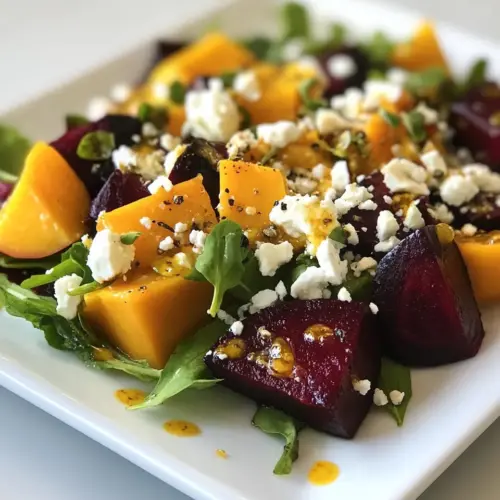
Beet Salad
Beet Salad is a bright, earthy salad with tender roasted beets, tangy goat cheese, and toasted almonds tossed in a lemon vinaigrette. The creamy cheese and crunchy almonds contrast the sweet beets, making it an easy weeknight side or an elegant salad for guests. This flavorful combination is quick to assemble and worth making for its balance of textures and fresh, citrusy lift.
Equipment
- Large Bowl
- Whisk
- Skillet
Ingredients
- 1/2 cup olive oil Adds richness and a smooth mouthfeel while serving as the primary fat for the dressing; helps carry and meld the flavors of lemon and garlic together. Use extra-virgin for a fruitier profile or a neutral olive oil for a milder taste, and whisk well to emulsify with mustard and lemon juice. Provides a glossy coating on greens and beets, enhancing visual appeal and preventing the salad from tasting dry.
- 1/4 cup lemon juice Brightens the dressing with sharp acidity and citrus aromatics, balancing the oil and cutting through the richness of goat cheese. Freshly squeezed lemon juice yields cleaner flavor than bottled and helps lightly marinate the beets and greens if tossed briefly. Adjust quantity to taste to achieve the desired tang without overpowering other elements.
- 2 cloves garlic, minced, or to taste Imparts pungent, savory depth and a subtle bite when minced finely; acts as a flavor enhancer that complements lemon and mustard. Minced garlic disperses evenly through the dressing, releasing aromatic oils that blend into the olive oil base. Use fresh cloves and adjust amount to preference to avoid overpowering delicate greens and cheese.
- 1/2 teaspoon Dijon mustard Stabilizes and slightly thickens the vinaigrette while contributing a touch of tangy, savory complexity that helps emulsify oil and lemon juice. Dijon mustard also adds a gentle heat and depth, tying together the garlic and herbs for a cohesive dressing. Use measured quantity to maintain balance and prevent mustard from dominating the flavor.
- 1/2 teaspoon minced fresh thyme, or fresh chives or fresh basil Infuses fresh, herbaceous notes and a delicate aromatic lift to the dressing; minced herbs add brightness that complements earthy beets and creamy goat cheese. Choose thyme for woody subtlety, chives for mild oniony flavor, or basil for sweet, anise-like warmth, depending on the desired herb profile. Add finely chopped to distribute flavor evenly without overwhelming the salad.
- Salt and freshly ground black pepper Seasoning provides essential taste balance, enhancing sweetness from beets and brightness from lemon while rounding out overall flavors. Salt brings forward underlying flavors and helps tenderize greens slightly, while freshly ground black pepper adds a warm, biting finish. Taste the dressing and salad as you go to achieve proper seasoning without oversalting.
- 4 cups mixed field greens (1 (5-ounce) bag) Forms the fresh, leafy base of the salad and contributes varied textures and mild flavors that frame the beets, cheese, and dressing. Mixed field greens offer a combination of tender and slightly peppery leaves that absorb dressing and provide visual contrast. Use the indicated bagged amount for convenient portioning and to ensure a balanced greens-to-topping ratio.
- 1 pound roasted beets (see note 1) Provides the salad's earthy, sweet centerpiece with tender texture and deep color; roasted beets add natural sweetness and body to each bite. Roast until caramelized for concentrated flavor, then slice or cube before tossing so they distribute evenly among greens and cheese. Can be prepared ahead and served warm or chilled to suit the salad's temperature preference.
- 1 (4-ounce) package goat cheese, crumbled Contributes creamy, tangy richness and a soft, crumbly texture that contrasts with beets and greens while adding salty-sour complexity. Crumbled goat cheese disperses in small pockets throughout the salad, creating flavorful bites and balancing the sweetness of roasted beets. Use full-fat goat cheese for the richest mouthfeel, or slightly less for a lighter finish.
- 1/2 cup slivered almonds, roasted (see note 2) Adds crunchy texture and nutty flavor while providing a toasty aroma when roasted; complements creamy cheese and tender beets with pleasant contrast. Slivered almonds can be dry-roasted or pan-toasted to enhance flavor and sprinkled over the salad just before serving to preserve crunch. Use the specified amount to maintain a balanced nuts-to-greens ratio without overwhelming the dish.
Instructions
- To make the dressing, in a large bowl whisk together the olive oil, lemon juice, garlic, Dijon mustard, thyme, and salt and pepper to taste (I like 1/2 teaspoon salt and 1/8 teaspoon pepper).: The bowl will smell bright and savory as you whisk, the citrus should cut through the raw garlic aroma and the Dijon mustard will help the mixture thicken slightly into an emulsion. Whisk until you feel the dressing thicken, that gentle resistance means the olive oil and lemon are combined. If the dressing separates, keep whisking or add a tiny splash more lemon and mustard to stabilize it. A frequent misstep is overpacing the oil while whisking, which can prevent proper emulsification, so add the oil slowly and keep whisking steadily.
- To the bowl with the dressing, add the salad greens and toss to combine. Top with beets, goat cheese, and almonds and serve. Dressed salad greens may also be divided among individual plates before adding beets, goat cheese, and almonds.: When you add the mixed field greens to the vinaigrette, you should hear a soft rustle as leaves move and see them become lightly glossy with dressing. Toss gently but thoroughly so each leaf gets a thin coating rather than puddles forming at the bottom. The reason we dress the greens before adding harder toppings is to ensure every leaf carries flavor, and that prevents the beets from making everything too wet. A common error is overdressing, which makes the greens limp, so start with less and add more if needed.
- Top with beets, goat cheese, and almonds and serve: Arrange the tender roasted beet pieces across the dressed greens for color contrast, then scatter crumbled goat cheese so some melts slightly onto warm beet if they are warm, offering creamy pockets in every bite. Finish with the toasted slivered almond s for crunch. The visual cue of glossy greens, vibrant beet pieces, and white cheese crumb is what you want to see before serving. Watch for overly large beet pieces which can overwhelm a forkful; aim for bite sized pieces for balance.
- Dressed salad greens may also be divided among individual plates before adding beets, goat cheese, and almonds: Plating individually helps with presentation and ensures each person gets a balanced portion of each component. When plating, place the greens gently in a shallow bowl, then layer the beet pieces artistically, finishing with cheese and nuts. The tactile satisfaction of layering contrasts is worth the extra couple of minutes. A typical mistake is piling everything in the center which can hide the greens, so spread components across the plate to show color and texture.
Notes
- Swap the herb: Try minced fresh chives or basil instead of thyme for a milder, brighter herb presence that shifts the salad toward herbaceous summer tones.
- Change the nut: Replace slivered almonds with roasted walnuts or hazelnuts for a deeper, earthier crunch that complements the beet sweetness.
- Make it sweeter: Stir in a small spoon of honey into the vinaigrette if you prefer a softer, rounded acidity that clings to the greens and beet pieces.
- Vinegar swap: Substitute balsamic vinegar for the lemon juice for a richer, slightly sweeter dressing that pairs exceptionally well with roasted beet.
- Cheese alternatives: If you want a sharper finish, swap goat cheese for crumbled Gorgonzola or shaved Parmesan to change the salad’s savory profile.