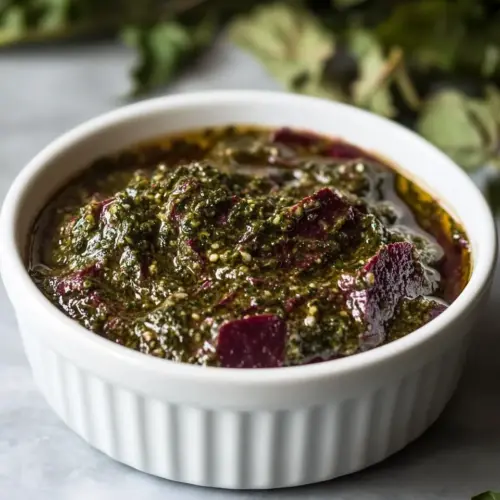
Beet Green Pesto
Beet Green Pesto is a creamy, bright green sauce that makes the most of tender beet leaves. Nutty shelled pistachios and mellow roasted garlic combine with tangy cider vinegar and rich olive oil for an easy weeknight condiment that transforms pasta, toast, and roasted vegetables. Make a jar to keep your meals vibrant all week.
Equipment
- Food Processor
- Sealable Container
Ingredients
- 2 cups beet greens tightly packed Provide tender, leafy flavor and vibrant color while contributing mild earthiness and a slightly sweet, beet-like undertone to the pesto; blend thoroughly to incorporate their delicate texture and maximize bright green pigment for an attractive sauce. Wilt gently or pack tightly before measuring to ensure accurate volume and a smoother purée when combined with oil and nuts.
- 1/2 cups shelled pistachios see note Add rich, buttery texture and a toasty, nutty backbone that helps emulsify the pesto and balance vegetal notes; lightly toast if desired to intensify flavor but avoid burning to keep a clean pistachio character. Use shelled pistachios for ease of blending and a creamy mouthfeel that supports the sauce structure.
- 5 cloves roasted garlic see note Deliver mellow, caramelized garlic flavor with reduced sharpness, lending depth and savory complexity without overpowering the greens; roasting concentrates sugars and creates a softer, spreadable garlic that blends smoothly into the pesto. Adjust number of cloves based on personal preference for garlic intensity and ensure skins are removed for a silky texture.
- 1 teaspoons sea salt to taste Season and enhance overall flavor profile by elevating natural tastes and balancing acidity and bitterness; add sparingly and taste as you go to avoid over-salting. Dissolve into the mixture to help bind flavors and bring out the sweetness of the greens and nuts.
- 2 tablespoons cider vinegar Provide bright acidity and tang that lifts the richness of the oil and nuts, adding a pleasant zip to the pesto; stir in gradually and taste to achieve a balanced finish. Use cider vinegar for its fruity, slightly sweet profile that complements beet greens without masking their character.
- 1/2 cup olive oil Create a smooth, cohesive emulsion that carries flavors and delivers a silky mouthfeel while preserving the pesto’s glossy appearance; add slowly while blending to achieve desired consistency. Choose extra-virgin olive oil for its fruity, peppery notes that enhance the overall depth of the sauce.
Instructions
- Add all of the ingredients except for the olive oil to a food processor. Pulse 5 to 10 times, or until the ingredients are roughly chopped.: The first pulses release aromas as the beet greens , shelled pistachios , and roasted garlic break down. You will notice an immediate green fragrance with nutty undertones, and the mixture should look coarsely chopped, not a puree. This texture stage matters because it determines how much structure remains in the final pesto. Too many pulses here can make the nuts turn past coarse into a paste, so stop while you still see distinct bits. A common mistake is over-processing, which can heat the mixture and dull the fresh color, so pulse in short bursts and scrape the bowl if needed.
- Turn the food processor on and slowly stream the olive oil through the opening at the top.: As you drizzle the olive oil , the mixture will begin to shine and coalesce, transforming from dusty bits into a glossy, cohesive pesto. Listen for a steady motor hum and watch for the mixture to smooth out, with the oil binding tiny flecks of green and nutty pearls. Pouring too quickly can cause the oil to separate instead of emulsify, leaving a greasy top layer. If separation occurs, stop adding oil and pulse briefly to bring it back together. The ideal cue is a velvety texture that holds together on a spoon.
- Taste the pesto for flavor and add more sea salt, vinegar, or garlic to taste.: This is when the flavors harmonize, and you must fine tune. I sample a small spoonful to check salt, acidity, and garlic presence. The cider vinegar should lift the overall profile without tasting vinegary, and the sea salt should make the green notes pop. If the pesto feels heavy, another splash of vinegar lifts it. One common pitfall is over-salting before tasting with the intended accompaniment, so season cautiously.
- Use immediately or transfer to a sealable container and refrigerate until ready to use. Pesto will stay fresh for up to 7 days in a sealed container in the refrigerator.: Fresh pesto has bright color and lively aroma right away, and when stored it mellows but remains flavorful. Press a thin layer of olive oil on top before sealing to slow oxidation and color loss. You will notice aroma fade over days, which is normal, but the taste remains vibrant. Avoid leaving it at room temperature for long periods, as that shortens its shelf life. A typical error is storing without oil seal, which leads to faster browning and flavor degradation.
Notes
- Substitute nuts or seeds — You can swap the shelled pistachios with walnuts, almonds, pecans, pumpkin seeds, or pine nuts, each offering a different richness and flavor profile. Toasting them lightly deepens the nuttiness and adds complexity.
- Adjust garlic intensity — If using raw garlic instead of roasted garlic, start with two large cloves and add more to taste, because raw garlic can dominate the mix quickly.
- Make it lemony — A squeeze of lemon can replace or complement the cider vinegar for a fresher, citrus lift that pairs beautifully with seafood or bright salads.
- Freeze for long term — Spoon pesto into ice cube trays and freeze, then transfer cubes to a bag so you have portioned sauce ready for quick meals.
- Adjust oil for texture — Reduce the olive oil slightly for a thicker paste, or increase it for a looser sauce that dresses pasta and salads easily.