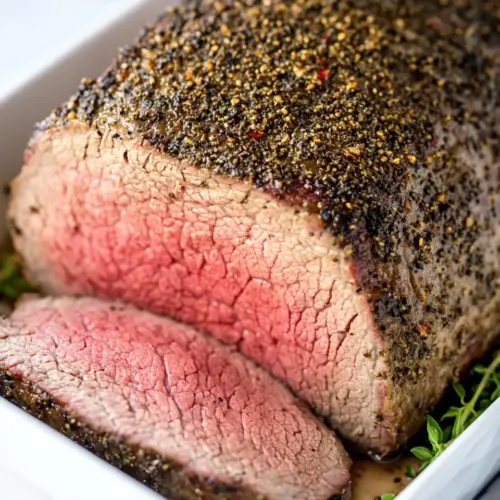
Beef Top Round Roast
Beef Top Round Roast is a juicy, peppery roast with a crisp, aromatic crust and tender, thinly sliced interior. This easy weeknight dinner method uses a high heat sear then a slow finish for reliably medium rare results. The lean cut is budget friendly and perfect for feeding a group, making it a smart choice for Sunday dinners and holiday meals.
Equipment
- Rimmed Baking Sheet
- Zip bag
- Meat Mallet
- Small Bowl
- Instant read thermometer
- Serrated Knife
Ingredients
- 4 – 4 1/2 pounds beef top round roast whole London broil roast Roast and serve as the primary protein for the dish, providing hearty beef flavor and a substantial texture; choose a whole top round (London broil) for uniform slicing. Allow to come to room temperature and rest after cooking to retain juices and ensure even doneness across the roast.
- 3 tablespoons olive oil Coat and gently sear the roast to develop a browned crust and carry flavors; olive oil helps distribute dry seasonings evenly and prevents sticking. Use a high-quality extra-virgin or light olive oil depending on desired smoke point and flavor intensity.
- 3 tablespoons whole peppercorn crushed Crush and press onto the roast to provide bold, aromatic heat pockets; whole peppercorns create textural contrast and release fragrant oils under heat. Lightly crush before use to control pungency and bloom the spice without overpowering the beef.
- 4 teaspoons kosher salt or 1 TB sea salt Season liberally to enhance and balance savory notes; kosher salt (or 1 tablespoon sea salt) draws out moisture for a better crust and deepens overall flavor. Adjust amount to taste and consider reduced salt if using additional salty components.
- 2 teaspoons ground mustard Flavor and add subtle tang to the rub while complementing beefiness; ground mustard gives a mild, sharp undertone that brightens the roast. Mix into the spice blend to meld flavors and help form a cohesive seasoning paste.
- 2 teaspoons dried thyme Infuse an earthy, slightly floral herb character into the roast; dried thyme pairs well with beef and holds up to long cooking times. Sprinkle evenly with other dry spices so its aroma becomes integrated during roasting.
- 1 teaspoon garlic powder Impart gentle savory garlic notes without adding moisture; garlic powder distributes evenly in the spice rub and provides consistent garlicky flavor throughout. Use sparingly to avoid bitterness from overconcentration when exposed to high heat.
Instructions
- Preheat the oven to 450°F. Set out a large rimmed baking sheet. Place the top round roast on the baking sheet. Drizzle oil over the top and rub the roast completely on all sides to coat.: The room fills with a faint tang of oil as you rub it in, and you want the surface to look evenly glossy but not dripping. This sheen is the sign that the olive oil is ready to help the seasoning stick and to promote browning. When the oven reaches full heat it will create direct contact heat that sears the exterior, forming a flavorful crust. A common mistake here is skipping the oil or rubbing it unevenly which can lead to patchy browning, so take a moment to coat every face of the roast.
- Place the peppercorns in a zip bag. Use a meat mallet to gently hammer them to crush into coarse pieces.: You will hear a satisfying crack as the peppercorn shards break, and the aroma opens up, offering a bright, spicy note. Crushing to coarse pieces keeps texture in the crust and prevents a single intense pepper blast, it also helps the pepper toast quickly during the high heat stage. Avoid pulverizing them into powder, because that can create a bitter burn during roasting.
- In a small bowl, combine the crushed peppercorns, kosher salt, ground mustard, dried thyme, and garlic powder. Mix well.: The mix should look evenly speckled, with salt and herb bits distributed through the pepper. Whisking by hand lets you gauge the balance, and you can smell how the mustard and thyme lift the pepper. Mixing thoroughly ensures every bite will carry the same seasoning, so do not rush this step or you risk uneven flavor pockets.
- Sprinkle the seasoning mix over the top round roast, turning to coat on all sides.: As you apply the seasoning, press it gently into the oiled surface so it adheres. The crust begins to form in concept when the aromatics make intimate contact with the meat, and when turned, each side will pick up its fair share of spice. A typical error is only seasoning the top, leaving the underside bland, so rotate and coat fully to avoid uneven taste.
- Once the oven is hot, roast the top round for 15 minutes to create a bark. Then lower the oven temperature to 300°F.: During the initial 15 minutes you will notice the roast start to darken and the pepper will toast, releasing a roasted, toasty scent. That rapid sear locks in savory flavors and creates a textured crust, which is essential for contrast with the tender center. After the sear it is important to lower the temperature so the interior cooks gently; rushing this phase can dry out the lean beef .
- Insert a meat thermometer into the thickest part of the roast. Place the roast back in the oven for approximately 50 to 60 minutes, until it reaches 130°F. *The top round should be between 130-135°F for medium-rare. But the temperature will rise a few degrees even after you take it out of the oven, so we like to pull it at exactly 130. For medium, roast until it reaches 135-140°F.: You will hear the quiet hum of the oven while the internal temperature climbs slowly, and the thermometer is your best friend for precision. The reason for the lower finishing temperature is carryover cooking, which gently raises the roast a bit while resting, avoiding overcooking. A frequent pitfall is removing it too late because you are watching only the clock; rely on the thermometer and the roast will be just right.
- Allow the top round roast to rest on the baking sheet for 10 to 15 minutes. Then use a serrated knife to slice the roast very thin, against the grain. The thinner the pieces, the less tough the roast will seem.: Resting is when the juices redistribute, and you may notice the aroma deepen and the surface relax. The texture softens slightly and slicing becomes smoother. Cutting against the grain is the trick to tenderness, because it shortens muscle fibers in each slice so they feel less chewy. A common mistake is slicing immediately, which causes juices to run out and yields a drier result, so be patient for the best mouthfeel.
Notes
- Storage tip Store cooled leftovers in an airtight container in the fridge for up to 3 days, which keeps slices moist and convenient for sandwiches or salads.
- Slicing technique Using a very sharp serrated or long slicing knife and cutting against the grain produces the most tender pieces and minimizes tearing.
- Thermometer guidance Aim to remove the roast at 130°F for medium rare because carryover heat will raise it a few degrees while resting, giving you perfect doneness.
- Seasoning balance Press the seasoning firmly into the oiled surface so the crust forms uniformly, this prevents clumps and uneven flavor.
- Oven calibration If your oven runs hot, consider verifying with an oven thermometer to ensure the initial sear does not burn the crust before the center cooks.