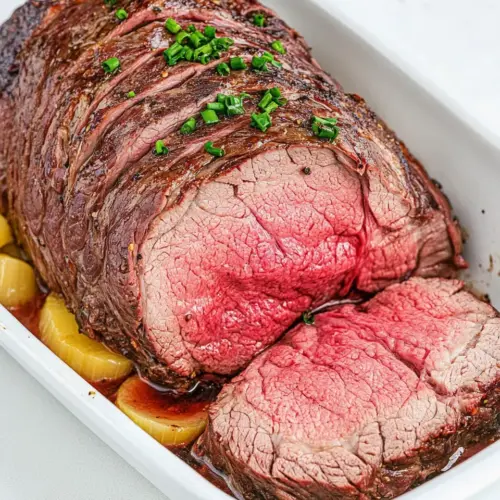
Beef Tenderloin Roast
Beef Tenderloin Roast is a tender, elegant centerpiece with a silky texture and a crisp seared crust. This easy weeknight dinner or special occasion main is buttery, savory, and reliably delicious for gatherings. With simple seasoning and a brief sear, it delivers restaurant quality at home, making it a perfect choice when you want an impressive meal without complicated steps.
Equipment
- Oven
- Skillet
- Baking Sheet
- Rack
- Instant read thermometer
Ingredients
- 2 pounds beef tenderloin center cut is best Roast to tender, even doneness by choosing a center-cut tenderloin and allow it to rest before slicing; its lean, fine-grained texture benefits from quick, high-heat searing to develop a flavorful crust while preserving a juicy interior.
- 4 tablespoons butter room temperature, divided use Soften at room temperature and spread onto the meat to promote browning and add richness; dividing its use lets some butter baste during roasting and reserves some for finishing to enhance mouthfeel and flavor.
- 1/2 teaspoon kosher salt Season evenly across the surface to enhance the beef's natural flavor and help create a balanced savory profile; kosher salt also aids in forming a crust when combined with high-heat cooking.
- 1/2 teaspoon ground black pepper Crack fresh into the seasoning mix to provide bright, sharp heat and aromatic depth; ground black pepper pairs with salt to lift the roast's flavors without overpowering the natural beef taste.
Instructions
- Take the beef tenderloin out of the refrigerator about 45 minutes to 1 hour before roasting to bring it to room temperature.: As the meat warms, the fibers relax and the interior cooks more evenly, yielding a tender, evenly colored roast with fewer gray bands. You will notice the roast lose its chill, and when you press it lightly it should feel less cold and slightly springy rather than rock hard. This step also shortens overall cook time and reduces the risk of an overdone exterior and underdone center. A common mistake is skipping this rest and placing a cold roast straight into the oven, which can result in uneven doneness and a tight texture.
- Preheat the oven to 300°F.: A moderate oven temperature encourages gentle, even cooking throughout the roast, building a uniform pink interior without an overly crusty exterior. When the oven reaches temperature, the ambient heat will slowly transfer into the roast, producing predictable internal rise. You should hear the oven fan cycle or see the preheat indicator confirm the set point before sliding the meat in. Avoid cranking the oven to very high heat for the entire roast, as that risks drying the exterior before the center reaches the right temperature.
- Spread 2 tablespoons of butter on the roast and season liberally with salt and pepper.: Butter adheres seasoning and facilitates browning during the final sear while adding richness to each bite. As you spread the softened butter, it should glide across the surface and create a thin sheen that will encourage even coloration. The salt and pepper will stick to this surface and form a simple, flavorful crust when seared. One pitfall is applying cold butter that slides off; using room temperature butter ensures even coverage and seasoning adhesion.
- Place the roast on a rack on top of a baking sheet and bake for 20 to 25 minutes per pound for rare, or about 30 to 35 minutes per pound for medium rare, checking the internal temperature with a thermometer. When the roast reaches the desired temperature, remove it from the oven.: A rack promotes air circulation so the roast cooks evenly on all sides. As it bakes, you will notice the outer surface firm up and develop a subtle brown tint. Use an instant read thermometer inserted into the thickest part of the roast to hit your target, and watch the internal temp climb steadily. A frequent error is relying on time alone rather than temperature; ovens vary and meat size differs, so the thermometer is essential for reliability.
- Heat 2 tablespoons of butter in a skillet over medium-high heat. Place the roast in the skillet and sear all sides until it is evenly browned.: Searing after roasting creates a pronounced, flavorful crust through the Maillard reaction, adding complexity and texture to each slice. You should hear a satisfying sizzle as the butter and meat meet, and the aroma will shift to nutty and toasty notes. Turn the roast to brown each face evenly, aiming for a deep caramelized color without burning. Be cautious of overheating the pan, which can char the surface quickly and impart bitterness; moderate heat and steady movement are key to an even sear.
- Remove the roast from the skillet and allow it to rest for 15 minutes before slicing and serving.: Resting lets the meat's juices redistribute back into the fibers, producing moist, tender slices rather than a pool of juices on the cutting board. During this period the internal temperature may rise a few degrees, and the crust will settle and firm just enough to slice cleanly. You can tent the roast loosely with foil to keep it warm, but avoid wrapping tightly which can steam the crust. A common oversight is slicing too soon, which causes the juices to run out and yields a drier result.
Notes
- Room temperature matters Prepare the roast ahead so it warms for about 45 minutes to 1 hour, which promotes even cooking and a tender interior.
- Trust the thermometer Rely on an instant read thermometer to hit rare or medium rare accurately, rather than strictly following minutes per pound.
- Butter strategically Use softened butter to help seasoning adhere and to create a richer surface for the final sear.
- Moderate pan heat When searing, use medium high heat and watch for a steady sizzle, avoiding scorching the butter which leads to bitterness.
- Rest before slicing Allow at least 15 minutes of rest to keep juices inside the roast and ensure clean, moist slices.