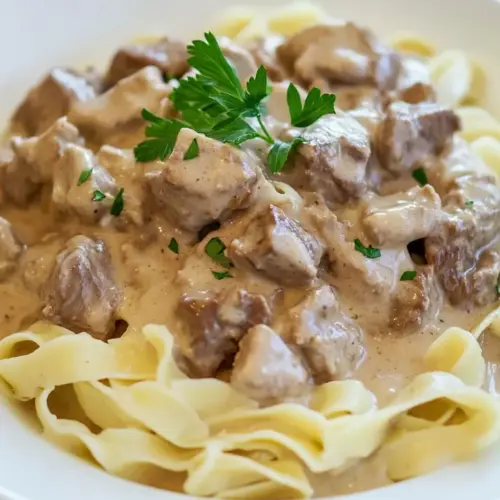
Beef Stroganoff Recipe
Beef Stroganoff Recipe offers a creamy, savory bowl of tender beef and silky sauce perfect for an easy weeknight dinner. This comforting classic blends browned beef with a tangy sour cream finish and hearty egg noodles, creating a rich mouthfeel and deep umami notes. It is an approachable recipe that feels special enough for guests, and simple enough to make any night you crave a satisfying, home cooked meal.
Equipment
- Large saucepan
- Pot for boiling noodles
- Colander
Ingredients
- 2 tablespoons canola oil Heat with oil in a skillet to brown and sear meat, providing a nonstick surface and carrying flavors during sautéing and deglazing for the sauce.
- 1 1/2 pounds chuck roast or sirloin steak, sliced into bite-sized strips (or ground beef) Cut into bite-sized strips to provide tender, flavorful protein; choose chuck roast for richness or sirloin for leaner texture, and brown well to develop savory fond for the gravy.
- 1/4 cup all-purpose flour Coat meat lightly to create a thin crust and help thicken the sauce when browned and deglazed, absorbing juices and creating body for the final stroganoff.
- 1/2 teaspoon salt, plus more to taste Season early to enhance meat flavor and balance richness; use in the cooking process and adjust later to taste to avoid over-salting the finished dish.
- 1/2 teaspoon pepper, plus more to taste Season during cooking to build savory depth and balance richness; add incrementally and taste before final adjustment to suit preference.
- 2 cups full-sodium beef broth Deglaze the pan and form the base of the sauce, adding robust beef flavor and necessary liquid for simmering the meat and thickening with flour.
- 1 -2 tablespoons Worcestershire sauce Add sparingly to deepen umami and introduce tangy-salty complexity; adjust quantity to taste to complement the beef and cream components.
- 3 cups (or 12 ounces) medium egg noodles Provide a hearty carbohydrate to serve with the saucy beef; cook until tender and toss with sauce to absorb flavors and complete the meal.
- 1 cup sour cream Enrich and create a creamy, tangy finish for the sauce; fold in off heat to prevent curdling and to add silkiness and slight acidity.
- 1/4 cup whipping cream Add extra richness and smooth mouthfeel to the sauce; stir in with sour cream to loosen texture and increase creaminess without overwhelming tang.
- 1 -2 teaspoons garlic salt Season and lightly flavor the dish with garlicky and salty notes; sprinkle judiciously to avoid overpowering the other seasonings while enhancing overall taste.
- chopped fresh parsley, for garnish (optional) Garnish chopped parsley to add fresh herbal brightness and color contrast; sprinkle just before serving to lift flavors and improve presentation.
Instructions
- Heat oil in a large saucepan over medium-high heat. Toss meat with flour, salt and pepper and cook in hot oil for about 2 minutes per side.: The pan should sizzle softly when you first add the canola oil , releasing a faint toasted scent as it warms. This step primes the surface to sear the beef efficiently, creating the Maillard browning that gives savory depth. If the oil smokes immediately, lower the heat to prevent bitter burnt flavors. A common mistake is adding meat to a pan that is too cool, which leads to stewing rather than browning and a less flavorful outcome.
- Add broth and Worcestershire sauce and simmer for 15 minutes.: As the beef hits the pan you should hear a lively sizzle and see edges turning golden brown within a minute. The flour coating will form a light crust that helps thicken the sauce later, and the initial seasoning helps draw out savory juices. Avoid overcrowding the pan, because that makes the meat steam instead of sear. If pieces are clumped, they will not brown properly and the texture will be less appealing.
- Meanwhile, cook egg noodles according to package directions. Drain when done.: When you pour in the beef broth you will notice steam rise and the browned bits loosening from the bottom, releasing concentrated flavor into the liquid. The simmer should be gentle, with tiny bubbles that break slowly, allowing connective tissue to relax and flavors to meld. If the heat is too high you risk reducing too fast and concentrating salt; if it is too low you will not extract as much depth from the browned bits.
- Add sour cream, whipping cream and garlic salt to meat mixture and stir.: The boiling water should be lively, and the egg noodles will float and blush to a slightly plumper color when near done. Taste for al dente texture; the noodles should resist slightly to the bite because they will continue to soften when mixed into the sauce. Overcooking yields mushy strands that break apart when tossed, which undermines the dish.
- Add noodles and toss to coat, or serve meat over noodles. Add more salt and pepper to taste if needed.: After draining the egg noodles , give them a brief shake to remove excess water and keep them warm. Well drained noodles allow the sauce to cling rather than running off, creating a cohesive plate. Leaving too much water will dilute your sauce and make the final texture thin and bland.
- Sprinkle with fresh parsley if desired and serve warm.: As you fold in the sour cream and whipping cream the aroma gains a gentle tang and the sauce thickens to a silky consistency. Stir gently over low heat to combine, and avoid boiling vigorously to prevent the dairy from separating. A frequent error is heating too fast after adding dairy, which can cause curdling and a grainy texture.
- Add noodles and toss to coat, or serve meat over noodles: When the egg noodles meet the sauce you should hear a soft, satisfying fold and see strands glossy with sauce. Tossing distributes sauce evenly, ensuring each bite is balanced, while serving the meat over noodles highlights the stew like quality. If you notice the sauce is too thick, a splash of warm broth can loosen it; if too thin, simmer a moment to concentrate flavors.
- Add more salt and pepper to taste if needed: Taste the finished dish and adjust with additional salt and pepper sparingly, because flavors intensify as the dish rests briefly. Season incrementally and taste after each adjustment to avoid over salting. A mistake I often see is adding all the salt at once, which can be hard to correct later.
- Sprinkle with fresh parsley if desired and serve warm: The final addition of chopped fresh parsley brings a bright herbal note and an inviting visual contrast. Serve the dish warm and enjoy the textural interplay between tender beef , silky sauce, and springy egg noodles . If you let it sit too long before serving the noodles will continue to absorb sauce and can become drier than intended.
Notes
- Choose your beef wisely, selecting chuck roast for longer, melt in your mouth tenderness, or sirloin for a quicker, tender sear depending on the time you have available.
- Adjust cream levels, if you prefer a lighter sauce reduce the whipping cream slightly and increase the beef broth to maintain volume without extra richness.
- Make it ahead, the flavors often harmonize nicely after a short rest, reheat gently over low heat and add a splash of broth to regain saucy consistency.
- Mind the noodle timing, cook the egg noodles just before serving so they retain structure and do not over absorb the sauce while sitting.
- Finish with fresh herbs, a sprinkle of chopped fresh parsley at the end brightens the dish and creates contrast to the creamy sauce.
- Control the salt, because the beef broth is full sodium, season gradually and taste after simmering to avoid an overly salty sauce.