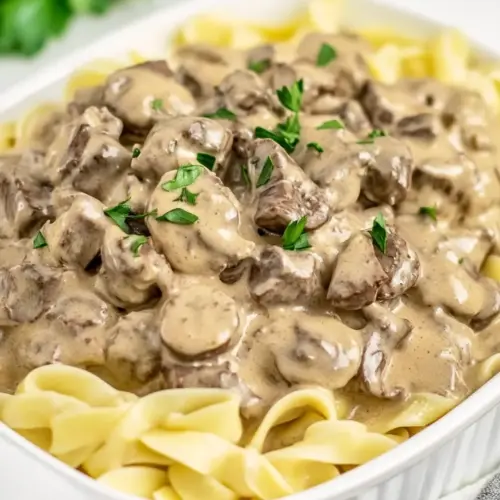
Beef Stroganoff
Beef Stroganoff brings tender slices of seared beef together with a creamy, savory mushroom and onion sauce, making for a creamy, comforting, easy weeknight dinner. This quick thirty minute dish offers layered umami, bright mustard notes, and a silky finish that clings to egg noodles, promising family friendly satisfaction and a reason to make it tonight.
Equipment
- 12-inch Cast Iron Skillet
Ingredients
- 1 pound (450 g) steak like sirloin, ribeye, or tenderloin, all fat trimmed Trimmed and thinly sliced, provides the hearty protein and primary texture for the dish, delivering savory beef flavor when seared. Contributes rich umami and juiciness that pairs with the creamy sauce, and benefits from quick, high-heat cooking to remain tender. Choose a tender cut to balance mouthfeel and flavor.
- 1/2 teaspoon salt Seasoned lightly, brings essential seasoning to enhance the natural flavors of the beef and other components. Helps to draw out moisture and concentrate taste during searing, and balances the overall seasoning of the finished stroganoff.
- 1 tablespoon (15 ml) olive oil Heated briefly, supplies a stable cooking oil for searing the steak and vegetables, adding a subtle fruity note. Creates a nonstick surface in the pan and helps achieve a good crust on the meat without burning at medium-high heat. Works well combined with butter for flavor and higher smoke point.
- 1 tablespoon (14 g) butter Melted into the pan, contributes rich, creamy flavor and helps brown the ingredients with a silky mouthfeel. Adds depth to the sauté base and complements the olive oil by enhancing browning and sauce richness.
- 2 tablespoons (28 g) butter Added later for sauce and additional richness, supplies a higher amount of butter fat to create a glossy, velvety sauce. Helps meld the flour into a roux-like base, enriching the final texture and carrying flavors smoothly throughout the dish.
- 1 medium yellow onion diced Diced finely, supplies aromatic sweetness and savory depth when softened and caramelized in the pan. Forms part of the flavor foundation, releasing moisture and natural sugars that balance the beef and creamy elements. Enhances overall complexity when cooked until translucent.
- 12 ounces (350 g) button mushrooms or brown/cremini/chestnut Sliced and sautéed, adds earthy umami and meaty texture that complements the steak and creates a fuller mushroom-forward flavor. Releases moisture that concentrates flavors and contributes to the sauce body when lightly browned.
- 1 clove garlic minced Minced and added toward the end of sautéing, provides a sharp, pungent aromatic that brightens the savory base. Enhances overall aroma and depth without overpowering when cooked briefly to mellow harshness.
- 2 tablespoons (15 g) all-purpose flour Sprinkled into the pan, acts as a thickening agent to help bind the beef broth and fats into a cohesive sauce. Absorbs cooking juices and, when cooked briefly, removes raw flour taste while contributing slight body to the finished stroganoff.
- 2 cups (480 ml) beef broth Simmered with the roux, supplies the liquid foundation and deep beef flavor needed for the sauce, creating a savory base for the dish. Helps adjust sauce consistency and infuses the mixture with rich, meaty notes when reduced slightly.
- 1 teaspoon Worcestershire sauce optional Added optionally, contributes tangy, salty, and slightly fermented umami that lifts the overall savory profile. Enhances depth and complexity in small amounts, complementing the beef and mushrooms without overwhelming.
- 1 tablespoon Dijon mustard Whisked in for sharp flavor, provides a bright, mustardy tang that cuts through the richness and balances the creaminess. Helps tie flavors together and adds subtle acidity and spice notes to the sauce.
- 1/2 cup (120 g) sour cream or Greek yogurt Folded in off heat, supplies the creamy tang and silky texture that defines traditional stroganoff, creating a luscious finish. Adds moderate acidity and richness, smoothing flavors while preventing the sauce from becoming overly heavy when gently warmed.
Instructions
- Trim your steak from any fat, and slice it thinly into 1/4 inch against the grain. Cut any long strips in half. Season with salt.: The first sensory cue is the clean sound of the knife as it slices through the chilled steak , which should feel firm and slightly cool. Slicing against the grain shortens muscle fibers, so the meat feels tender when chewed. If the slices feel stringy you likely cut with the grain, and the texture will be tougher after cooking. Take your time and use a sharp knife, pressing evenly so slices are uniform and cook at the same rate.
- In a large skillet over medium-high heat, heat olive oil and melt the butter. Sear the beef strips in a single layer in batches, 30 seconds per side, then remove onto a plate and set aside.: You want the pan hot enough that the olive oil shimmers and the butter foams, producing an immediate sizzle when the steak hits the surface. The smell of caramelizing meat and browned butter is your cue that the fond is forming. Searing in a single layer ensures even contact and a golden crust, while removing in batches prevents steaming. A common misstep is overcrowding, which causes grey, steamed meat instead of browned slices. Let the pan reheat between batches for consistent color.
- In the same skillet, melt butter and cook onion until soft and translucent, about 3 minutes.: You will notice the aroma shift to sweet as the onion softens, and the pieces turn glossy and pale. This gentle cooking releases sugars that balance the savory elements of the dish. Stir occasionally so the edges do not brown too quickly, unless you prefer deeper caramel notes. If the heat is too high the onion will brown unevenly and add a bitter edge, so keep the skillet at medium.
- Add mushrooms, and cook for 3 more minutes or until they start to soften. Add garlic, and saute for 30 seconds or until fragrant.: As the mushrooms hit the pan you should hear a lively sizzle and then a slower release of moisture, which concentrates their earthy aroma. They will shrink and take on browned edges, signaling flavor development. Add the minced garlic later to avoid burning, and watch for its brief fragrant moment; overcooked garlic becomes bitter. If mushrooms steam rather than brown, they were crowded in the pan or the heat was too low.
- Sprinkle flour all over the mushrooms, stir, and cook for 30 seconds.: The dry smell of the flour will quickly change as it heats and becomes nutty, which is what you want before adding liquid. This toasting step cooks out raw starch and helps the sauce thicken evenly. Stir thoroughly to coat the mushrooms and aromatics so no dry pockets remain. If you skip the toast the sauce can taste pasty or have raw flour notes.
- Pour the beef broth into the pan, deglaze it, and scrape off any bits stuck to the bottom of the pan. Stir, lower the heat to medium, and allow the mixture to simmer and thicken for 5 minutes.: When the beef broth hits the warm pan you will hear a lively hiss and watch the browned bits lift, turning the liquid a rich color as you scrape. Reduce to a gentle simmer so the flour hydrates and the mixture thickens into a glossy sauce. Smell and taste as it reduces; the aroma should be concentrated and meaty. If it bubbles too hard the sauce can break or reduce too far, becoming salty or pasty.
- Add Worcestershire sauce, Dijon mustard, and sour cream to the sauce. And stir until well incorporated.: The moment you stir in the Worcestershire sauce and Dijon mustard the sauce gains a layered tang, and folding in the sour cream brings silkiness. Do this off or on very low heat to avoid curdling, and stir until the texture is uniformly glossy. If the sauce begins to split, lower the heat and whisk gently while adding a splash of warm beef broth to stabilize it.
- Add sauteed beef strips to the sauce with any juices left on the plate, stir to combine, and simmer for 1 minute. Remove from heat and serve over egg noodles, garnish with chopped fresh parsley or chives.: When you return the beef to the pan, listen for the soft reunion sizzle and watch the sauce cling to the meat, indicating it has properly bonded. Simmering briefly allows flavors to meld without overcooking the thin slices, which should remain tender and slightly pink if you prefer. Overcooking here is the most common error, leading to dry strips, so keep the final simmer to about the recommended time. Serve immediately so the sauce stays glossy and the textures remain distinct.
Notes
- Slicing the Steak It’s very important to slice the meat against the grain. This shortens the muscle fibers so each slice is tender after quick cooking. I find it easiest when the meat is slightly chilled, which firms it and yields cleaner, uniform slices.
- Adding Flour Toast the flour for about thirty seconds with the vegetables so the raw starch taste cooks away. Gluten free flour can be used if you need a gluten free option, and it will thicken similarly though the texture may be slightly different.
- Adjust the Sauce If the sauce thickens too much, stir in a little warm beef broth until it reaches the desired consistency. Add gradually and taste as you go, since thinning liquids dilute flavor.
- Garnish A scattering of chopped fresh parsley or chives brightens the plate and adds a fresh contrast to the rich sauce. I sprinkle just before serving so the herbs stay vibrant.
- Storing Keep leftovers in an airtight container in the refrigerator for up to four days, or freeze for up to three months. Reheat gently over low heat with a splash of warm beef broth to prevent overcooking the steak.