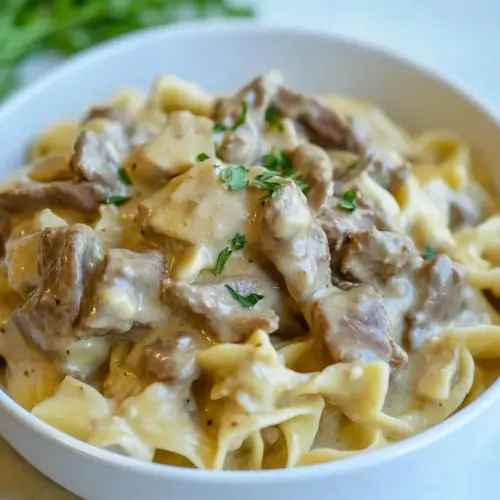
Beef Stroganoff
Beef Stroganoff is a creamy, savory classic with tender beef, earthy mushrooms, and a tangy dairy sauce that clings to egg noodles. This easy weeknight dinner balances rich, umami flavors with bright mustard notes, creating a satisfying, cozy meal. Make it in a pressure cooker for speed or slow cooker for melt in your mouth tenderness, a perfect reason to cook tonight.
Equipment
- Pressure Cooker
- Slow Cooker
Ingredients
- 1/2 onion sliced Sliced and softened to add aromatic sweetness and a gentle bite, providing a savory base that melds with the beef and sauce during sautéing or braising.
- 2 lbs beef stew meat, (can also used cubed flank stake, sirloin, or beef tenderlion) Cut into bite-sized pieces to become the hearty protein centerpiece, offering rich beefy flavor and tender texture after searing and slow cooking.
- 2 cups beef broth, (I like to use Better thank Bouillon Beef base) Simmered to create a flavorful liquid foundation that deglazes the pan, intensifies the meat flavors, and forms the body of the stroganoff sauce.
- 8 ounces sliced mushrooms Sliced and browned to contribute earthy, savory notes and tender texture that complement the beef while absorbing the surrounding sauce flavors.
- 2 tablespoons Dijon mustard Stirred into the sauce to introduce a tangy, sharp acidity that brightens the overall flavor and helps balance the richness of dairy.
- 1 tablespoon Worchestershire Added for its deep, savory umami complexity to enhance the beefy profile and round out the sauce with a slightly salty, fermented note.
- 1 tablespoon minced garlic Minced and sautéed to release aromatic pungency that layers with onion and mushrooms, boosting overall depth and savory fragrance.
- 1/2 teaspoon dried thyme Sprinkled as a subtle herbaceous note to impart floral, slightly minty undertones that enrich the sauce without overpowering primary flavors.
- kosher salt and pepper, (about 1 teaspoon salt and 1/2 teaspoon pepper) Used to season during cooking and finishing, achieving balanced salinity and a mild heat that elevates the dish to taste specifications.
- 2 tablespoons cornstarch Mixed as a thickening agent to create a smooth, glossy sauce consistency that clings to the meat and noodles once dissolved into the broth.
- 1 cup sour cream Folded in at the end to provide creamy tang and silkiness, mellowing the sauce and contributing a traditional stroganoff richness.
- 4 ounces cream cheese, softened Softened and blended to add additional creaminess, body, and slight tang; helps stabilize and enrich the sauce for a luxurious mouthfeel.
- 12 ounces egg noodles Cooked and served as the starchy accompaniment to soak up the sauce, offering a soft, chewy texture that pairs well with the beef and creamy gravy.
Instructions
- In the bowl of a pressure cooker, add the onion, stew meat, beef broth, mushrooms, Dijon mustard, Worchestershire, garlic, thyme, and salt and pepper.: The pan will smell savory and herbaceous as these aromatics mingle; the onion and garlic release a sweet, fragrant steam while the beef begins to infuse the broth. This stage is about building depth, because contact between meat and liquid helps proteins release flavor into the stock. You want the ingredients evenly distributed so every bite benefits. A common mistake is crowding the cooker with too much liquid, which dilutes intensity, so keep measured amounts. Visually check that the mushrooms are scattered and broth covers most ingredients, and the sound will be a quiet simmering rhythm once pressure starts building.
- Bring instant pot to pressure and cook on high pressure for 10 minutes. Let pressure release.: As pressure rises you will notice a low, steady hiss and a richer aroma as flavors concentrate; after cooking the beef should be tender and yielding. This high pressure time quickly breaks down connective tissue, making stew meat pleasantly soft without long simmering. It preserves juices while intensifying the broth, and the texture will be fork tender with little resistance. A frequent issue is releasing pressure too quickly, which can leave meat unevenly cooked, so allow natural release if you want even tenderness. Look for meat that flakes gently when prodded, and smell for a full savory note that tells you the base is ready.
- Make a slurry with the cornstarch and a couple of tablespoons of water; stir in the pot. Stir in the sour cream and cream cheese and choose the sautee button. Cook until mixture thickens a bit. You can also add the egg noodles in at this point with the sour cream mixture if eating right away. If serving later, cook the noodles separately as they will soak up the sauce.: After pressure cooking, the broth will be rich but slightly thin, and a glossy finish comes from the cornstarch slurry. The moment you stir it in you should see the sauce begin to thicken, developing a sheen that clings to the back of a spoon. This thickening improves mouthfeel and helps the sauce adhere to the egg noodles . Whisk the slurry thoroughly beforehand to avoid lumps, and add in small increments while stirring to control consistency. The most common error is adding dry cornstarch directly, which results in grainy clumps, so always premix with water.
- Slow Cooker Instructions: Use Step 1 but cook for 6-8 hours on low. Skip to Step 3 and add the ingredients but cook on low for 30 minutes.: When you add the sour cream and softened cream cheese , the sauce becomes creamy and slightly tangy, smoothing into a velvety texture under low heat. The emission is a gentle bubbling and a richer, slightly sweet dairy aroma that rounds out the savory base. Use the saute function at a low setting so the dairy warms evenly and integrates, avoiding a rapid boil which can cause separation. Gently stir until the mixture is cohesive and glossy. Avoid overheating, because curdling will make the sauce grainy rather than silky.
- Cook until mixture thickens a bit: As the sauce reduces you will notice a thicker coating on the spoon and a subtle bench of steam rising from the pot; it should be thick enough to cling but still saucy. This reduction concentrates flavors and allows the mustard and Worchestershire to harmonize with the dairy, producing a balanced mouthfeel. Keep stirring occasionally to prevent sticking and to monitor texture. A common slip is leaving it too thin, so continue to reduce a little more if needed, but stop before it becomes gluey. The ideal visual cue is a sauce that coats pasta cleanly without pooling separately.
- You can also add the egg noodles in at this point with the sour cream mixture if eating right away: Adding egg noodles now lets them finish cooking in the sauce and soak up flavors, yielding cohesive bites where sauce and pasta are married. The noodles will soften and absorb some liquid, creating a silky, unified plate. Watch the texture frequently so they reach al dente and do not over soften. If you add them while the sauce is very hot, stir gently to distribute heat evenly and prevent clumping. The typical mistake is assuming they will not overcook, so keep tasting until they reach the preferred chew.
- If serving later, cook the noodles separately as they will soak up the sauce: Cooking noodles separately preserves their spring and prevents them from turning mushy in stored leftovers. Rinsing briefly with warm water and tossing with a tiny drizzle of neutral oil will prevent sticking without altering flavor. When reheating, combine just prior to serving so both components retain texture. Many people forget this and end up with dry, dense pasta, so plan accordingly. The sensory difference is clear; separately cooked noodles stay lively and the sauce remains silky.
- Slow Cooker Instructions: Use Step 1 but cook for 6 to 8 hours on low : In the slow cooker the mixture will slowly release aromas over hours, creating deep, mellow flavors and fall apart tender meat; you will notice the kitchen fill with rich, slow cooked notes. This long gentle heat breaks down collagen and intensifies the broth without needing pressure. Make sure ingredients are submerged and the lid stays closed to retain moisture. Overcooking for much longer can cause overly soft textures, so adhere to the recommended window for ideal tenderness.
- Skip to Step 3 and add the ingredients but cook on low for 30 minutes: After the long slow cook, finishing with the slurry and dairy allows the sauce to thicken and smooth, producing a final texture that is creamy and clingy. Stirring during this finishing phase integrates the dairy without curdling and brings the whole dish together. Watch for lumps when adding the slurry and warm the dairy slowly. A common trap is adding cold cream cheese directly to hot liquid, which can lead to uneven melting, so ensure it is softened first.
Notes
- Swap beef cuts thoughtfully, use stew meat for slow tender results, or choose sirloin for a firmer bite; each choice affects texture and cooking time, so adjust accordingly.
- Control sauce thickness, increase the cornstarch slurry gradually until you reach a glossy coating, avoid adding too much at once to prevent an overly gummy texture.
- Prevent curdling, warm the sour cream and cream cheese slightly before adding and keep heat low during integration to maintain a silky sauce.
- Make it ahead, store sauce and noodles separately in airtight containers, reheat gently on the stove while tossing together just before serving to preserve texture.
- Adjust seasoning at the end, taste after thickening and add small increments of salt or Worchestershire rather than oversalting early.