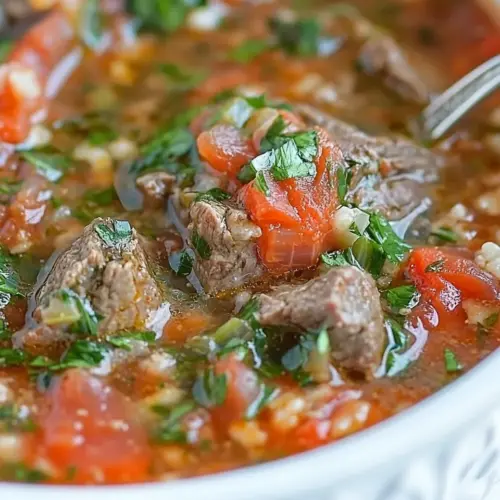
Beef Soup Kharcho
Beef Soup Kharcho is a rich, aromatic, easy weeknight dinner that balances tender beef, bright tomato and lemon notes, and fragrant herbs. Velvety broth and soft jasmine rice create a comforting texture while coriander and smoked paprika add depth and warmth. Make a big pot to feed a crowd or save for next day reheats, it's a soulful bowl worth trying.
Equipment
- Dutch Oven
- Soup pot
- Wooden Spoon
Ingredients
- 3 lb beef stew meat Provide rich, meaty flavor and tender chunks after slow simmering; brown well to develop deep savory fond that forms the backbone of the soup. Cut into uniform pieces to ensure even cooking and maintain texture throughout long simmer times.
- 3 tsp salt Enhance overall seasoning and help balance flavors; dissolve into the broth to make the soup savory without overpowering other aromatics. Use measured amounts while tasting toward the end to adjust for personal preference and the saltiness of the broth.
- 4 tbsp light olive oil, or any cooking oil, divided Add a light fruity richness and help with browning when searing the meat; use it in stages to sauté aromatics and finish the meat for depth. Choose a neutral or light olive oil to avoid introducing strong flavors that could dominate the soup's profile.
- 1 medium onion, chopped Provide aromatic sweetness and a savory base when softened; chop finely to release juices and caramelize slightly for complexity. Cook until translucent to meld with the celery and create a balanced soffritto that supports the broth.
- 2 celery ribs, finely chopped Contribute a mild, aromatic crunch and vegetal freshness that complements the onion; finely chopping helps the pieces soften and integrate into the soup. Sauté with the onion to build a subtle, layered flavor base without overpowering other spices.
- 4 cups beef broth + 4 cup filtered water Deliver concentrated beefy taste and cooking liquid to simmer the meat and rice; combine with water to achieve desired broth strength and volume. Use low-sodium options if concerned about salt levels, and keep simmering gently to extract flavor from the meat.
- 28 oz can diced tomatoes Introduce bright tomato acidity and savory body, helping to thicken and color the broth; add directly to the simmer to meld with spices. Drain or crush as desired to control texture, and stir well to distribute tomato pieces throughout the soup.
- 2 dry bay leaves Impart subtle herbal depth and a mild bitterness that enhances savory stews; add whole during cooking and remove before serving. Keep bay leaves intact during simmering to slowly release their aroma without creating gritty textures.
- 1 tsp ground coriander seeds Provide warm, citrusy, slightly floral notes that complement other spices; sprinkle ground coriander early to infuse the broth. Pair with paprika and garlic to create a balanced spice profile that supports the meat and tomatoes.
- 1 tsp smoked paprika Contribute smoky, sweet, and slightly earthy flavors that deepen the soup's color and aroma; stir in so it melds with the tomatoes and broth. Adjust quantity to control smokiness, ensuring it enhances but does not dominate the other spices.
- 2 garlic cloves, pressed Give pungent, aromatic sharpness and savory depth; press or mince and add toward the end of cooking for fresher garlic flavor. Sweat briefly with the aromatics to mellow its bite, then simmer to distribute its essence through the soup.
- 1/2 cup uncooked white rice, I used Jasmine Absorb broth and thicken the soup while adding a gentle, slightly nutty grain texture; rinse briefly if desired and add at the proper time to cook through. Measure accurately to maintain the intended soup-to-rice ratio and avoid over-thickening.
- 2 tbsp fresh lemon juice, from 1 medium lemon Brighten and balance rich flavors with acidity and a fresh citrus lift; squeeze fresh juice to taste and stir in near the end to preserve brightness. Use enough to cut through fattiness and enhance overall flavor harmony without making the soup overtly sour.
- 1/4 cup fresh parsley, chopped, plus more to serve Provide fresh, herbaceous brightness and a clean green finish that complements the lemon and spices; chop finely and stir in toward the end for a burst of freshness. Reserve some chopped parsley for garnishing to add color and aromatic lift at serving.
- 1/4 cup fresh dill, chopped, plus more to serve Offer a distinct, slightly anise-like freshness that pairs well with parsley and lemon; chop and incorporate near the end to retain its delicate aroma. Use extra dill for garnish to reinforce herbal notes and provide visual appeal at plating.
Instructions
- Sprinkle meat with 3 tsp salt and stir. Heat dutch oven or soup pot over medium/high heat and add 2 Tbsp oil. Once oil is hot, add beef in 2 batches, sautéing until browned on all sides. Remove from pot and set aside. Don't worry about cooking it through.: The aroma of salt hitting the surface of room temperature beef is immediate, drawing out moisture and beginning to season the core of the dish. As you toss the pieces, notice the gentle sheen that appears, which helps the next stage of browning. Why this matters, the salt helps both flavor and texture development during searing, creating more pronounced crust and savory depth later in the broth. A common mistake here is over salting too early if you are using salted broth, so be mindful. When you stir, listen for the soft clink of meat pieces settling together, and feel how the grains of salt dissolve slightly into the surface before the pan meets the meat.
- Add chopped onion and celery with more oil as needed. Saute 5 min until softened.: A good hot pot is the stage manager for color and aroma, so heating it until a drop of water sizzles is a helpful cue. When you add the oil, watch for it to shimmer and move with the pan, which indicates it is ready for contact. This step matters because proper oil temperature prevents sticking and encourages Maillard reactions that deepen flavor. A common error is using too low heat which yields stewed gray meat instead of browned pieces. The sizzling sound that starts when meat hits the oil is reassuring, and the first browning scents will be nutty and rich.
- Add canned tomatoes with their juice, 4 cups broth, 4 cups water, 2 bay leaves and browned beef. Bring to a boil then reduce heat, cover and simmer 1 1/2 to 2 hours or until beef is tender.: As each batch hits the pot you will hear a satisfying sizzle, and soon a fragrant, savory perfume will rise. Browning in batches prevents overcrowding, which causes steaming instead of searing. The visual cue to stop is a deep golden brown crust on most sides, not just the edges. This step is crucial because the fond left behind will be deglazed later by tomatoes and liquid, contributing layers of flavor. A typical slip up is crowding the pot, which leads to pale meat and a thinner broth, so work in two turns and resist impatience.
- Add 1/2 cup white rice, 2 Tbsp lemon juice, 2 pressed garlic cloves, 1 tsp coriander, 1 tsp paprika. Cover and simmer 20 min or until rice is tender.: As you transfer the seared beef to a plate, take a moment to smell the caramelized edges, because that scent is a promise of depth to come. Leaving the fond in the pot is intentional, since it will dissolve into the liquid and enrich the soup. One reason cooks err here is rinsing the pot too aggressively, which discards those browned bits, so avoid cleaning the pot between steps. The measure of success is a plate of browned cubes and a pot streaked with deep brown smears that shimmer when a little oil pools.
- Remove from heat and add 1/4 cup parsley and 1/4 cup dill then cover and let sit off heat another 10 min before serving. Season to taste with salt and pepper and serve with more fresh herbs as desired.: When the aromatics hit the hot surface you will hear a gentle sizzling and smell a sweetening, vegetal scent as they soften. The texture should move from crisp to translucent to just starting to color, about a few minutes. Sautéing these until tender unlocks sugars and lays the aromatic foundation for the entire soup. A common oversight is turning up the heat too high, which browns them too quickly and can introduce bitter notes; keep the heat moderate and stir to cook evenly.
- Saute 5 min until softened: During these minutes the kitchen will fill with a fragrant, oniony sweetness and the celery will lose its raw edge. The sound will be a softer, steadier sizzle, and the visual cue is translucence with tiny flecks of golden edge. This matters because softened aromatics integrate into the broth, offering balance and a gentle backbone. Mistakes here include undercooking, which leaves harsh raw flavors, so aim for that softened, slightly glossy finish.
- Add canned tomatoes with their juice, 4 cups broth, 4 cups water, 2 bay leaves and browned beef: Pouring the canned tomatoes and liquids will lift the fond off the pot in a satisfying wet bubble, creating the foundation for the simmer. Watch as the broth turns a deeper red and the pot releases those caramelized bits, which is when the aroma shifts from maillard to stewy and aromatic. Adding the seared beef back now ensures the meat finishes cooking in the flavorful liquid. A common mistake is skipping the water which can make the soup overly intense; the water helps balance concentration and gives the meat room to become tender.
- Bring to a boil then reduce heat, cover and simmer 1 1/2 to 2 hours or until beef is tender: At the boil you will see lively bubbles and an assertive scent; reducing to a gentle simmer is when the magic happens, as slow heat gradually breaks down connective tissue in the beef . The result should be tender chunks and a broth that tastes rounded and layered. This long simmer is essential for texture and depth. A frequent problem is simmering too vigorously which can toughen meat; keep the surface gently moving with small bubbles.
- Add 1/2 cup white rice, 2 Tbsp lemon juice, 2 pressed garlic cloves, 1 tsp coriander, 1 tsp paprika: The moment you add the rice you will notice the starch starting to thicken the broth as it cooks, and the fresh squeeze of lemon juice brightens the whole pot immediately. The pressed garlic releases a fragrant punch, while the spices add warmth and dimension. Adding these mid point matters so the rice cooks through without becoming mush, and so the aromatics maintain lift. A common miss is adding rice too early which leaves it over soft and broken in texture.
- Cover and simmer 20 min or until rice is tender: In these twenty minutes the rice will plump and the broth will gain a silkier mouthfeel. Listen for a subtle quieting of the pot and watch for rice grains to look swollen and translucent around the edges. This step gives body and comfort to each spoonful. Overcooking is a risk here, so check the rice near the end of the time to avoid a mushy result.
- Remove from heat and add 1/4 cup parsley and 1/4 cup dill then cover and let sit off heat another 10 min before serving: Adding the fresh parsley and dill off heat preserves their bright color and herbaceous aroma, which lifts the entire bowl. As it rests, flavors meld and any remaining heat finishes cooking the rice gently. This short resting period is important for integration and a balanced final aroma. A misstep would be stirring in herbs too early which dulls their vibrancy, so keep them for this resting stage.
- Season to taste with salt and pepper and serve with more fresh herbs as desired: The final seasoning is where the soup really comes alive, so taste carefully and add salt incrementally until flavors sing. Freshly cracked pepper adds a rounded, warming finish. Serving with extra chopped herbs provides visual freshness and aromatic lift. A typical mistake is over seasoning right away; always taste after the rest so you do not overshoot the balance.
Notes
- Adjust the rice Swap in a slightly shorter grain if you want a creamier mouthfeel, but reduce the cooking time and check often to prevent over softening.
- Control the smokiness Use less smoked paprika for a subtler finish, or increase it modestly if you prefer a more pronounced smoky note, tasting as you go.
- Broth concentration If you prefer a richer bowl, start with less water or use full strength beef broth, but remember to check salt levels before serving.
- Herb balance Adjust the parsley to dill ratio to suit your taste; more parsley makes the soup greener, while more dill emphasizes a distinctive, anise like lift.
- Make ahead strategy The soup often tastes better the next day; cool, refrigerate, then gently reheat and add a splash of water if the rice has absorbed too much liquid.