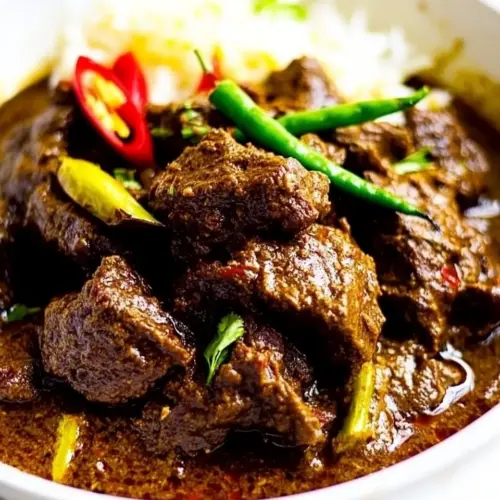
Beef Rendang
Beef Rendang is a deeply flavored, creamy and aromatic slow simmered beef stew with toasted coconut and lemongrass. This easy weeknight dinner becomes indulgent with tender meat and concentrated spice notes, perfect for sharing. Make it ahead for even better flavor and enjoy a comforting, show stopping meal that rewards patience and simple technique.
Equipment
- Stew pot
- Food Processor
- Wok or skillet for toasting coconut
Ingredients
- 1 1/2 lb s.boneless beef short ribs, cut into cubes Provide rich, tender meat and backbone to the dish when simmered slowly until flavors penetrate and fat renders, contributing depth and texture.
- 5 tablespoons cooking oil Add neutral heat for frying aromatics and spices, allowing the spice paste to bloom and preventing sticking during initial sautéing.
- 1 stick cinnamon, about 2-inch length Impart warm, sweet-spicy aromatics that infuse the cooking liquid during toasting or simmering, balancing savory flavors with subtle woodsy notes.
- 3 star anise Offer licorice-like fragrance and sweet anise notes that lift the curry profile and complement other whole spices during long simmering.
- 3 cardamom pods Deliver bright, citrusy and floral warmth when lightly crushed and toasted, contributing aromatic lift to the spice blend and broth.
- 1 lemongrass, cut into 4-inch length and pounded Provide fragrant citrusy stalk notes and fragrant oils when bruised, releasing aroma that brightens the rich, coconut-based sauce.
- 1 cup thick coconut milk, coconut cream Contribute rich creaminess and natural fat that creates a luxurious, thick sauce and helps carry spices and aromatics.
- 1 cup water Add controlled moisture to adjust sauce consistency and facilitate even cooking and simmering of meat and spices.
- 2 teaspoons tamarind pulp, soaked in some warm water for the juice and discard the seeds Supply bright, tangy acidity that balances richness and deep flavors, with soaked pulp contributing a mellow sour note to the sauce.
- 6 kaffir lime leaves, very finely sliced Bring intense citrus aroma and astringency when finely sliced, adding fresh lift and complexity to cut through the richness.
- 6 tablespoons kerisik, toasted coconut Introduce nutty, toasted coconut flavor and granular texture that thickens the sauce and adds traditional roasted coconut character.
- 1 tablespoon sugar, or palm sugar to taste Provide subtle caramelized sweetness that helps balance savory and spicy elements, adjustable to taste for final flavor harmony.
- salt, to taste Season to desired taste to enhance and unify all flavors; used sparingly and adjusted at the end of cooking.
- 5 shallots Contribute mild oniony sweetness and delicate aroma when fried or blended into the spice paste, adding background savoriness.
- 1 inch galangal Add sharp, earthy, slightly pine-like ginger-galangal warmth and citrusy notes when pounded into the paste for aromatic depth.
- 3 lemongrass, white part only Deliver lemony, herbaceous stalk flavor from the tender white part, bruised and blended to contribute fresh, zesty undertones.
- 5 cloves garlic Provide pungent umami and savory depth when crushed or minced into the paste, pairing with shallots and spices for body.
- 1 inch ginger Offer sharp, warming, peppery-sweet bite that brightens the paste and complements galangal and ginger when minced.
- 10 -12 dried chilies, soaked in warm water and seeded Contribute concentrated heat and chili flavor after soaking and blending, providing the primary spiciness and red color to the dish.
Instructions
- Chop the spice paste ingredients and then blend in a food processor until fine.: Close your eyes and inhale the bright, sharp notes as you chop shallots , garlic , ginger , galangal , the white part of lemongrass , and rehydrated dried chilies . The sound of the blade will go from coarse to a steady hum as the pieces become uniform, and the aroma will shift from raw and piquant to more integrated and pungent once the processor smooths them. This matters because a fine paste releases flavors evenly and prevents bits from burning during frying. A common mistake is blending too little, leaving fibrous chunks that can scorch; aim for a silky, cohesive paste. If the mixture seems too dry, add a tablespoon of water, but avoid excess liquid which dilutes the aroma.
- Heat the oil in a stew pot, add the spice paste, cinnamon, cloves, star anise, and cardamom and stir-fry until aromatic. Add the beef and the pounded lemongrass and stir for 1 minute. Add the coconut milk, tamarind juice, water, and simmer on medium heat, stirring frequently until the meat is almost cooked.: As the oil warms, it will shimmer, and when you add the paste, expect an immediate fragrant bloom as volatile oils release. Stir constantly so the paste does not stick, and watch for the color to deepen slightly and for tiny bubbles to form around the edges, signaling caramelization. The whole spices will toast and lend a layered aroma. This step activates flavors and reduces rawness from the paste, which is essential for the final rounded taste. Avoid overheating, which leads to burning and bitterness; lower the heat if the paste darkens too quickly. If there is any burnt smell, stop and gently deglaze with a splash of water to lift the fond and reset the temperature.
- Add the kaffir lime leaves, kerisik (toasted coconut), sugar, or palm sugar, stirring to blend well with the meat.: When you add the cubes of beef , you will hear a satisfying sizzle as the meat hits the hot oil and paste, sealing flavors into the surface. The pounded lemongrass will release a bright citrus perfume that contrasts the deeper toasted notes. Stir briefly to coat the meat so each piece is wrapped in spice, which helps the flavors penetrate as the simmer begins. Do not crowd the pot or you may steam the meat instead of browning, which can reduce flavor concentration. A common error is stirring too often later; at this initial stage, just get a good even coating.
- Lower the heat to low, cover the lid, and simmer for 1 to 1 1/2 hours or until the meat is really tender and the gravy has dried up. Add more salt and sugar to taste. Serve immediately with steamed rice and save some for storage.: Pouring in the coconut cream will immediately mellow the spices and create a creamy, bubbling surface. The tamarind juice introduces a lively tang that balances the richness. As it simmers, watch the pot surface for a gentle rolling bubble; this indicates a steady simmer rather than a violent boil. Stirring frequently ensures the bottom does not stick and helps the meat heat through evenly. This step is crucial because it lets collagen in the beef break down slowly, yielding tender texture. Avoid high heat which toughens meat and causes coconut to separate; keep things gentle and monitored.
- Add the kaffir lime leaves, kerisik toasted coconut, sugar, or palm sugar, stirring to blend well with the meat: When you fold in the finely sliced kaffir lime leaves and fragrant kerisik , the pot releases a bright, nutty scent as the toasted coconut absorbs fat and thickens the sauce. Stirring integrates those toasted notes and distributes the small toasted coconut bits so every bite has textural contrast. The sugar rounds acidity and binds flavors into a smooth profile. A mistake to avoid is adding kerisik too early, which can lead it to burn; adding it at this stage ensures it fat blooms into the sauce while maintaining its toasted character.
- Lower the heat to low, cover the lid, and simmer for 1 to 1 1/2 hours or until the meat is really tender and the gravy has dried up: With the heat low and a lid partially snug, the pot will fall into a patient rhythm, and over the hour plus, the sauce will transform from soupy to glossy and clingy. You will notice the sound change to soft, intermittent bubbles, and the aroma will become richer and more cohesive. This slow reduction concentrates flavors and allows the fat to meld with the spice and kerisik, producing that signature rendang texture. Stir occasionally to prevent sticking and check for moisture; if things dry too fast, add a splash of water. A common oversight is rushing this part with higher heat which yields tougher meat and an underdeveloped sauce. Taste and adjust salt and sugar near the end to balance the final profile.
- Add more salt and sugar to taste and serve immediately with steamed rice and save some for storage: At the finish, your senses will confirm readiness the moment the sauce clings and little droplets of oil appear on the surface. Tasting now allows you to tweak with salt and sugar to hit the sweet sour savory equilibrium. Serve hot with plain steamed rice which cleanses the palate and showcases the concentrated flavors. If you plan to store leftovers, cool quickly and refrigerate, noting that flavors continue to harmonize, often improving the next day. Avoid over seasoning early on as reduction will intensify the saltiness; adjust at the end.
Notes
- Choose the right cut, prefer short ribs or cuts with connective tissue for tenderness and flavor after long simmering.
- Make a fine spice paste, blending to a smooth texture helps the paste cook evenly and prevents fibrous bits from burning.
- Control the heat, fry the paste over medium low to release aroma without scorching, adjusting as needed.
- Patience for reduction, allow the sauce to slowly thicken on low heat, because rapid boiling can toughen the meat and separate coconut fat.
- Finish by tasting, adjust salt and sugar at the end when flavors have concentrated for accurate balance.
- Make ahead advantage, flavors often deepen overnight, so leftovers are usually tastier and worth preparing in larger batches.